 Pin
Pin The first time I tasted authentic banitsa was in a Sofia kitchen on a cold morning, steam rising from a cup of thick coffee while my friend's grandmother pulled a golden rectangle from the oven. The smell alone—butter, feta, and something deeply comforting—made me understand why this dish had survived centuries. She cut into it with such certainty, the layers cracking under the knife, and handed me a warm piece that changed how I thought about breakfast pastries forever.
I made this for a group of friends gathered around my small kitchen table on a lazy Sunday, and the moment it came out of the oven, conversation stopped. Someone cut into it carefully, nervous the layers would collapse, but instead they stayed perfectly intact and flaky. Serving it warm with cold yogurt on the side felt like I was sharing something sacred, and honestly, that feeling has stayed with me every time I make it since.
Ingredients
- Feta cheese, crumbled (400 g): This is the soul of banitsa; use good quality feta that isn't too salty or it will overwhelm the filling. Crumble it by hand for a more tender texture than food processor chunks.
- Eggs (4 large): They bind everything and create that custardy richness when baked. Whisk them well to distribute them evenly throughout the filling.
- Phyllo dough (1 package, about 400 g, thawed): Let it come to room temperature before you start; cold phyllo cracks and tears. Keep unused sheets covered with a barely damp towel so they don't dry out while you work.
- Plain yogurt (250 ml): Full-fat yogurt gives a creamier texture than low-fat, and it adds a subtle tang that lifts the filling without adding acid.
- Unsalted butter, melted (60 g): Use real butter for the flavor and how it crisps the phyllo; clarified butter works even better if you have it.
- Whole milk (50 ml): This lightens the filling slightly and keeps it from becoming too dense as it bakes.
- Salt (1/2 tsp) and freshly ground black pepper (1/4 tsp): Season gently; remember the feta is already salty, so taste as you go.
Tired of Takeout? 🥡
Get 10 meals you can make faster than delivery arrives. Seriously.
One email. No spam. Unsubscribe anytime.
Instructions
- Set your oven and prepare:
- Preheat to 180°C (350°F) and brush your baking dish generously with melted butter so nothing sticks. A 23 x 33 cm baking dish is standard, but if yours is slightly different, that's fine—just layer confidently.
- Make the filling:
- Whisk eggs, yogurt, milk, salt, and pepper in a bowl until smooth and pale. Gently fold in the crumbled feta with a spatula so you keep some texture; the pieces should stay distinct, not become a paste.
- Unroll and cover the phyllo:
- Lay the phyllo package flat and unroll it slowly—rushing this step causes cracks. Drape a barely damp kitchen towel over the stack immediately so the exposed sheets don't dry out and become brittle.
- Build the first phyllo base:
- Place one sheet in the buttered dish and brush it lightly all over with melted butter using a pastry brush. Layer three more sheets on top, buttering each one; you should see them start to look glossy and golden from the butter alone.
- Add the first layer of filling:
- Spread about one-quarter of your cheese mixture evenly across the phyllo, leaving a tiny border. It will seem like a modest amount, but the layers will collapse slightly as they bake and release moisture.
- Layer and fill:
- Add 3 to 4 more phyllo sheets, buttering each one, then spread another quarter of the filling. Repeat until all the filling is used, finishing with 3 to 4 phyllo sheets on top, each one brushed with butter. The last layers should shine.
- Score and finish:
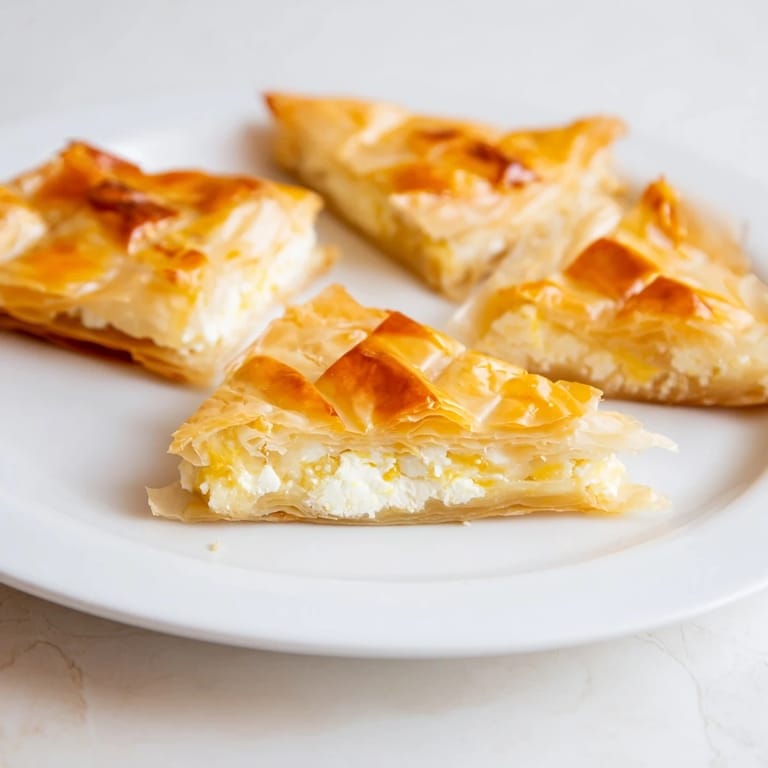
- Using a sharp, dry knife, cut the banitsa into squares or diamond shapes, pressing down firmly but not sawing. Pour any remaining melted butter over the top in a drizzle.
- Bake until golden:
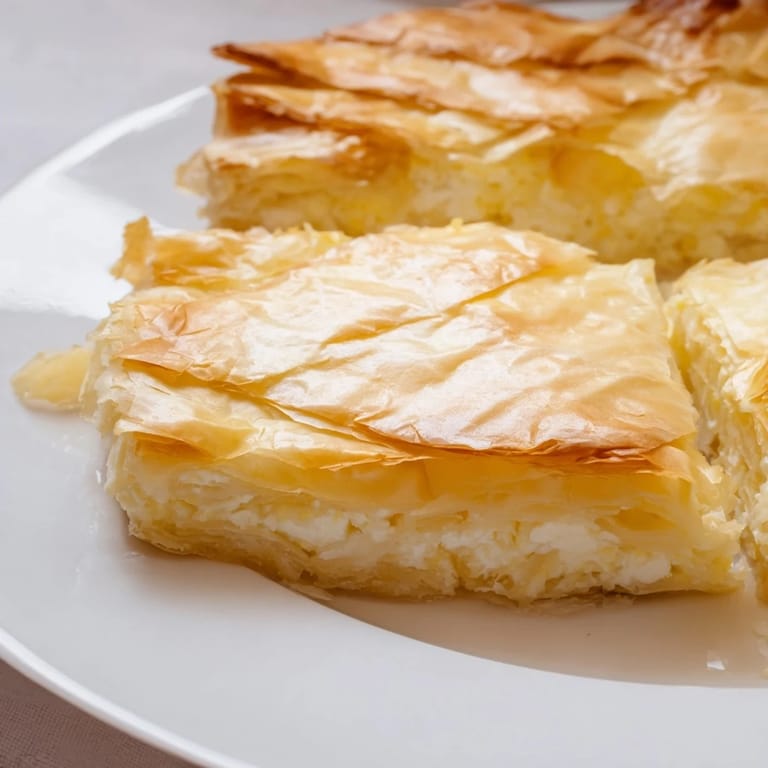
- Bake for 30 to 35 minutes until the top is deep golden and crispy, and you can see the filling puffing slightly at the edges. The smell at minute 25 will be almost unbearable.
- Cool and serve:
- Let it rest for 10 minutes—this is hard but crucial, as it lets the layers set slightly. Serve warm or at room temperature with something cold to drink.
 Pin
Pin There's a moment while banitsa bakes when the whole kitchen transforms—the butter and phyllo release this nutty, caramelizing aroma that makes the entire space feel like a Bulgarian grandmother's kitchen, even if you've never been to Bulgaria. That smell is when you know you're on the right track.
Understanding the Layers
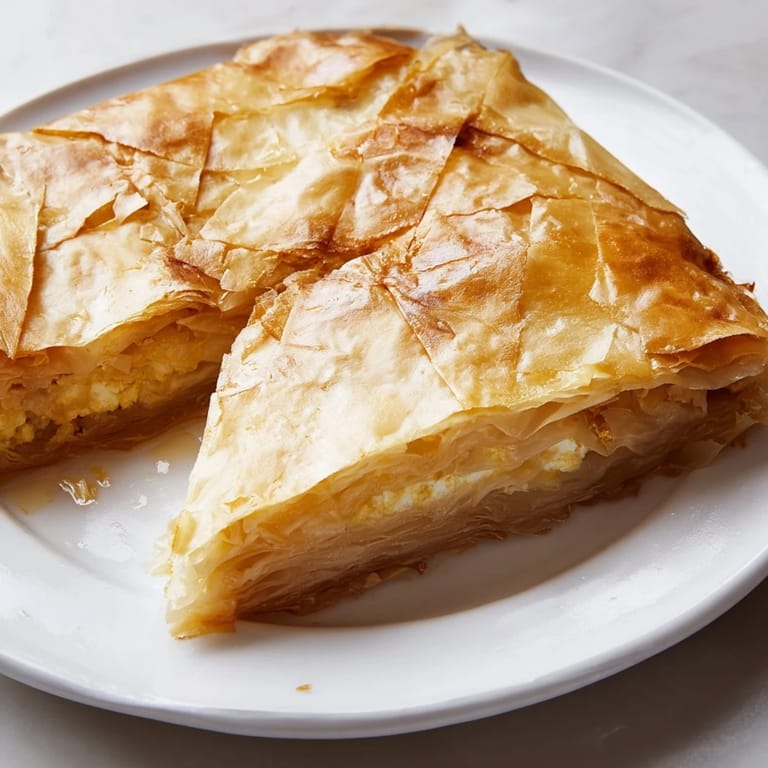
The magic of banitsa lives in those delicate phyllo layers. Each one gets brushed with butter, which is what creates that distinctive crispy, shattering texture when you cut into it. The butter doesn't just flavor—it separates each layer so they stay distinct instead of fusing together. This is why good technique with the pastry brush matters more than perfection; you're building something structural with every brush stroke. If you find phyllo intimidating, remember that even torn or patched sheets bake into something delicious; minor mistakes disappear under golden butter and heat.
Building Flavor and Balance
The filling is a conversation between salty feta, tangy yogurt, and creamy eggs—no single flavor should dominate. That ratio of 400 grams feta to 250 milliliters yogurt creates a balance that works consistently; too much feta becomes overwhelming, and too much yogurt makes the filling watery. Some cooks add a tablespoon of chopped fresh dill or parsley to the filling for brightness, which transforms the whole thing into something more herbaceous and springlike. The 50 milliliters of milk is there to add silkiness without adding more sourness, so don't skip it or swap it for more yogurt.
Serving and Storing Banitsa
Banitsa tastes wonderful warm straight from the oven, but it's equally good at room temperature, which makes it perfect for cooking ahead. It keeps well in an airtight container for three days, though the phyllo will gradually soften; if you want to restore crispness, warm slices in a 160°C oven for 5 minutes. Serve it alongside cold ayran (a yogurt-based drink), a simple tomato and cucumber salad, or just a cup of strong coffee.
- If phyllo cracks while you're layering, keep going—your filling and butter will seal everything together as it bakes.
- For extra richness, brush the top phyllo layers with a mixture of egg yolk and milk instead of plain butter.
- Room temperature banitsa is actually easier to cut neatly than piping-hot banitsa, so patience at the serving stage pays off.
 Pin
Pin Making banitsa is one of those cooking experiences that feels both technical and deeply intuitive. Once you understand why each step matters—the damp towel, the careful layering, the generous butter—you stop following a recipe and start making it your own.
Recipe Q&A
- → What type of cheese is traditionally used?
Feta cheese is the classic choice, offering a tangy, creamy texture that complements the flaky pastry layers.
- → Can I add herbs to the filling?
Yes, adding fresh dill or parsley enhances the flavor profile without overpowering the main ingredients.
- → How should the phyllo dough be handled?
Keep the phyllo sheets covered with a damp towel while assembling to prevent them from drying out and becoming brittle.
- → What is the best way to serve this dish?
Serve warm or at room temperature, paired nicely with a refreshing yogurt drink or a simple tomato-cucumber salad.
- → Can I substitute the feta cheese?
Yes, Bulgarian sirene or ricotta can be used for a milder, creamier taste variation.