 Pin
Pin My sister called one rainy Tuesday asking if I could make something that felt like home but wouldn't leave us sluggish afterward. She'd been experimenting with lighter eating, and I found myself staring at a head of cauliflower wondering if it could masquerade as potatoes in an Irish stew. That first spoonful, when the beef practically melted and the creamy mash held its own against tradition, made her laugh and say she finally understood comfort food didn't have to come with regret.
I made this for a dinner party where someone mentioned they were trying to eat better, and I watched her take three helpings without realizing it was a lightened version until dessert. That quiet moment when good food stops being about what's missing and just becomes what's there—that's when I knew this recipe had something special worth holding onto.
Ingredients
- Lean beef stew meat: Trimmed well so every bite is pure flavor without grease pooling on top; I learned the hard way that cutting it yourself beats pre-cut meat from most counters.
- Olive oil: Just enough to get a gorgeous brown crust on the beef, which is where all the savory depth lives.
- Onion, carrots, and celery: The holy trinity that builds flavor from the ground up; don't skip the sautéing step or they'll taste raw and bitter.
- Garlic cloves: Minced fine so they dissolve into the broth rather than leaving little chunks that catch between teeth.
- Low-sodium beef broth: The foundation that lets the beef and herbs sing without overpowering salt that makes you thirsty.
- Dry red wine: A cup of something you'd actually drink; it brightens the stew in ways broth alone cannot.
- Tomato paste: Two tablespoons stirred in early creates an umami backbone that makes people ask what your secret ingredient is.
- Worcestershire sauce: A surprising depth that tastes vaguely familiar and distinctly Irish without announcing itself.
- Dried thyme and rosemary: Together they smell like a country cottage; go easy because dried herbs concentrate their flavor.
- Bay leaves: Two because one sometimes feels lonely in a pot this size, and they anchor everything with subtle earthiness.
- Frozen peas: Added at the end so they stay bright green and slightly firm, a textural contrast to the soft beef.
- Cauliflower: Cut into florets and boiled until it falls apart easily; this is what makes the mash smooth and cloud-like.
- Unsalted butter and milk: The only indulgence in the mash, and honestly, it makes all the difference in making it feel luxurious.
Tired of Takeout? 🥡
Get 10 meals you can make faster than delivery arrives. Seriously.
One email. No spam. Unsubscribe anytime.
Instructions
- Dry and season the beef:
- Pat each cube completely dry with paper towels because moisture is the enemy of browning. Season generously with salt and pepper right before cooking so it sticks rather than drawing out juices.
- Brown the beef in batches:
- Heat oil until it shimmers, then add beef in a single layer without crowding the pot. Listen for that sizzle; if it sounds angry, the temperature is right, and you'll get a dark crust that tastes like restaurant-quality stew.
- Build the flavor base:
- Sauté onion, carrots, and celery until the onion turns translucent and everything smells sweet. This takes about five minutes, and you'll notice when they're ready because the kitchen smells completely different.
- Toast the aromatics and paste:
- Add garlic for just a minute—any longer and it burns and tastes bitter—then stir in tomato paste and herbs. Cook for another minute so the paste caramelizes slightly and the herbs wake up.
- Deglaze and build the broth:
- Pour in wine, scraping the bottom of the pot with a wooden spoon to lift all those browned bits that taste like pure stew essence. Return the beef, add broth and Worcestershire, then bring to a gentle simmer.
- Simmer low and slow:
- Cover the pot, reduce heat to low, and let it bubble quietly for an hour and fifteen minutes, stirring occasionally so nothing sticks. You'll know the beef is done when a fork slides through without resistance.
- Finish with peas:
- Remove the lid, add peas, and simmer uncovered for five to ten minutes. Taste and adjust seasoning; this is when you discover if it needs more salt or pepper or if it's already perfect.
- Prepare the cauliflower mash:
- While the stew finishes, boil cauliflower florets in salted water until a knife goes through like butter, about ten to twelve minutes. Drain very well because excess water makes the mash watery and defeats the purpose.
- Blend into creamy mash:
- Transfer warm cauliflower to a food processor with butter and milk, then blend until completely smooth and cloud-like. If using a potato masher, you'll get a slightly chunkier texture, which is also lovely if that's what you prefer.
- Plate and serve:
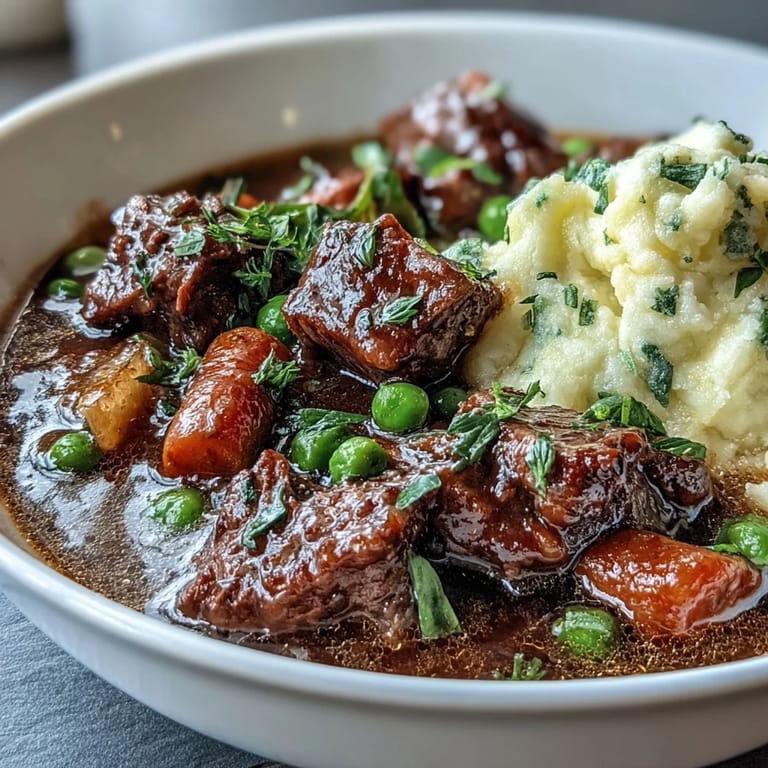
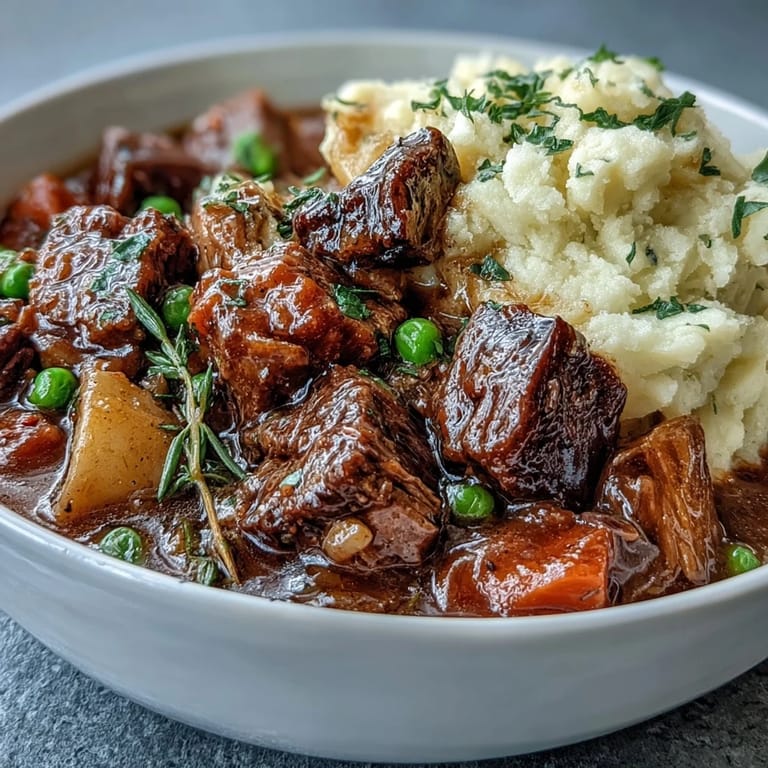
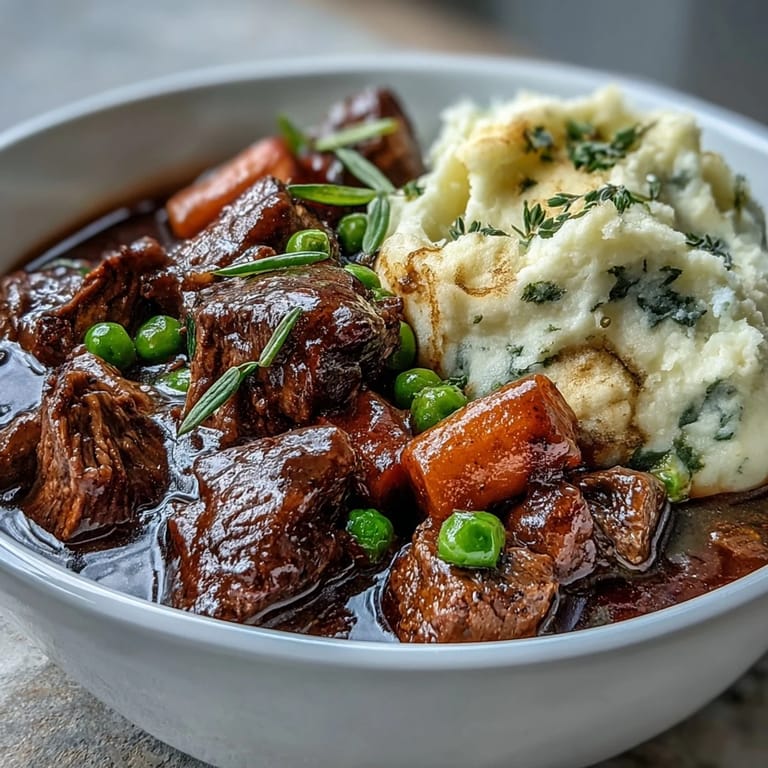
- Ladle stew into bowls, mound cauliflower mash in the center, and garnish with fresh chives if you have them. The colors alone—that deep brown stew against creamy white mash with green chives—make it look like you spent all afternoon cooking.
 Pin
Pin There's a moment, somewhere between adding the wine and covering the pot, when you stop thinking about calories or carbs and just breathe in the aroma of thyme and slow-cooked beef. That's when you know the recipe has already won.
Why This Tastes Like Traditional Irish Stew
Removing potatoes sounds like culinary blasphemy until you taste the cauliflower mash and realize it captures everything you loved about creamy, comforting potato-based stew without the heaviness that follows. The beef braises in red wine and herbs just as it would in any countryside kitchen, and the vegetables soften into the broth with the same patient, unhurried cooking. What makes it feel authentically Irish is respecting the technique and the aromatics, not rigidly following what sits on the plate.
Making It Your Own
I've learned that the best recipes are starting points, not commands. A splash of Guinness instead of wine makes the stew taste more like a pub night, while swapping carrots for sweet potatoes adds earthiness and color. Some nights I thicken it by mashing some of the cooked vegetables back into the broth, creating a texture somewhere between broth and gravy.
Serving and Pairing
This stew tastes best served hot, ladled generously over that fluffy mash, in a bowl wide enough for spooning both together. It pairs beautifully with a light-bodied red wine—nothing heavy, just something that echoes the wine in the pot—or an Irish ale if that's more your style. A crisp salad on the side cuts through the richness without overwhelming the dish, and crusty bread for soaking up broth is never a mistake.
- Make extra and freeze it; the stew actually improves after a day or two as flavors deepen.
- Reheat gently on the stovetop rather than microwave to preserve the tender beef texture.
- The cauliflower mash is best made fresh, but you can prepare the stew completely ahead and make the mash just before serving.
 Pin
Pin This recipe exists because comfort food and nourishment don't have to choose sides. Serve it and watch people forget entirely about what's missing.
Recipe Q&A
- → What cuts of beef work best for this stew?
Lean stew beef trimmed of excess fat ensures tenderness while keeping the dish light and flavorful.
- → How do I achieve a creamy cauliflower mash?
Boil the cauliflower until very tender, then blend with butter and a splash of milk until smooth and creamy.
- → Can I substitute the red wine in the stew?
Yes, beef broth or a splash of stout like Guinness can replace red wine without sacrificing depth of flavor.
- → How long should the stew simmer for optimal tenderness?
Simmering for about 1 hour 15 minutes allows the beef to become tender and the flavors to meld fully.
- → What herbs enhance the stew’s flavor profile?
Thyme, rosemary, and bay leaves provide an earthy and aromatic background that complements the beef and vegetables.
- → Is this dish suitable for gluten-free diets?
Yes, all ingredients used are naturally gluten-free, making it safe for gluten-sensitive individuals.