 Pin
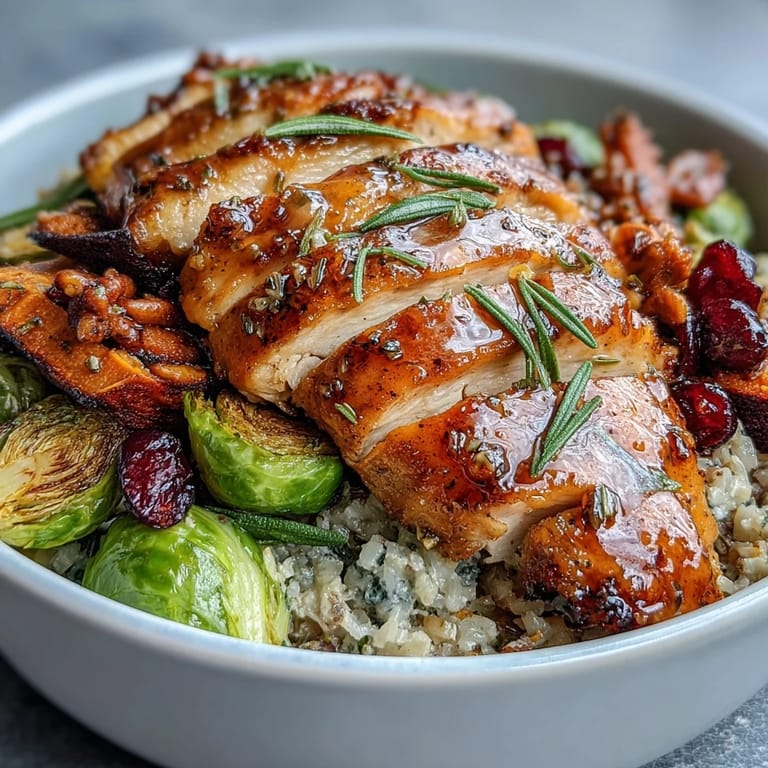
Pin There's something about autumn that makes me crave bowls instead of plated dinners, and this maple Dijon chicken came together one crisp October evening when I had chicken breasts, a bottle of good maple syrup, and a stubborn Brussels sprout that refused to cooperate at the farmers market. I started building layers—sweet potatoes first, then Brussels sprouts that turned crispy at the edges, and a glaze that felt like it belonged on something fancier than a weeknight meal. What surprised me was how the Dijon's sharpness cut through the maple's sweetness, making it feel balanced instead of cloying, and suddenly I wasn't just cooking dinner, I was creating something I'd want to make again and again.
I made this for my sister during her last visit, and she's not someone who gets excited about healthy bowls, but she went back for seconds and asked me to write down every component. Watching her toast the pecans while I glazed the chicken, both of us moving around the kitchen without speaking much, felt like we were in sync somehow—less like cooking and more like creating something together that mattered.
Ingredients
- Chicken breasts: Pounding them to even thickness is non-negotiable if you want them cooked through without drying out the edges.
- Pure maple syrup: Don't use the fake stuff—it'll taste one-dimensional and the glaze won't caramelize with the same golden richness.
- Dijon mustard: The sharp backbone that keeps this from tasting like candy; choose a quality brand and check the label if you need certified gluten-free.
- Sweet potatoes: Cut them smaller than you think you need to—they roast faster and crisp up better on the outside.
- Brussels sprouts: Halving them gives you more surface area for browning, and that's where all the flavor lives.
- Brown or wild rice: Either works, though I lean toward wild rice because it holds its shape better and has a nuttier texture that complements the glaze.
- Pecans: Toast them yourself if possible; the difference between pre-toasted and fresh-toasted is the difference between fine and genuinely delicious.
- Cranberries and fresh parsley: The acid and brightness these bring are what make the bowl feel finished instead of heavy.
Tired of Takeout? 🥡
Get 10 meals you can make faster than delivery arrives. Seriously.
One email. No spam. Unsubscribe anytime.
Instructions
- Start your rice first:
- Get the rice going before anything else hits the stove—it's the slowest player in this lineup. Use broth instead of water if you have it; it adds a quiet depth that makes people wonder what your secret is.
- Prep and roast the vegetables:
- Toss your sweet potatoes and Brussels sprouts with olive oil and seasonings, spreading them in a single layer so they roast instead of steam. Halfway through, give them a stir and resist the urge to move them around too much—the browning happens when you leave them alone.
- Pound and season the chicken:
- Even thickness means even cooking, so take a minute to pound those breasts until they're uniform. Season generously on both sides and let them sit at room temperature while you prep the glaze.
- Make your glaze:
- Whisk maple syrup, Dijon, olive oil, and rosemary together in a small bowl—it should look glossy and smell like fall. This is your moment to taste and adjust if something feels off.
- Sear the chicken with glaze:
- Get your skillet hot, add oil, then chicken—don't move it around constantly, just let it brown. In those last two minutes, brush the glaze on generously and watch it caramelize into something sticky and golden.
- Rest, slice, and assemble:
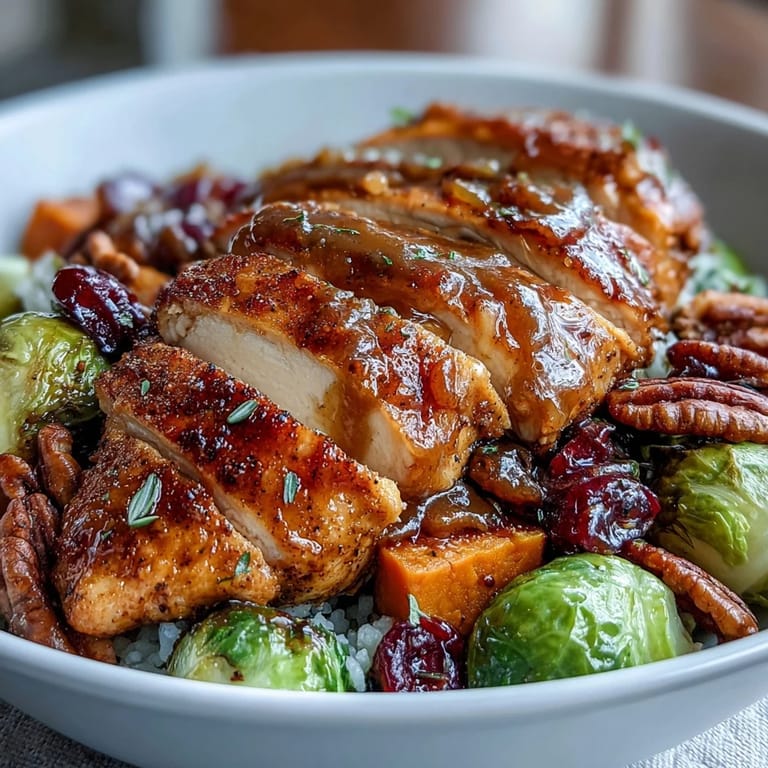
- Five minutes of rest prevents the chicken from being dry and allows the juices to redistribute. Build your bowls by layering rice, vegetables, chicken, then drizzling with any glaze left in the pan and finishing with pecans, cranberries, and parsley.
 Pin
Pin There was a moment when my nephew, who's picky about everything green, ate an entire bowl without complaining and asked if he could have pecans on top of his next serving. I realized then that this dish works because it doesn't feel like someone's trying to sneak health into your dinner—it just tastes good, which is the only nutrition lesson that ever stuck with me.
Why This Bowl Became My Go-To
Bowls work for me because they're forgiving—nothing needs to be plated perfectly, the components taste good even when they're not piping hot, and there's something inherently satisfying about building your own bite. Every element in this particular bowl pulls its weight: the sweet potatoes bring warmth and sweetness, the Brussels sprouts add earthiness and crunch, the chicken is the protein anchor, and the glaze ties everything together. It's the kind of meal that makes you feel like you took care of yourself without feeling like deprivation.
Meal Prep Wisdom
I cook each component separately and store them in different containers, keeping the glaze in its own small jar ready to drizzle. This matters because wet ingredients will make rice mushy, and cold glaze is easier to portion than something sticky that's already cooled. On a random Wednesday when I'm exhausted, I can grab what I need and assemble without feeling like I'm cooking from scratch.
Small Changes That Matter
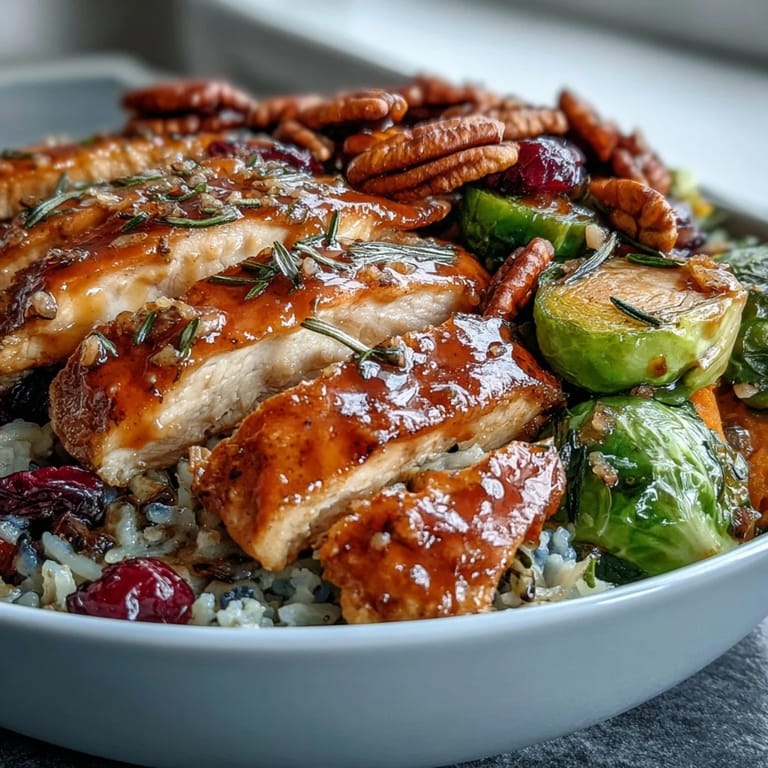
This recipe is flexible enough that you can swap components without losing the soul of what makes it work. The maple Dijon glaze is the constant—that's what ties everything together—but everything else can shift based on what you have or what you're craving. I've used farro instead of rice, roasted chickpeas when chicken seemed boring, and added a crumble of goat cheese on nights when dairy felt necessary instead of forbidden.
- If you're making this vegetarian, roasted chickpeas tossed in the same glaze will give you the texture and protein without changing the flavor profile.
- Cinnamon in the roasted vegetables is optional, but it whispers in the background and makes people pause to figure out what they're tasting.
- Fresh rosemary in the glaze is worth buying; dried works, but fresh has an evergreen brightness that dried can't quite match.
 Pin
Pin This bowl sits at the intersection of comfort and care, the kind of meal that makes weeknight cooking feel less like an obligation and more like something worth doing. Make it once and it'll become the recipe you reach for when you want something that tastes homemade but doesn't demand everything from you.
Recipe Q&A
- → Can I substitute the chicken with a vegetarian option?
Yes, roasted chickpeas or tofu can be used instead, providing a similar hearty texture and absorbing the maple Dijon glaze well.
- → What rice works best for this dish?
Brown or wild rice are recommended for their nutty flavor and texture, but quinoa, farro, or cauliflower rice are great alternatives.
- → How do I make the glaze stick better to the chicken?
Brush the glaze onto the chicken during the last few minutes of cooking and reserve some for drizzling after resting the meat.
- → Is it possible to prepare parts of this dish ahead of time?
Yes, cook and store the components separately, then assemble just before serving to maintain freshness and texture.
- → Can I add cheese to this dish?
Adding goat cheese or feta can enhance creaminess and add a tangy contrast to the sweet and savory elements.