 Pin
Pin My friend texted me a photo of a sushi roll at 11 PM on a Tuesday, asking if I could recreate it for her book club meeting the next evening. I'd never made sushi before, let alone attempted to bake it, but something about the challenge felt right. By midnight, I'd discovered this genius casserole version and realized I could actually pull it off. What started as panic became one of those happy kitchen experiments where everything just clicks into place.
When my book club arrived the next evening, I was honestly nervous about unveiling this baked casserole version of something traditionally hand-rolled. The moment someone took that first bite and their face lit up, I knew this recipe was a keeper. One person asked for seconds before anyone else had finished, and another admitted she'd been skeptical until she tasted it.
Ingredients
- Sushi rice (2 cups uncooked): The foundation that makes this feel authentically sushi, and cooking it properly matters more than you'd think—mushy rice ruins everything, so follow package directions exactly.
- Rice vinegar, white sugar, salt (for seasoning): This trio transforms plain rice into the tangy, slightly sweet base that defines sushi, and microwaving the mixture helps it dissolve evenly rather than creating gritty pockets.
- Salmon fillet (8 oz): Fresh salmon cooks beautifully and shreds easily, giving you chunks of tender fish instead of the mushy texture you'd get if you overcooked it.
- Imitation crab sticks (10 oz): The traditional sushi choice that adds sweetness and texture; they shred beautifully and keep this dish budget-friendly.
- Cream cheese (4 oz softened): This is your binding agent that makes the whole mixture creamy and luxurious, so let it sit on the counter before mixing to avoid lumps.
- Sriracha mayo (⅓ cup): The spicy-creamy backbone that brings everything together; mixing your own costs less and lets you control the heat level.
- Furikake seasoning: Those little flavor explosions sprinkled throughout add umami and a pop of color that makes people ask what you did differently.
- Sesame seeds (optional): A nutty finishing touch that adds texture and looks professionally done without any extra effort.
- Green onion and seaweed snack sheets: These fresh elements keep everything from feeling heavy and complete that wrapped-sushi experience.
Tired of Takeout? 🥡
Get 10 meals you can make faster than delivery arrives. Seriously.
One email. No spam. Unsubscribe anytime.
Instructions
- Cook your rice foundation:
- Follow your rice cooker's instructions or simmer in a saucepan until fluffy and tender. You'll know it's right when each grain is separate but still holds moisture.
- Create the seasoning liquid:
- Microwave the rice vinegar, sugar, and salt together for 30 seconds until everything dissolves completely, then fold this gently into your warm rice so you don't crush the grains. The rice should smell tangy and taste slightly sweet.
- Prep your salmon:
- Season your fillet with salt and pepper, then either air fry at 400°F for 10–12 minutes or bake at 375°F for 15–17 minutes until it flakes easily with a fork. Let it cool just enough to handle, then shred it into bite-sized pieces using two forks or your fingers.
- Mix your seafood filling:
- In a large bowl, shred the imitation crab, then add your cooled salmon, softened cream cheese, and Sriracha mayo. Stir until everything is combined and creamy, breaking up any cream cheese lumps as you go.
- Layer your baking dish:
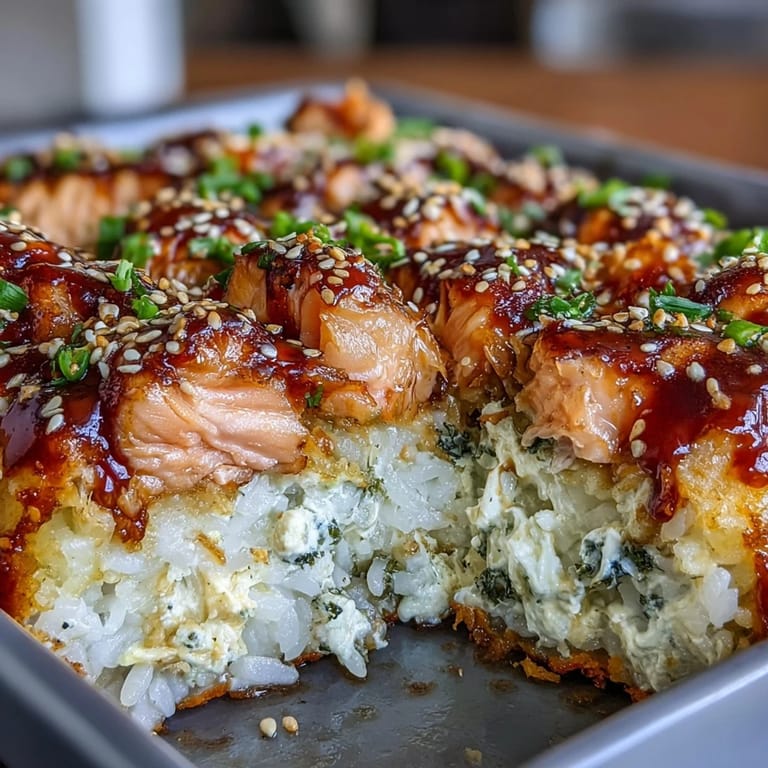
- Spread the seasoned rice evenly across your prepared 9x9-inch or 9x13-inch baking dish and press down gently with a spatula. Sprinkle generously with furikake so every bite gets that umami boost.
- Top and bake:
- Spread the salmon-crab mixture evenly over the rice, smooth the top, and bake at 400°F for 10–15 minutes until heated through and the surface shows light golden spots. You'll know it's ready when you smell that savory, slightly toasted aroma.
- Finish with style:
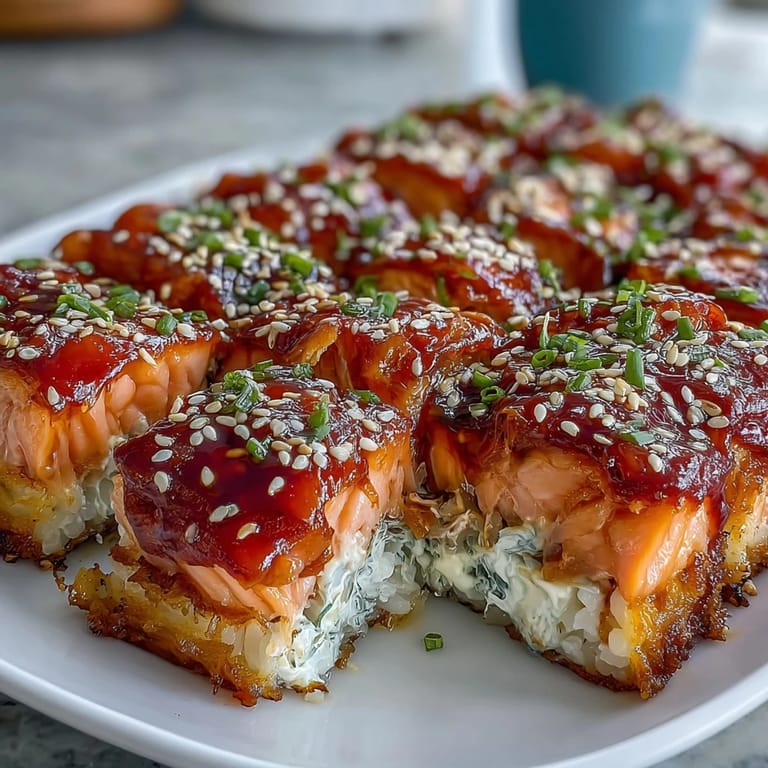
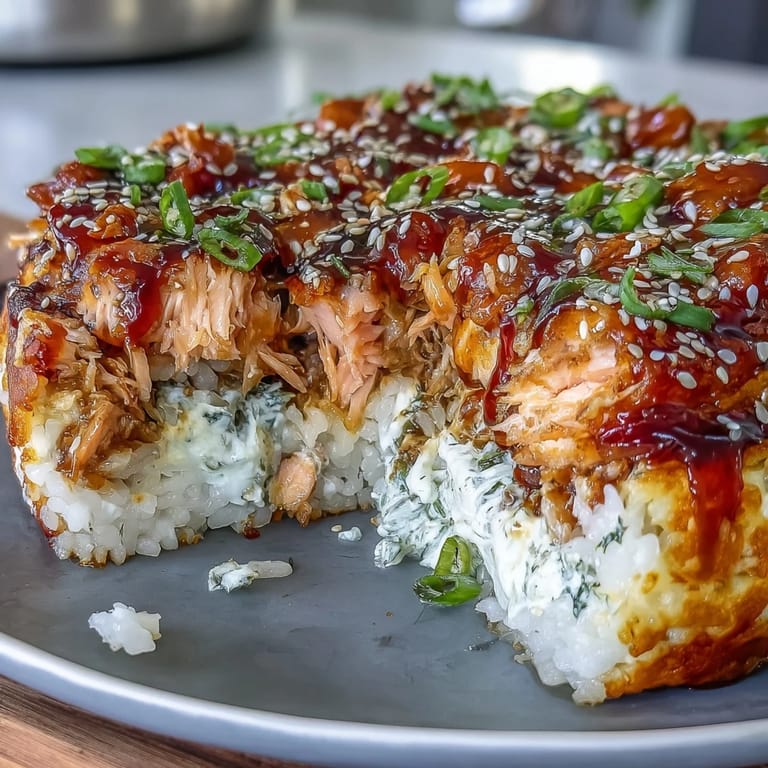
- Pull it from the oven and immediately drizzle with extra Sriracha mayo, then shower it with additional furikake, sesame seeds, and fresh chopped green onions for color and crunch.
- Serve and enjoy:
- Scoop a portion onto a small seaweed snack sheet, wrap it loosely, and take a bite while it's still warm. This is when the textures and flavors shine brightest.
 Pin
Pin Watching my sister take her first bite and then immediately ask if I was making this for Thanksgiving was the moment I realized this recipe had somehow become part of our family story. She's made it three times since then, and each time she texts me a photo, we laugh about how a last-minute experiment turned into something we actually crave.
Why This Recipe Works as Comfort Food
There's something deeply satisfying about eating sushi flavors from a warm casserole instead of cold rolls—it feels indulgent without being heavy. The combination of creamy filling, tangy rice, and those little flavor bursts from the furikake creates a complete experience that somehow feels both restaurant-quality and homey. Every layer has a purpose, and nothing feels like it's there just for show.
Customizing Your Sushi Bake
Once you understand how this casserole works, you'll start seeing endless possibilities on your pantry shelves. I've made versions with shrimp tempura, cucumber and avocado for vegetarian guests, and even spicy tuna when I wanted to impress someone. The rice and cream cheese base is flexible enough to hold whatever fresh ingredients you love, so treat this recipe as a template rather than a strict rulebook.
Storage and Reheating Tips
Leftovers stay fresh in the fridge for up to two days, though honestly they rarely last that long in my house. Reheat gently in a 300°F oven for about 10 minutes so the rice warms through without drying out, and always add fresh green onions and sesame seeds right before serving to keep things crispy and bright. I've learned the hard way that microwaving makes the rice texture sad, so patience with the oven method pays off.
- Let it cool completely before covering: Trapping steam creates soggy rice, so wait until the casserole reaches room temperature, then cover it tightly.
- Bring leftovers to room temperature slightly: Straight-from-the-fridge salmon bake tastes better when you let it sit for 15 minutes before reheating.
- Make the rice mixture the day before if planning ahead: Seasoned rice actually improves overnight as the flavors settle in.
 Pin
Pin This recipe proved that sometimes the best kitchen discoveries come from last-minute challenges and a willingness to improvise. It's become my go-to dish for anyone who says they want something special but doesn't have hours to spend cooking.
Recipe Q&A
- → How should I cook the salmon for the best texture?
Cook salmon in an air fryer at 400°F for about 10-12 minutes or bake at 375°F for 15-17 minutes until fully cooked but moist enough to shred easily.
- → Can I substitute real crab meat for imitation crab?
Yes, using real crab meat adds a more authentic flavor and enhances the seafood richness of the dish.
- → What rice type is best for this dish?
Use sushi rice, which becomes sticky and holds shape well when seasoned with rice vinegar, sugar, and salt.
- → What can I use instead of sriracha mayo for spice?
Mayonnaise mixed with chili flakes or a dash of hot sauce can be a good alternative to sriracha mayo.
- → How do I store leftovers safely?
Store leftovers in an airtight container in the refrigerator for up to two days and reheat gently to maintain texture and flavor.
- → What toppings enhance the flavor and presentation?
Sprinkle sesame seeds, chopped green onions, and furikake seasoning after baking for added crunch and umami depth.