 Pin
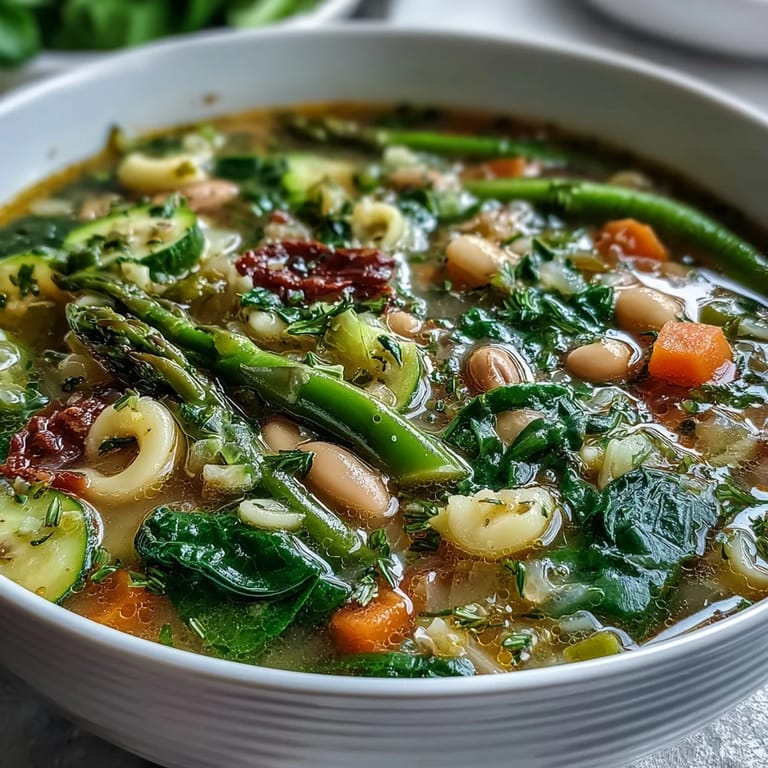
Pin There's something about April that makes me crave soup—not the heavy kind, but something bright and alive that tastes like the garden is finally waking up. I discovered this minestrone while wandering through a farmers market on an unexpectedly warm Saturday, my arms full of asparagus bunches and fresh peas still in their pods. The vendor mentioned her grandmother made something similar in Tuscany, and I became obsessed with recreating it in my own kitchen. What started as a casual conversation turned into my favorite weeknight ritual, the one where the house fills with the smell of herbs and spring vegetables all at once.
I made this for my sister on the day she moved into her new place, knowing she'd be exhausted and tired of takeout menus. Watching her eat it straight from the pot while sitting on an unpacked box, talking about fresh starts and how good it felt to be home—that's when I realized this soup does something beyond nourish. It's the kind of dish that makes people pause and actually taste what they're eating, and that matters more than the recipe itself.
Ingredients
- Olive oil: Start with good oil here since it's one of the few fats holding this soup together—it makes a real difference in how silky the broth tastes.
- Onion, carrots, and celery: This holy trinity of aromatics is your foundation; don't skip or rush these, as they build the flavor base that makes everything else sing.
- Garlic: Two cloves minced fine enough to disappear into the warm oil—this is where the soup gets its personality.
- Zucchini: Adds body and a delicate sweetness that balances the earthiness of the beans and herbs.
- Asparagus: The star ingredient that screams spring; cut into one-inch pieces so they stay tender but hold their shape.
- Peas: Frozen works beautifully here since they're picked at peak sweetness and don't overcook into mush like fresh ones sometimes do.
- Baby spinach or Swiss chard: Adds color, nutrition, and a gentle bitter note that makes the broth taste more complex.
- White beans: Cannellini or Great Northern beans give the soup substance without being heavy; drain and rinse them to control the sodium.
- Small pasta: Ditalini or small shells work best because they cook at the same pace as everything else and don't sink to the bottom of the bowl.
- Vegetable broth: Low-sodium is important so you can taste the vegetables and herbs rather than just salt.
- Thyme, oregano, and bay leaf: Together these create that comforting Italian kitchen smell that makes people ask what you're cooking before they even walk in.
- Lemon zest and parsley: These finish the soup with brightness, making it feel fresh rather than heavy or one-note.
Tired of Takeout? 🥡
Get 10 meals you can make faster than delivery arrives. Seriously.
One email. No spam. Unsubscribe anytime.
Instructions
- Build your foundation with the soffritto:
- Heat the olive oil in a large pot over medium heat and add the diced onion, carrots, and celery, letting them soften together for about five minutes until the edges start to turn golden. This is when the kitchen begins to smell alive—not burnt, just warm and inviting.
- Wake up the garlic:
- Stir in the minced garlic and cook for just one minute until you catch that distinctive aroma rising from the pot. This is the signal that things are happening, so don't let it sit too long or the garlic will turn bitter.
- Introduce the summer vegetables:
- Add the diced zucchini and cook for two more minutes, letting it soften slightly and release its own subtle sweetness into the oil. The vegetables should smell concentrated and aromatic at this point.
- Bring in the liquid and season:
- Pour in the vegetable broth and add the thyme, oregano, and bay leaf, then bring everything to a gentle boil. The soup should smell herbaceous now, almost like a garden is steaming right there in your pot.
- Add beans and pasta together:
- Stir in the white beans and small pasta, reduce the heat to a simmer, and let them cook for about ten minutes until the pasta starts to soften. The beans warm through gently without falling apart.
- Finish with spring vegetables:
- Add the asparagus pieces and frozen peas and simmer for five to seven more minutes until everything is tender and the pasta has fully cooked. The bright green colors intensify as they cook, making the whole pot look like spring just landed in your kitchen.
- Final season with greens and brightness:
- Stir in the spinach or chard, lemon zest, and fresh parsley, then season with salt and pepper to taste. The greens will wilt in about two minutes, turning a darker shade of green and adding a subtle bitter note that makes everything taste more interesting.
- Finish and serve:
- Remove the bay leaf, ladle into bowls, and drizzle with olive oil or top with Parmesan if you like. Each spoonful should taste like the season itself.
 Pin
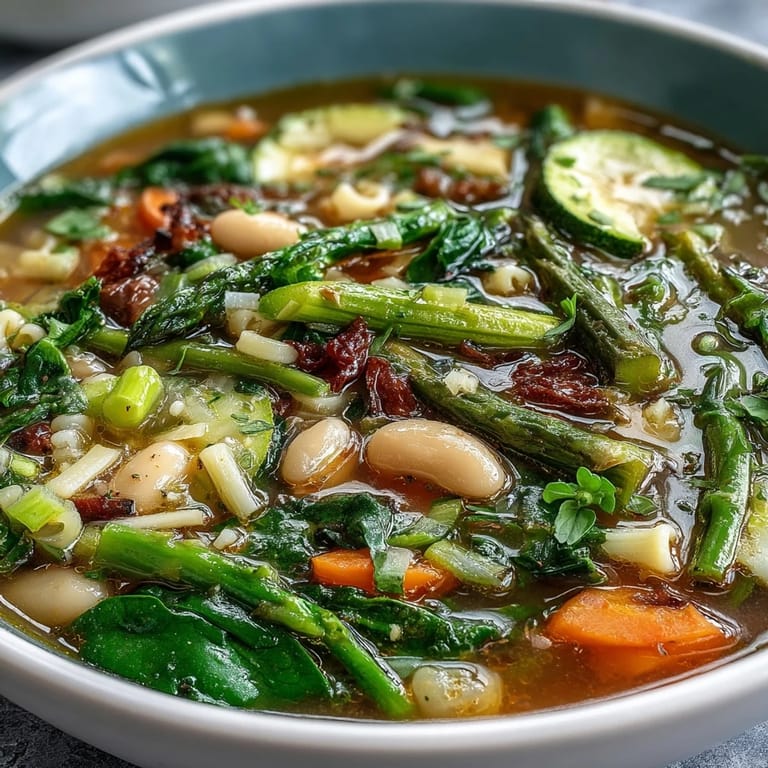
Pin My neighbor came over one evening when I was making this, drawn by the smell wafting through our shared wall, and we ended up standing in my kitchen talking for an hour while the soup simmered. She told me stories about her mother's kitchen in Naples, and I realized that food like this becomes a bridge between people—it holds memories and invites new ones at the same time. That's when cooking stopped being just about hunger and became about connection.
Why Spring Vegetables Matter in This Soup
Spring vegetables have a delicate sweetness and tender texture that heavier root vegetables simply don't offer, and this soup celebrates that lightness rather than fighting against it. Asparagus especially brings an elegant, almost grassy note that makes you feel like you're eating something closer to the earth, while peas and zucchini round out the flavor with their own quiet sweetness. The combination teaches you something about seasonal cooking—that some dishes are meant for certain times of year because that's when they actually taste alive.
Making It Your Own Without Losing the Soul
This is the kind of recipe that welcomes improvisation because the structure is strong enough to handle it. If you have fava beans instead of peas, use them; if green beans call to you from the market instead of asparagus, that works too. The key is respecting the cooking times—delicate vegetables go in toward the end, sturdy ones go in earlier, and that rhythm stays the same no matter what you're putting in the pot.
Serving and Storage Wisdom
Serve this soup hot with crusty bread if you want it to feel like a complete meal, or simply on its own if you're keeping things light. It keeps beautifully in the refrigerator for three or four days, and something magical happens overnight as the flavors meld and deepen, making the second bowl even better than the first. The pasta might soften a bit more, but that's not a flaw—it just means the soup becomes creamier and more comforting.
- Add an extra squeeze of lemon juice right before eating if you want to wake up the flavors again after they've been sitting together for a day.
- If you're making it vegan, a drizzle of really good olive oil or a sprinkle of nutritional yeast gives you the richness you'd normally get from cheese.
- Leftover soup reheats gently on the stove over medium heat, and sometimes tastes even better than it did fresh.
 Pin
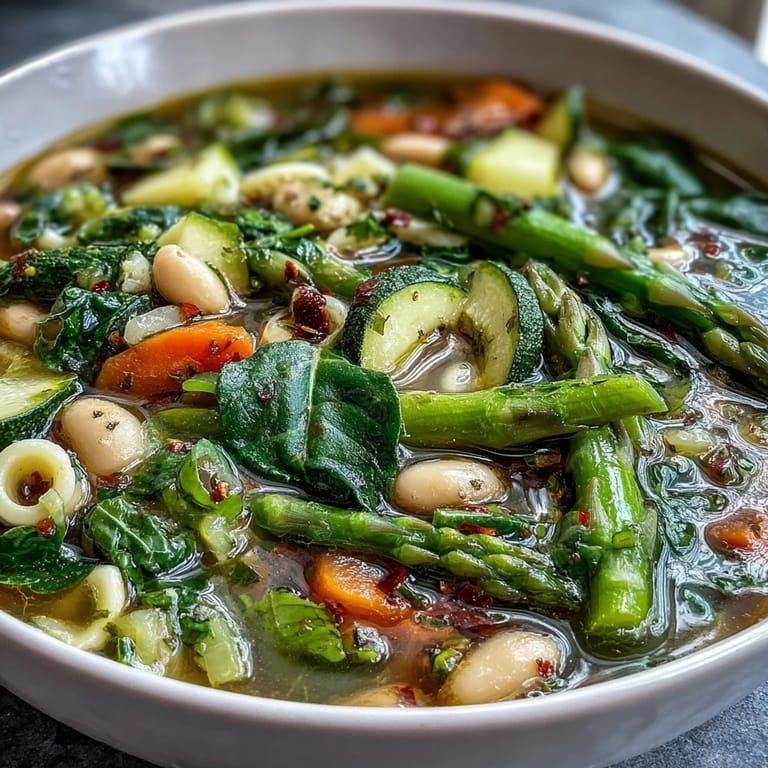
Pin This soup has become my answer to almost every spring craving—when the weather shifts and you want something nourishing but not heavy, something that tastes like the season itself. Make it once and you'll understand why it's worth returning to again and again.
Recipe Q&A
- → Can I substitute other vegetables for asparagus?
Yes, spring vegetables like fava beans or green beans can be used as alternatives to asparagus for a similar fresh taste.
- → What kind of beans work best in this soup?
White beans such as cannellini or Great Northern are ideal for their creamy texture and mild flavor.
- → Is it possible to make this dish gluten-free?
Absolutely. Use gluten-free small pasta like gluten-free ditalini or shells to maintain texture without gluten.
- → How can I make this dish vegan?
Simply omit the Parmesan cheese or replace it with a plant-based alternative to keep the dish fully plant-based.
- → What herbs enhance the flavor of this soup?
Dried thyme, oregano, and fresh parsley contribute aromatic and fresh herbaceous notes to the broth.
- → Can this soup be served chilled?
While typically enjoyed warm, chilling the soup creates a refreshing option for warmer days.