 Pin
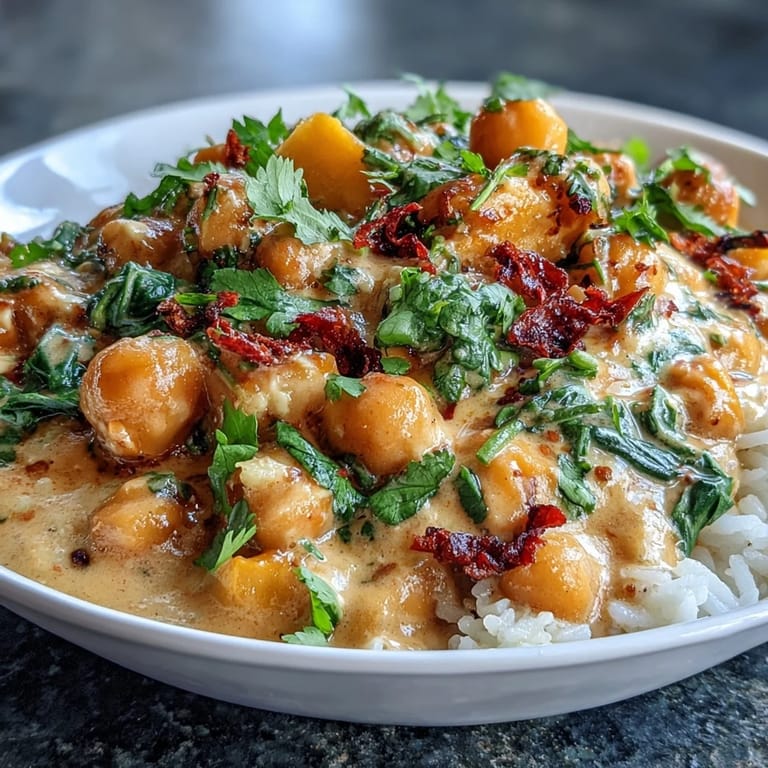
Pin Tuesday night, my partner came home asking what smelled so good, and I realized I'd been stirring this mango coconut curry for barely ten minutes. That's when it hit me—sometimes the best meals are the ones you throw together on a whim, not the ones you plan for days. This curry emerged from my desperate need to use up a ripe mango before it turned, paired with a can of chickpeas and some coconut milk gathering dust on the shelf. What started as a practical solution turned into something so vibrant and comforting that I've made it at least twice a week since.
I made this for my friend Maya last month when she mentioned offhand that she'd gone vegan, and I could see the relief wash over her face when I served it—not because it was vegan, but because it was genuinely delicious and nothing felt sacrificed. She had seconds and asked for the recipe immediately. That moment reminded me that the best food is the kind that brings people together without making anyone feel like they're missing out.
Ingredients
- Basmati or jasmine rice (1 cup): The fragrant varieties cook fluffier and actually soak up the curry sauce better than regular white rice, and the aroma while it's cooking sets the whole mood for dinner.
- Coconut oil (1 tbsp): Use refined coconut oil if you don't want coconut flavor to dominate, or go unrefined if you want that tropical vibe to come through every bite.
- Onion (1 small), garlic (2 cloves), and ginger (1-inch piece): These three are your flavor foundation—don't skip the ginger because it adds a subtle warmth that ties everything together.
- Red bell pepper (1): Red peppers have more natural sweetness than other colors, which complements the mango beautifully and makes the curry pop visually.
- Fresh or frozen mango (1 1/2 cups): Fresh mango is best, but frozen works perfectly and actually stays firmer during cooking if that matters to you.
- Canned chickpeas (1 can, 15 oz): Always rinse them well—I learned this the hard way when I forgot once and the curry came out gluey and disappointing.
- Full-fat coconut milk (1 can, 13.5 oz): Light coconut milk will make this thinner and less satisfying, so resist the temptation unless you're specifically going for a brothier curry.
- Curry powder (2 tbsp), turmeric (1/2 tsp), salt, and black pepper: Mild or medium curry powder is forgiving for beginners, but medium gives better flavor development without overwhelming heat.
- Lime juice (1 tbsp) and optional maple syrup or agave: The lime is non-negotiable—it brightens everything and prevents the curry from tasting flat, while sweetener is your personal choice depending on how ripe your mango is.
- Fresh cilantro (1/4 cup): Cilantro tastes like either happiness or soap depending on your genes, so taste a tiny piece first if you're unsure about yourself.
Tired of Takeout? 🥡
Get 10 meals you can make faster than delivery arrives. Seriously.
One email. No spam. Unsubscribe anytime.
Instructions
- Start your rice while everything else waits:
- Combine rice, water, and salt in a medium saucepan and bring it to a boil—you want to hear that active bubbling. Reduce the heat to low, cover it, and let it simmer untouched for 12 to 15 minutes until the water absorbs and the grains are tender.
- Get your aromatics dancing:
- Heat coconut oil in a large skillet over medium heat until it shimmers, then add your chopped onion and let it cook for 2 to 3 minutes until it starts turning translucent and softens. You'll know it's ready when it stops smelling sharp and becomes sweet.
- Build flavor with ginger and garlic:
- Add your minced garlic, grated ginger, and diced red bell pepper to the onions and stir frequently for about 2 minutes. The kitchen will smell incredible at this point—that's your signal that the spices are waking up.
- Bring in the tropical elements:
- Pour in your diced mango, drained chickpeas, coconut milk, curry powder, turmeric, salt, and black pepper, stirring everything together until the curry looks cohesive. Don't worry if it seems loose—it's supposed to be slightly soupy at this stage.
- Let it simmer and meld:
- Reduce the heat to medium-low and let the curry bubble gently for 6 to 8 minutes, stirring occasionally, while the flavors blend and the sauce thickens slightly. You're looking for small bubbles rising to the surface, not an aggressive boil.
- Finish with brightness:
- Stir in the lime juice and maple syrup if you're using it, then taste the curry and adjust salt or spices to match your preference. Sometimes I add a tiny pinch more curry powder here if it tastes too mellow.
- Plate and celebrate:
- Fluff your rice with a fork and divide it among bowls, then ladle the curry over the top and scatter fresh cilantro across everything. The green garnish isn't just pretty—it adds a fresh note that cuts through the richness perfectly.
 Pin
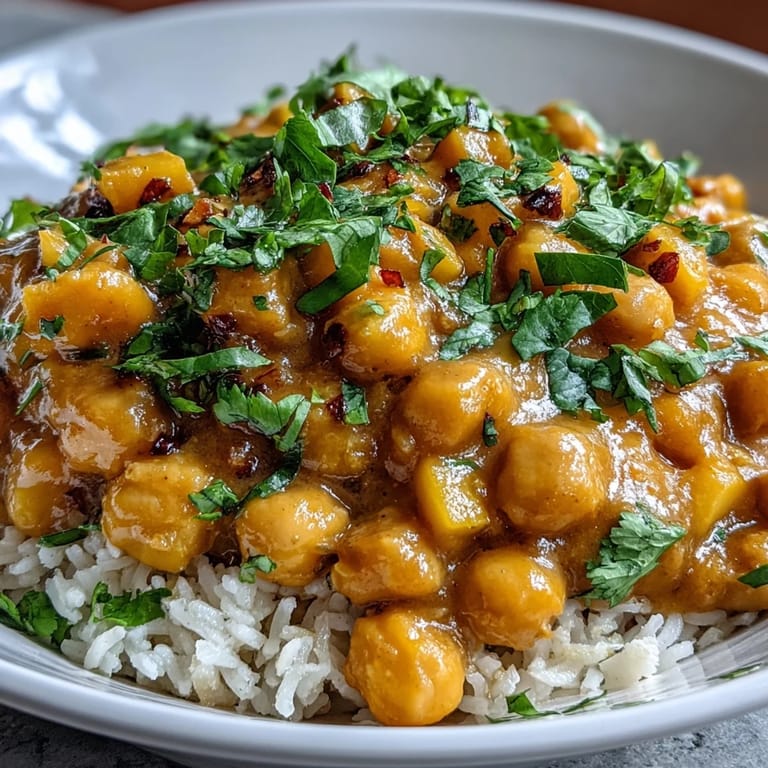
Pin My roommate asked if this was restaurant curry, and when I said I'd made it in twenty minutes, she didn't believe me until I showed her the empty skillet. That's when I understood why I keep coming back to this recipe—it tastes like effort but requires almost none, which means you can actually make it on nights when you're tired or busy.
Why Mango Works Better Than You'd Think
Mango in curry sounds unusual until you taste it, and then you realize it's been hiding in plain sight the whole time. The fruit brings natural sweetness without needing sugar, plus it adds a subtle creaminess when it breaks down in the sauce. What surprised me most is how the mango's tartness works with the lime to keep the curry from feeling one-dimensional.
Customizing Your Curry Without Overthinking It
I've made this with pineapple instead of mango on nights when my mango was going brown, and honestly it was tangier and a little less creamy but equally good. The beauty of this recipe is that it's a framework, not a rulebook—chickpeas can swap for white beans or lentils, bell pepper can trade places with diced zucchini or spinach stirred in at the end. The curry powder and coconut milk are your non-negotiables because those are doing the actual heavy lifting flavor-wise.
Making It Your Own Heat Level
This recipe lands in the mild-to-medium zone, which feels safe for most people but might bore spice lovers. I've discovered that adding a finely minced chili or 1/4 tsp cayenne pepper with the onions gives you gentle heat that builds rather than hits all at once. If you go the chili route, start small—you can always add heat, but you can't take it back once it's in the pot.
- Frozen mangoes and pineapples work exactly like fresh in this curry, so use whatever you have.
- Taste as you finish cooking so you can adjust lime juice, salt, or sweetness to match your exact preferences.
- Make extra curry base without the mango and freeze it—just thaw and add fresh mango when you want a quick meal later.
 Pin
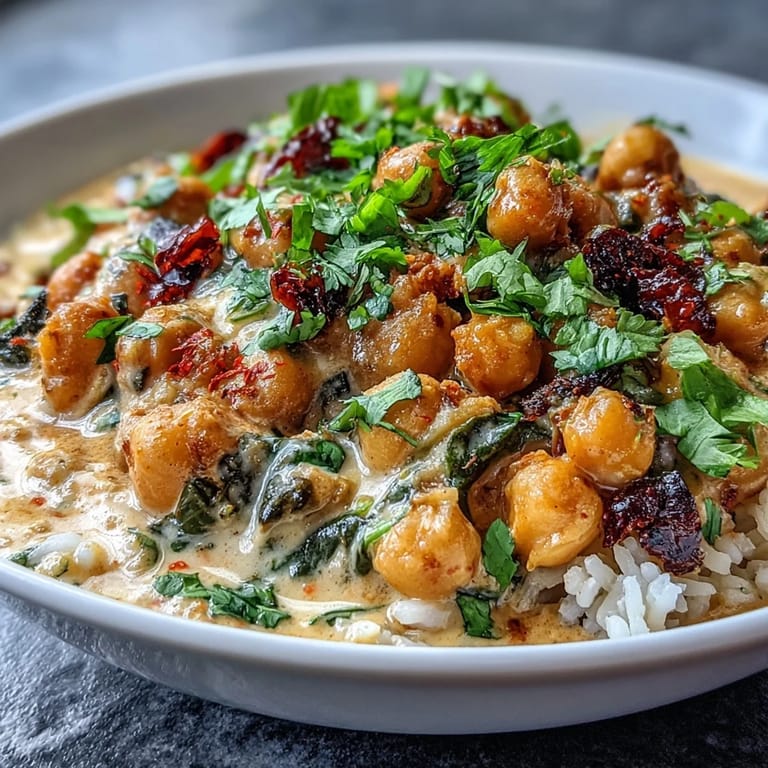
Pin This curry became my Tuesday night answer to "what's for dinner," and I think it'll become yours too. There's something magical about a meal that tastes like you spent hours cooking but actually lets you sit down to eat within twenty minutes.
Recipe Q&A
- → What type of rice works best with this dish?
Basmati or jasmine rice complements the curry well, adding fluffy texture and subtle fragrance.
- → Can I adjust the spice level?
Yes, add cayenne pepper or chopped chili with the onion to increase heat according to preference.
- → Is fresh mango essential?
Fresh or thawed frozen mango both work well, offering sweetness and tropical flavor to the sauce.
- → Can I swap ingredients for dietary needs?
Yes, pineapple can replace mango for a tangier taste, and light coconut milk may be used for a lighter version.
- → How to best garnish the dish?
Fresh chopped cilantro adds a bright, herbaceous finish that complements the creamy curry.
- → What kitchen tools are recommended?
A medium saucepan for rice, large skillet for curry, chef’s knife, cutting board, and measuring tools are ideal.