 Pin
Pin I discovered this bowl on my phone at midnight, scrolling through videos of people assembling lunch with almost meditative calm. The next morning, I had leftover salmon from dinner and some cold rice sitting in the fridge, so I decided to try it. What struck me wasn't just how quick it came together—under thirty minutes from craving to eating—but how each component stayed distinct while tasting like they'd been meant for each other all along. That first bite, with the creamy avocado, salty nori, and flaky salmon all hitting at once, felt like the internet had finally done something useful.
I made this for my roommate one afternoon when she came home exhausted from back-to-back meetings. She watched me arrange the components in the bowl with mild skepticism until the first forkful, then asked for the recipe before even finishing. Now she makes it on Thursdays, her standing lunch-for-dinner, and somehow it tastes like care when someone else cooks it.
Ingredients
- 1 cooked salmon fillet (about 170 g / 6 oz): Use leftover salmon if you have it, or pan-sear fresh if you're starting from scratch—either way, flaking it by hand lets you feel when it's perfect, not mushy.
- 2 cups cooked white rice (preferably leftover, chilled): Cold rice is your friend here; it won't turn mushy when warmed and actually absorbs the soy mixture better than hot rice.
- 1 tablespoon soy sauce: This is the backbone of flavor, so don't skip it even though the amount seems small.
- 1 teaspoon sesame oil: Just a drizzle, but it makes everything taste roasted and intentional.
- 1 tablespoon Japanese mayonnaise (e.g., Kewpie): Kewpie is creamier and less sharp than regular mayo, which is why this recipe specifically asks for it—regular mayo will make it taste harsh.
- 1 teaspoon Sriracha or chili sauce (optional): Add this if you like heat, but know it'll announce itself in every bite.
- 1 avocado, sliced: Ripe but still firm enough to hold its shape—cut it just before assembling so it doesn't brown.
- 1 sheet roasted seaweed (nori), cut into squares: The seaweed is how you eat this dish; it's the fork and the flavor boost combined.
- 1 teaspoon toasted sesame seeds: Toast them yourself if you have time—they're nuttier and crispier than store-bought.
- 2 spring onions, thinly sliced: The bright, sharp bite that keeps this from feeling too heavy or rich.
- Pickled ginger (optional): A small amount adds a clean, palate-cleansing sharpness that balances the mayo.
- Lemon or lime wedges (optional): Squeeze a little over everything at the end if something feels like it needs waking up.
Tired of Takeout? 🥡
Get 10 meals you can make faster than delivery arrives. Seriously.
One email. No spam. Unsubscribe anytime.
Instructions
- Prepare the salmon:
- Place your cooked salmon in a microwave-safe bowl and flake it apart with a fork, breaking it into pieces that feel substantial but still come apart on the tongue. Don't over-shred it into dust—you want flakes, not paste.
- Layer the rice:
- Pile the cooked rice on top of the salmon. If it's leftover rice that's been sitting in the fridge, sprinkle it very lightly with water to soften it without making it soggy, then cover the bowl with a plate or plastic wrap.
- Warm everything together:
- Microwave on high for 1 to 2 minutes until the whole bowl feels warm and the ingredients have started to meld slightly. The goal is warmth, not heat—you're not trying to cook anything further.
- Season and mix:
- Drizzle the soy sauce and sesame oil over the warm mixture and stir until the rice and salmon are evenly coated and the flavors start to coat your mouth. This is when the bowl actually becomes a dish instead of just a bowl of stuff.
- Add richness and heat:
- Dollop the Japanese mayonnaise over the top and add Sriracha if you want it, stirring gently so the mayo coats everything in streaks rather than disappearing completely.
- Finish with toppings:
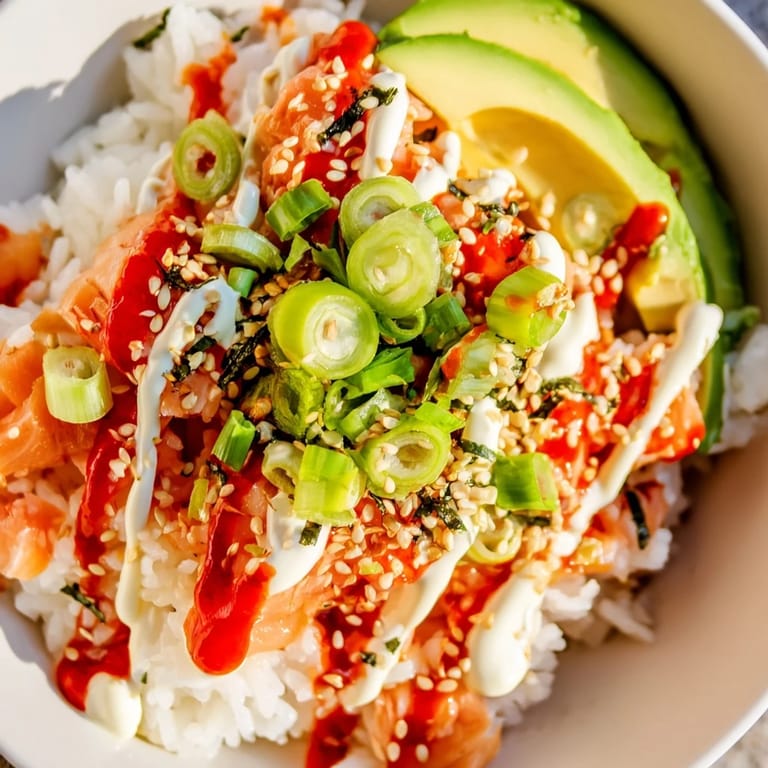
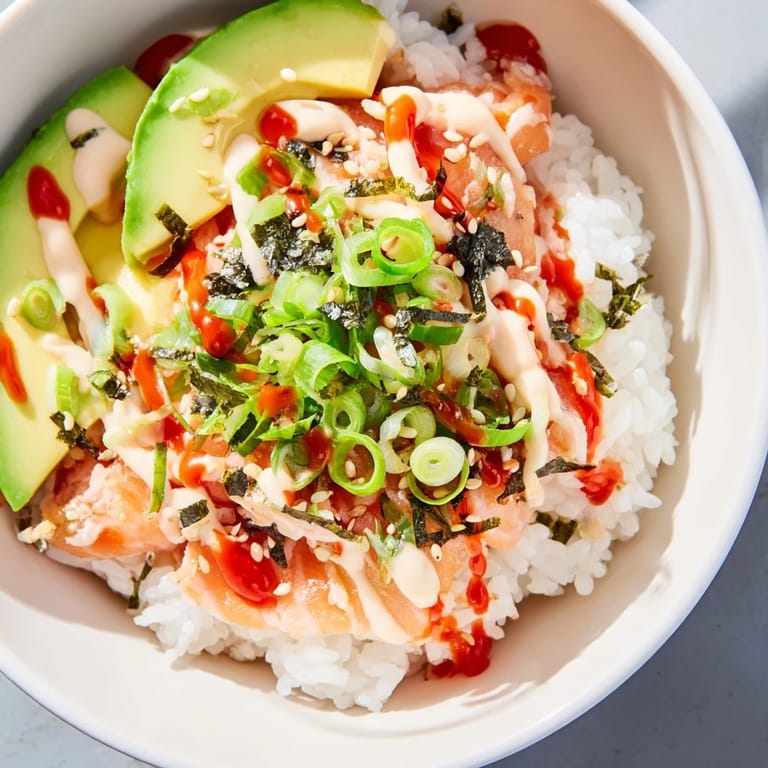
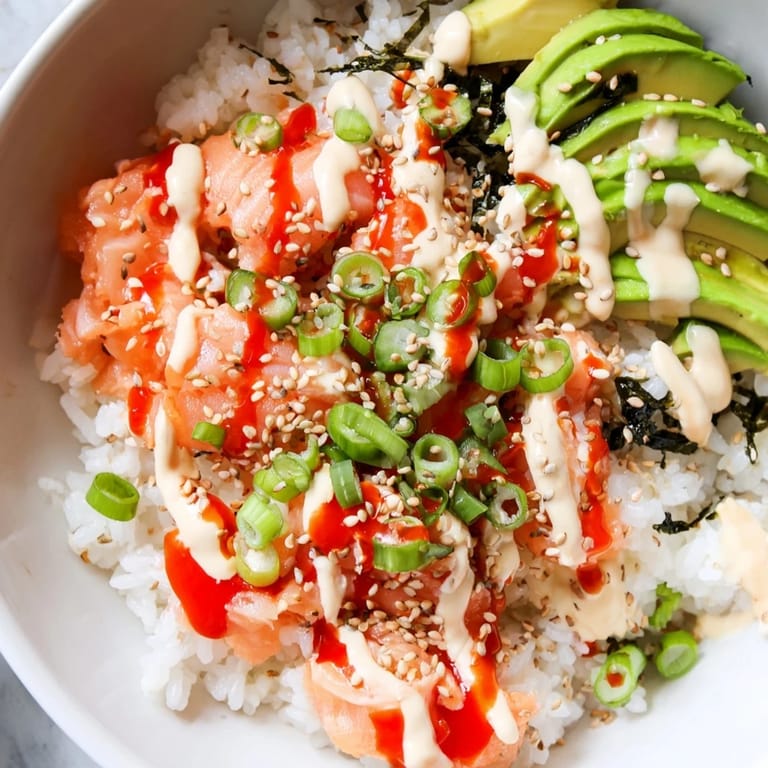
- Arrange the avocado slices, spring onions, toasted sesame seeds, and pickled ginger on top, creating little pockets of texture and flavor that you'll hit as you eat. Make it pretty because presentation is part of why this dish feels like more than just lunch.
- Serve and eat:
- Place the nori squares and lime wedges on the side and use the seaweed as a scoop, layering a little rice-salmon mixture onto each square before eating it. This method keeps everything from getting soggy and is genuinely fun to eat.
 Pin
Pin The first time I made this for someone else, I realized food doesn't always need to be complicated to feel like you put thought into it. Watching someone eat something you assembled for them with that moment of quiet satisfaction—that's when this stopped being a TikTok trend and became something I actually care about making.
Why Leftover Rice Is the Secret Ingredient
Cold, leftover rice is genuinely better for this bowl than fresh rice, and it's one of those cooking truths that feels backwards until you try it. Fresh rice is too tender and absorbs liquid too quickly, turning mushy the second anything wet touches it. Cold rice has been sitting long enough for the starches to settle and firm up, so when you warm it gently with the soy sauce and sesame oil, it absorbs the flavors without falling apart. This is also why this recipe is perfect for a clean-out-the-fridge situation—you're not wasting rice, you're actually making it better.
The Importance of Assembly Order
This recipe feels simple because it is, but the order matters more than you'd think. Mixing the soy and sesame oil into the warm rice first means those flavors coat every grain before the mayo arrives, which is why the bowl tastes balanced instead of mayo-forward. Then the cold toppings—avocado, spring onions, pickled ginger—get added last so they stay crisp and don't get warm and weird. It's the difference between a bowl where every element shines and a bowl where everything tastes blended together.
Building Your Own Variations
Once you understand the skeleton of this bowl, you can dress it up however you want without losing what makes it work. The core is the warm rice-salmon base with soy and sesame, the mayo for creaminess, and the crispy, fresh toppings that cut through all that richness. Beyond that, add whatever feels right—kimchi for funk, cucumber for brightness, shredded carrots for crunch, or even a soft-boiled egg if you want more protein and richness.
- Brown rice, farro, or sushi rice all work if you want to change the base texture.
- Smoked salmon adds depth, canned salmon works in a pinch, or even leftover cooked white fish can stand in for the salmon.
- Tamari instead of soy sauce keeps it gluten-free if that matters for your table.
 Pin
Pin This is the kind of recipe that reminds you that the best meals don't need hours or obscure ingredients—just good components treated with intention. Make it when you're hungry and want to feel like you're taking care of yourself without the performance of it.
Recipe Q&A
- → Can I use brown rice instead of white rice?
Yes, brown rice works well and adds extra fiber, though cooking time and texture will vary slightly.
- → Is it possible to prepare this without a microwave?
Absolutely. Warm the salmon and rice gently on the stove or in an oven-safe dish to achieve similar results.
- → What alternatives exist for Japanese mayonnaise?
You can substitute with regular mayonnaise or a vegan mayo to adjust creaminess based on preference.
- → How should the seaweed sheets be used?
Use the roasted seaweed sheets to scoop bites of the salmon and rice mixture for added texture and flavor contrast.
- → Can I add vegetables to this bowl?
Yes, options like kimchi, cucumber, or shredded carrots enhance freshness and complement the flavors well.