 Pin
Pin There's this moment every time I make teriyaki beef bowl when the kitchen fills with that unmistakable aroma of soy and ginger hitting a hot pan, and suddenly everyone emerges from wherever they were to see what's cooking. My neighbor actually invited herself over once after catching that smell drifting over the fence, and I couldn't say no. It's become my go-to when I need something that feels special but doesn't demand hours in the kitchen, and honestly, it's saved me on countless weeknight dinners that felt like they needed a little magic.
I made this for my partner on a rainy Tuesday when we were both too tired to think about cooking, and somehow watching the beef sizzle and the vegetables soften turned the whole evening around. There's something grounding about standing at the stove while steam rises up, and by the time we sat down to eat, the day didn't feel heavy anymore. That's when I realized this bowl had become more than just dinner, it's become a small ritual that reminds us to slow down.
Ingredients
- Flank steak or sirloin, thinly sliced: The thinner you slice it, the more tender it becomes once cooked, and using a partially frozen steak makes this so much easier than trying to slice room-temperature meat.
- Cornstarch for beef coating: This creates a subtle texture that helps the sauce cling beautifully and keeps the meat from sticking to the pan.
- Soy sauce: This is your umami anchor, so don't skimp on quality here, and if you're cooking for someone with gluten concerns, tamari works just as well.
- Mirin: It brings a natural sweetness and silky texture that honey alone can't replicate, though honestly, if you're in a pinch, brown sugar mixed with a splash of water works in a crisis.
- Rice vinegar: Just a subtle acidic note that prevents the sauce from tasting one-dimensional and flat.
- Fresh ginger and garlic: Minced fresh is non-negotiable here, ground versions will make the sauce taste dusty and tired.
- Cornstarch slurry: This is what transforms the sauce from thin and watery into something silky and coating, the trick is to whisk it in slowly while simmering so it doesn't lump.
- Mixed vegetables: Carrots, bell pepper, and broccoli are my base, but this is where you use what's in your fridge without guilt.
- Rice: Fluffy white rice or nutty brown rice both work beautifully, depending on your mood and what you have on hand.
- Sesame seeds and spring onions: The garnish is where you add that last flourish that makes people think you spent way more effort than you did.
Tired of Takeout? 🥡
Get 10 meals you can make faster than delivery arrives. Seriously.
One email. No spam. Unsubscribe anytime.
Instructions
- Build your sauce foundation:
- In a small saucepan, combine soy sauce, mirin, honey, rice vinegar, minced garlic, and grated ginger over medium heat. Let it come to a gentle simmer and watch as the garlic starts to perfume everything around you. Once you see those small bubbles breaking the surface, prepare your cornstarch slurry by mixing cornstarch with water until it's completely smooth, then whisk it in slowly while stirring constantly, letting the sauce thicken to a glossy consistency that coats the back of a spoon.
- Prepare your beef for the pan:
- Slice your partially frozen steak into thin strips and toss them with cornstarch until each piece is lightly coated. This coating helps them brown beautifully and prevents them from stewing in their own liquid.
- Sear the beef until golden:
- Heat vegetable oil in a large skillet or wok over high heat until it's shimmering and almost smoking, then add your beef in a single layer. Don't move it for the first minute or two, let it develop that deep brown crust, then stir and cook for another minute or so until it's just cooked through with no gray areas.
- Stir-fry your vegetables until tender-crisp:
- In the same skillet, add your carrots, bell pepper, and broccoli florets, stirring constantly for three to four minutes so they stay vibrant and don't turn mushy. You want them to have some texture and resistance when you bite down.
- Bring it all together:
- Return the beef to the skillet, pour that glossy teriyaki sauce over everything, and toss gently for about a minute until the sauce is coating every surface. Taste it here, and if something feels off, you can adjust with a splash of vinegar for brightness or a drizzle of honey for sweetness.
- Serve with intention:
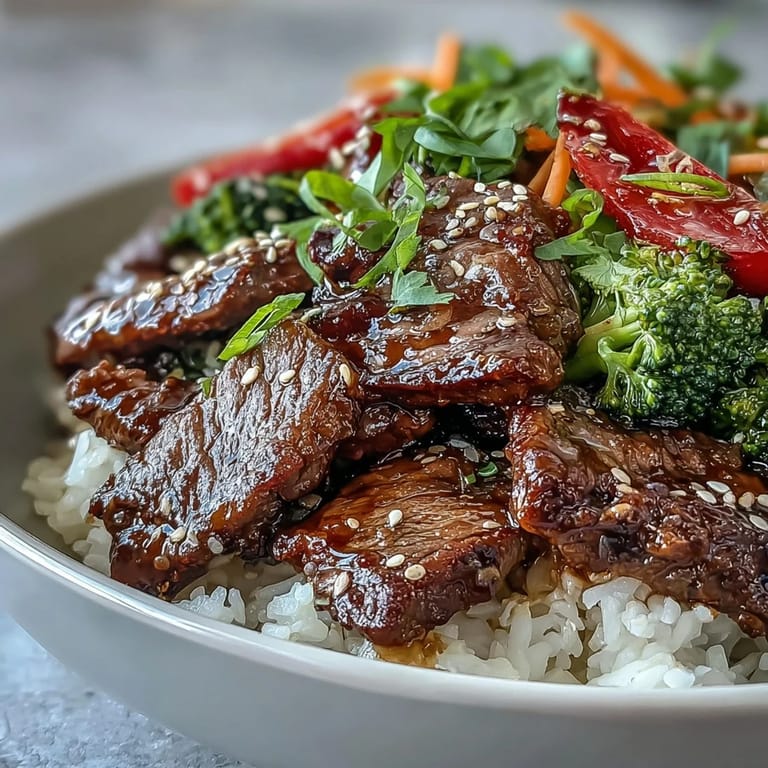
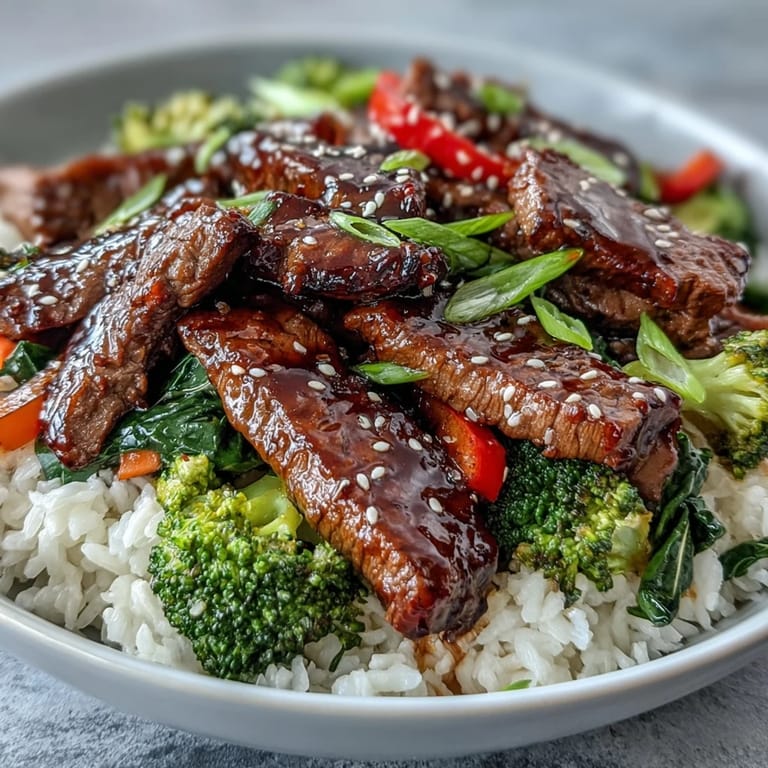
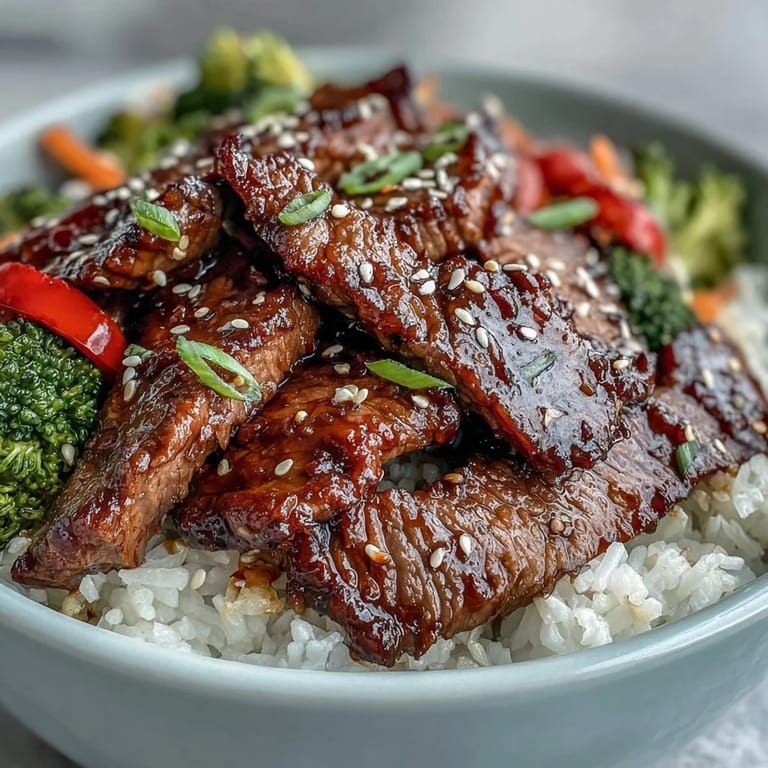
- Divide hot rice between bowls, top generously with the beef and vegetable mixture, then scatter fresh spring onions and sesame seeds over the top. The warm rice absorbs any sauce that pools at the bottom, making every bite cohesive and complete.
 Pin
Pin My daughter called this her favorite dinner when she was learning to use chopsticks, and watching her concentrate so hard on picking up those tender beef slices while grinning about getting sauce on her nose made me understand why people talk about food bringing families together. It stopped being just a bowl of beef and rice, and became this little moment I wanted to keep creating over and over again.
The Magic of High Heat
High heat is the secret ingredient that nobody talks about, because it's the difference between beef that tastes seared and alive versus beef that tastes boiled and tired. When you get that pan properly hot, the outside browns in seconds while the inside stays tender and pink, and the vegetables get these tiny charred edges that add depth. I learned this the hard way after years of cooking at medium-high and wondering why restaurant versions tasted so much better, and switching to truly high heat felt like unlocking a cheat code in my kitchen.
Customizing Your Bowl
The beauty of this dish is that it adapts to whatever you have available or whatever your body is craving that day. I've made it with chicken on nights when I forgot to thaw beef, with tofu for vegetarian friends who said it tasted just as satisfying, and with snap peas and mushrooms when my farmers market haul leaned that direction. The sauce is so forgiving that as long as you keep the ratios roughly the same, you can swap ingredients without losing the soul of the dish.
The Science Behind the Sauce
That glossy, clinging sauce isn't just delicious, it's actually a lesson in how starch works as a thickener and how acid balances sweetness to create something more interesting than just honey and soy. Mirin brings a depth that regular sugar can't touch because it's already fermented, giving it an almost caramel-like complexity, and the rice vinegar keeps everything from feeling cloying or one-note. The beauty is in understanding that each component has a job, so you never feel like you're just randomly mixing things together hoping for the best.
- If your sauce breaks or becomes too thin, whisk in a bit more cornstarch slurry and it'll come right back together.
- Make extra sauce because everyone will want to pour it over rice even after the bowl is empty.
- Taste the sauce before adding it to the beef because this is your moment to adjust sweetness and saltiness to your preference.
 Pin
Pin This bowl has become my answer to the question of what to cook when I want something that tastes like it took effort but actually feels effortless. It's proof that simple ingredients treated with intention and high heat can create something that feels worth celebrating.
Recipe Q&A
- → What cut of beef works best?
Flank steak or sirloin are ideal choices because they're lean, tender, and slice beautifully against the grain. Look for pieces with minimal connective tissue for the most tender results.
- → Can I make the teriyaki sauce ahead?
Absolutely. Prepare the sauce up to a week in advance and store it in an airtight container in the refrigerator. Reheat gently on the stovetop, adding a splash of water if it has thickened too much.
- → What vegetables can I substitute?
Snap peas, edamame, shiitake mushrooms, or baby corn all work wonderfully. For a heartier version, try adding diced sweet potato or bok choy during the vegetable stage.
- → How do I get the sauce perfectly thick?
The cornstarch slurry is key. Whisk it thoroughly to eliminate lumps before adding to the simmering sauce. Cook for 2-3 minutes while stirring constantly until it coats the back of a spoon.
- → Is this gluten-free?
Traditional teriyaki contains gluten from soy sauce. Simply substitute tamari or a certified gluten-free soy sauce blend to make this entirely gluten-free without sacrificing flavor.
- → Can I use brown rice instead?
Brown rice adds nutty flavor and extra fiber. Just note that brown rice typically takes 45-50 minutes to cook, so prepare it in advance or use quick-cooking varieties to keep the total time reasonable.