 Pin
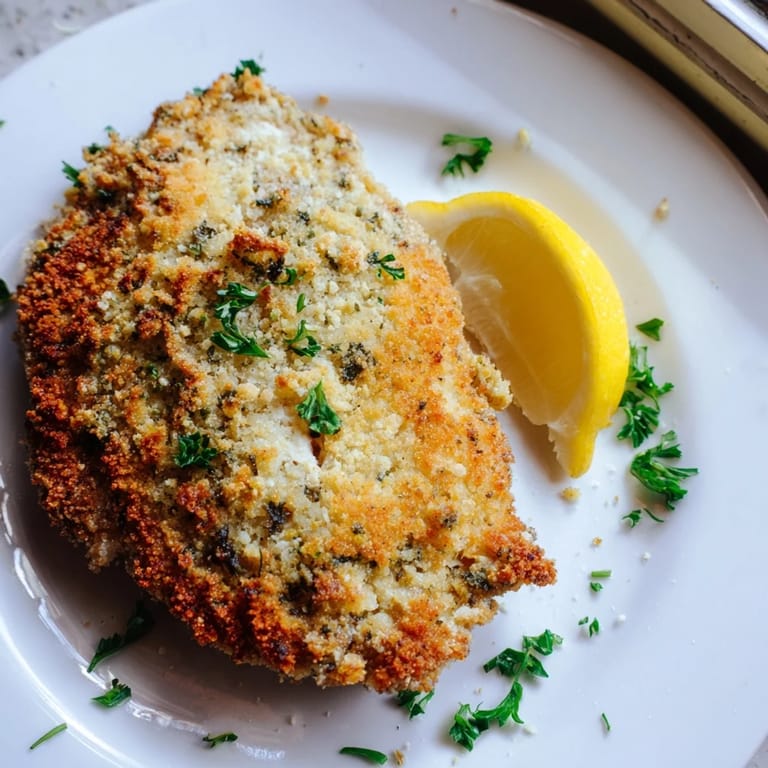
Pin My kitchen smelled like a trattoria the first time I nailed this dish, and honestly, it was an accident. I'd grabbed panko instead of regular breadcrumbs because I wasn't paying attention, pounded the chicken a bit thinner than usual because I was stressed about timing, and somehow everything came together golden and impossibly crispy. That's when I realized this recipe isn't fussy—it just wants you to show up and pay a little attention.
I made this for my partner's parents on a random Tuesday, and his mom asked for the recipe before dessert was even served. That's the moment I knew it wasn't just food—it was the kind of dish that makes people feel cared for, even when you've spent all of 20 minutes in the kitchen.
Ingredients
- Boneless, skinless chicken breasts (4, about 150 g each): The quality here matters more than anywhere else—look for breasts that feel firm and are roughly the same thickness so they cook evenly.
- Large eggs (2): These are your glue; they help the breadcrumb mixture cling to every surface, so don't skip the whisking step.
- Milk (2 tablespoons): A splash of milk thins the egg wash slightly, making it easier to work with and more forgiving.
- Grated Parmesan cheese (1 cup, 100 g): Always freshly grated if possible—pre-shredded versions have anticaking agents that can make the coating less crispy.
- Panko breadcrumbs (1 cup, 100 g): These chunky crumbs are the secret to that shatteringly crisp exterior that regular breadcrumbs just can't achieve.
- All-purpose flour (1/2 cup, 60 g): This first layer helps the egg mixture stick and creates a seal that keeps moisture in while the outside crisps up.
- Garlic powder (1 teaspoon): It dissolves into the coating, adding a subtle savory depth without any raw-garlic harshness.
- Dried oregano (1 teaspoon): This herb is what makes it feel Italian, but don't use fresh here—the oil content can make the coating less crispy.
- Salt and black pepper (1/2 teaspoon each): Season generously because the coating needs flavor; the chicken itself gets its own light seasoning too.
- Olive oil or vegetable oil (1/3 cup, 80 ml): Use olive oil if you want that Mediterranean flavor, or vegetable oil for a cleaner taste—either works beautifully.
- Lemon wedges and fresh parsley: These aren't just garnish; they brighten the richness of the crispy coating and make each bite feel fresh.
Tired of Takeout? 🥡
Get 10 meals you can make faster than delivery arrives. Seriously.
One email. No spam. Unsubscribe anytime.
Instructions
- Pound the chicken to an even thickness:
- Place each breast between two sheets of plastic wrap and use a meat mallet or rolling pin to gently pound until it's about 1/2 inch thick—this ensures even cooking and helps the meat stay tender. You'll hear the satisfying sound of resistance giving way, which means you're done.
- Season simply:
- Sprinkle both sides lightly with salt and pepper; this is your baseline flavor, and the Parmesan coating will carry most of the seasoning.
- Set up your breading station:
- Line up three shallow bowls: flour in the first, whisked eggs with milk in the second, and the Parmesan-panko mixture in the third. Having everything ready means you can work quickly and the coating will adhere better.
- Coat with intention:
- Dredge each chicken breast in flour, shake off the excess, dip it into the egg mixture so it's fully coated, then press it firmly into the Parmesan-breadcrumb mixture—this pressing step is what creates that glorious crust. Work over the bowl so you don't waste the coating.
- Heat your oil properly:
- Pour the oil into a large skillet and heat it over medium-high heat for about 2 minutes; you'll know it's ready when a breadcrumb sizzles immediately upon contact. Don't rush this—cold oil makes soggy coatings.
- Fry until golden:
- Working in batches so you don't crowd the pan, cook each cutlet for 3 to 4 minutes per side until it's deep golden brown and the internal temperature reaches 165°F (74°C). Listen for that gentle sizzle the whole time—it tells you the oil is doing its job.
- Drain and rest briefly:
- Transfer the cooked cutlets to a paper towel-lined plate; this absorbs excess oil while they cool slightly and become even crispier.
- Serve with brightness:
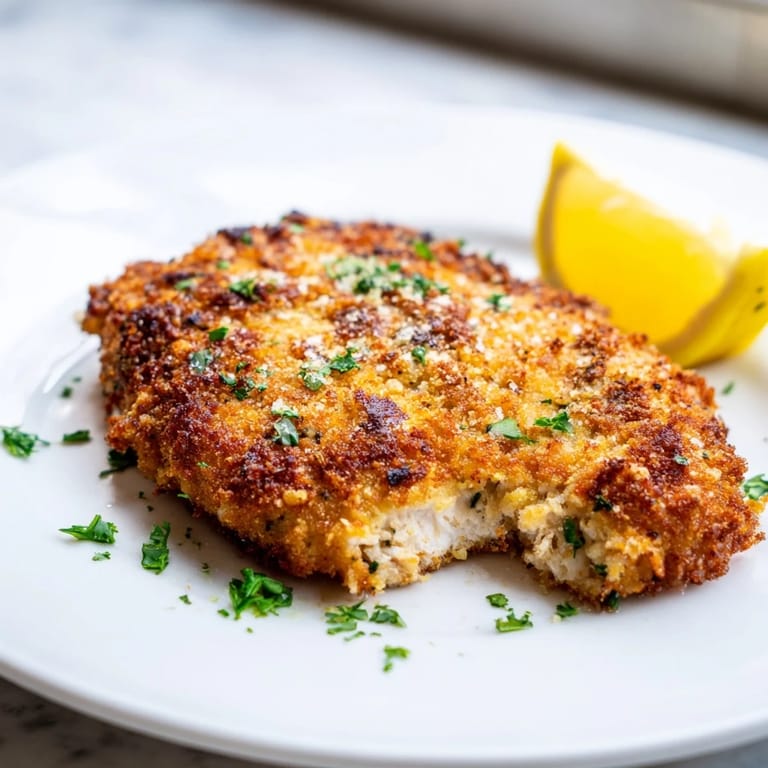
- Plate hot with lemon wedges and a scatter of fresh parsley, then squeeze the lemon over just before eating—that acid cuts through the richness in the best way.
 Pin
Pin There's something quietly magical about that moment when you bite into a cutlet and the Parmesan crust shatters, the hot chicken releasing steam underneath. It's humble food that somehow feels fancy, which is exactly why people come back for seconds.
The Secret to Maximum Crispiness
The panko is non-negotiable, but here's what really changed things for me: patting the pounded chicken dry with paper towels before you start the breading process. Any surface moisture turns to steam, which works against crispiness, so that extra 10 seconds makes a measurable difference. I also learned to let the coated cutlets sit on a plate for about 5 minutes before frying—this allows the coating to set and cling better, reducing any breading that falls off into the oil.
Variations That Actually Work
This recipe is forgiving in ways that surprise me. I've added a pinch of chili flakes to the breadcrumb mixture for heat, swapped half the panko for crushed hazelnuts for a nuttier crunch, and even mixed a tablespoon of pesto into the egg wash for an herby twist. Each version feels intentional rather than experimental, which is the mark of a truly flexible recipe.
What to Serve Alongside
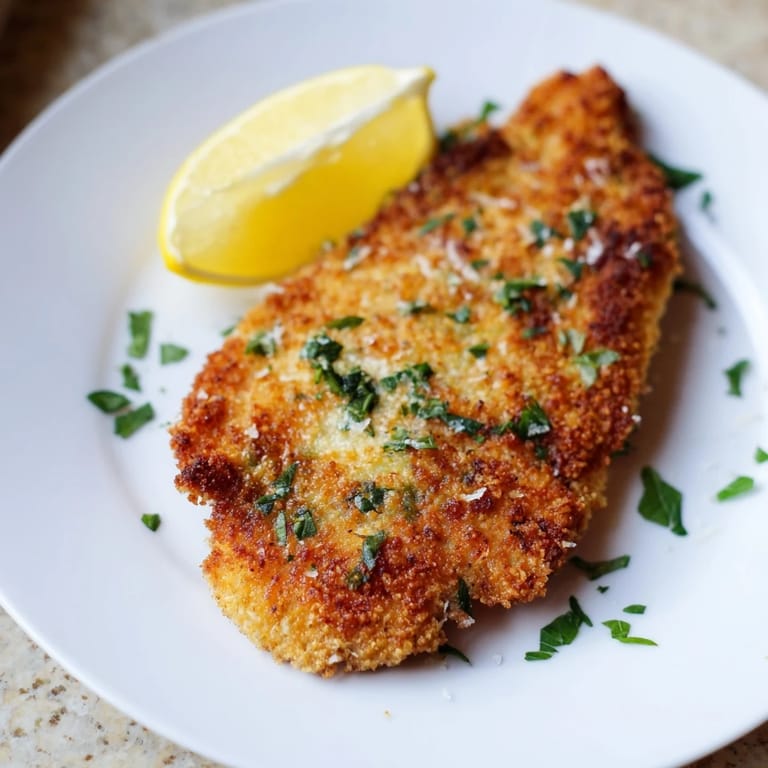
The beauty of a crispy cutlet is that it plays well with almost anything, though I've found certain pairings feel especially right. A peppery arugula salad dressed with lemon and olive oil lets the cutlet shine without competing, while simple buttered pasta or creamy risotto becomes something restaurant-quality when you top it with a golden cutlet and fresh parsley.
- Roasted vegetables like zucchini or bell peppers echo the Italian flavors without overwhelming the plate.
- A light tomato sauce or marinara turns this into something closer to chicken parmigiana if you're craving that direction.
- Leftover cutlets become incredible sandwich fillings when you add a thin spread of pesto or mayonnaise and some fresh greens.
 Pin
Pin This is one of those recipes that justifies learning to cook, honestly. It tastes like effort when it barely takes any, which is the kind of kitchen magic worth remembering.
Recipe Q&A
- → How thin should I pound the chicken breasts?
Pound each breast to approximately 1/2 inch (1.25 cm) thickness. This ensures even cooking and optimal texture for the crispy coating.
- → What's the best oil for frying these cutlets?
Olive oil works beautifully and adds authentic Italian flavor, though vegetable oil is a suitable alternative. Use enough oil to coat the skillet generously for even browning.
- → How do I know when the chicken is fully cooked?
The cutlets are done when the coating is golden brown and an instant-read thermometer inserted into the thickest part reaches 165°F (74°C). They should be cooked through with no pink inside.
- → Can I make these ahead of time?
Yes, you can pound and bread the cutlets several hours ahead, then refrigerate on a parchment-lined tray. Pan-fry just before serving for maximum crispiness.
- → How do I keep leftover cutlets crispy?
Store cooled leftovers in an airtight container in the refrigerator. Reheat in a 350°F (175°C) oven for 8-10 minutes to restore crispiness rather than microwaving.
- → Can I add spice to the breading?
Absolutely. Add a pinch of red chili flakes, cayenne pepper, or Italian seasoning to the Parmesan-breadcrumb mixture for extra flavor and heat.