 Pin
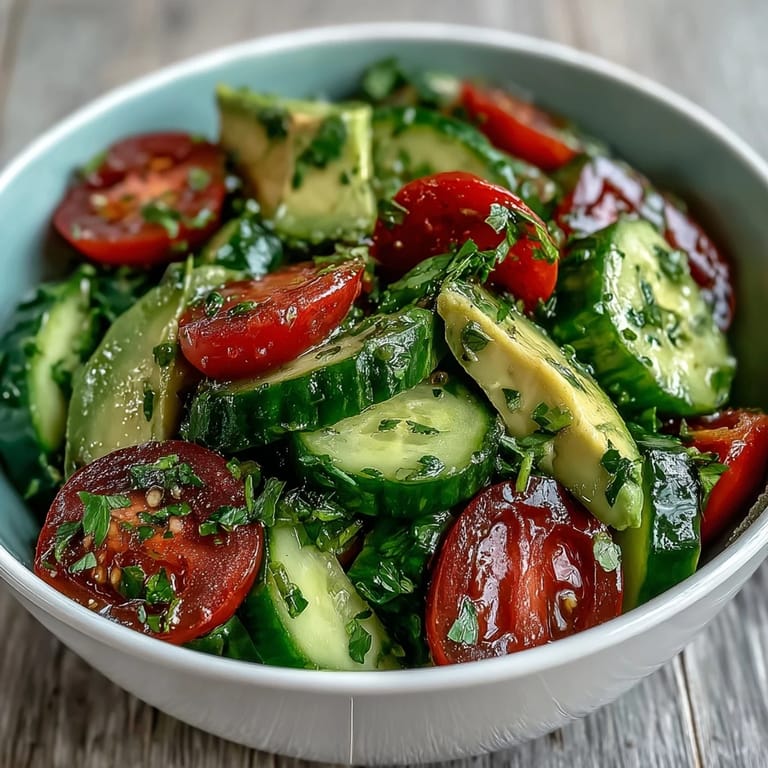
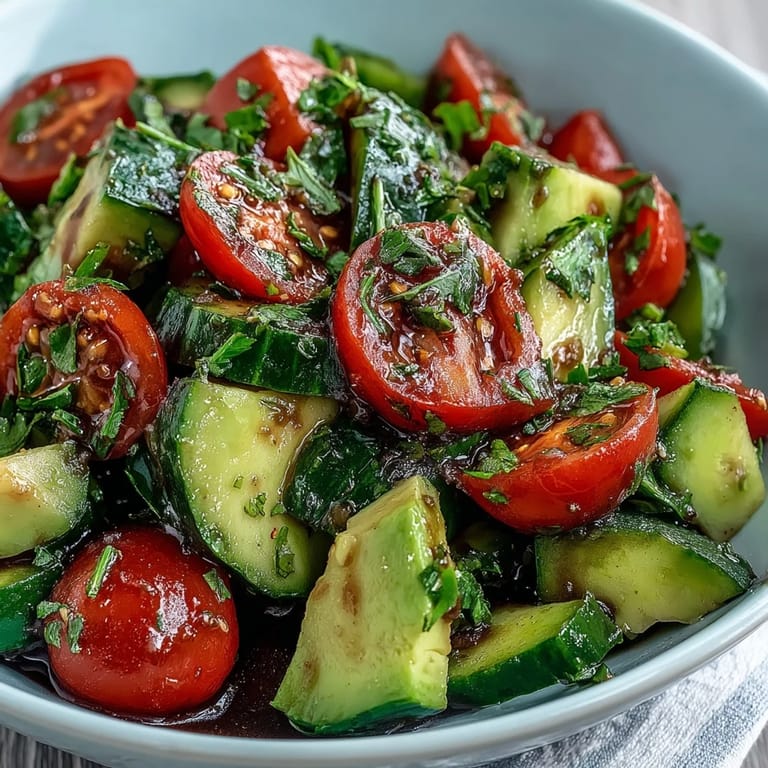
Pin There's this moment every summer when I realize I've been chopping vegetables all wrong—not in technique, but in spirit. Standing at my kitchen counter on a particularly warm afternoon, I was tasked with feeding a group of hungry friends who'd dropped by unannounced, and all I had was what the farmer's market had given me that morning. The avocados were perfectly ripe, the tomatoes smelled like sunshine, and something just clicked: why complicate this? The simplest combinations often taste the most honest, and this salad became proof of that.
My neighbor knocked on my door one evening with that apologetic expression people get when they're hungry but don't want to ask. I threw this together while she sat on my kitchen stool telling me about her terrible day, and by the time we finished eating, the salad had somehow become part of her story—the small thing that turned everything around. Food like this has a quiet magic: it doesn't demand attention, but it somehow makes people feel cared for.
Ingredients
- Cucumber (1 large, diced): Choose one that's firm with thin skin, and don't peel it unless it's waxy or bitter—the skin holds nutrients and texture.
- Cherry tomatoes (2 cups, halved): They're sweeter than regular tomatoes and hold their shape better when dressed, which I learned after watching a salad turn to mush.
- Avocados (2 ripe ones, diced): Ripe means they yield slightly to gentle pressure; too soft and they bruise, too hard and they taste like nothing.
- Red onion (1/4 small, finely sliced): The sharpness cuts through richness and adds a subtle bite that makes you taste everything else more clearly.
- Fresh parsley (2 tbsp, chopped): It's fresh, herbaceous, and won't overpower—cilantro or basil work beautifully too if that's what you have.
- Extra-virgin olive oil (3 tbsp): Quality matters here since it's tasted directly; cheap oil makes the whole thing taste thin.
- Lemon juice (2 tbsp, freshly squeezed): Bottled juice is convenient but lacks the brightness of the real thing—fresh lemons make an actual difference.
- Dijon mustard (1 tsp): It acts as an emulsifier, holding the oil and lemon juice together in a way that coats each vegetable evenly.
- Sea salt and black pepper (1/2 tsp and 1/4 tsp): Season as you taste; what seems right in the dressing might need adjusting once everything comes together.
Tired of Takeout? 🥡
Get 10 meals you can make faster than delivery arrives. Seriously.
One email. No spam. Unsubscribe anytime.
Instructions
- Prep your vegetables with intention:
- Cut everything into similar-sized pieces so they cook (or rather, don't cook) evenly and every bite feels balanced. The cucumber and tomatoes should be roughly the same size as the avocado chunks so nothing dominates.
- Build the salad base:
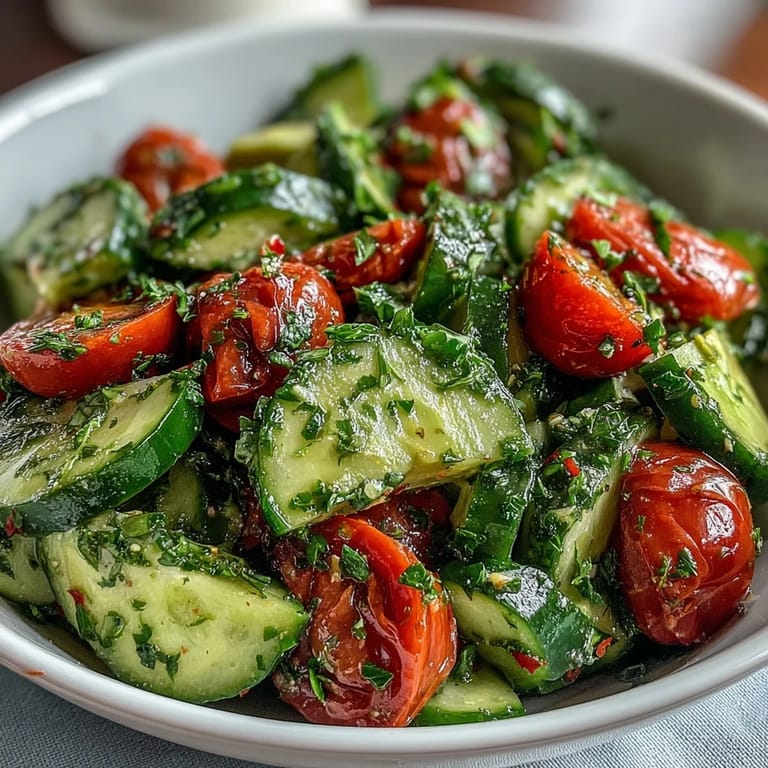
- Toss the cucumber, cherry tomatoes, avocado, red onion, and parsley together gently in a large bowl—you're combining, not mashing, so use a light hand.
- Whisk the dressing with care:
- In a separate small bowl or jar, whisk the olive oil, lemon juice, Dijon mustard, salt, and pepper until the mixture becomes creamy and slightly thickened, which means the mustard has done its job as an emulsifier. This takes about a minute of steady whisking.
- Dress thoughtfully:
- Pour the dressing over the salad just before serving and toss gently to coat everything without breaking apart the avocado. If you dress it too early, the acid from the lemon will soften everything, and the avocado will brown.
- Taste and trust your instincts:
- Before serving, take a bite of a dressed piece and see if the salt and pepper feel right—sometimes you need a tiny pinch more, sometimes you don't.
 Pin
Pin There's something about feeding people food this uncomplicated that teaches you what maturity in cooking actually looks like. It's not about fancy techniques or rare ingredients—it's about respecting each component enough to let it shine. I've made this salad dozens of times now, and it's become my answer to almost every question about what to bring to a gathering.
The Lemon Dressing Secret
The moment I understood that Dijon mustard wasn't just a flavoring but an actual emulsifier, this salad transformed. The mustard holds the olive oil and lemon juice together in a creamy suspension instead of letting them separate into distinct layers, which means every vegetable gets coated evenly with that bright, silky dressing. This is kitchen chemistry at its simplest, and once you feel it happening while you whisk, you'll start using this technique everywhere.
Timing and Texture Matters
I learned this the hard way by dressing salads an hour before serving, only to watch them turn from vibrant and crisp to soft and watery. The acid in lemon juice breaks down the cell walls of vegetables over time, which is beautiful in some dishes but not this one. For this salad, timing is everything: prep your ingredients whenever you want, but wait until the very last moment to dress it and serve.
Variations and Endless Possibilities
The beauty of this salad is that it's a foundation waiting for your own touches. I've added crumbled feta for a salty, creamy element, tossed in sliced olives for briny depth, and switched the parsley to fresh mint on afternoons when I wanted something more aromatic. The core of cucumber, tomato, and avocado with lemon dressing is flexible enough to welcome whatever appeals to you.
- Feta cheese adds a salty, tangy richness that plays beautifully against the bright lemon dressing.
- Cilantro or basil can replace parsley if you're drawn to bolder herb flavors.
- A handful of pumpkin seeds or toasted nuts brings texture and makes the salad feel more substantial as a main course.
 Pin
Pin This salad has become my quiet answer to so many moments: when I want to eat something that feels like health, when I need to feed people on short notice, when summer feels overwhelming and I need something uncomplicated. It's the kind of recipe that disappears from the bowl before you've even sat down to eat it.
Recipe Q&A
- → How do I prevent avocado from browning?
Add the lemon dressing just before serving and toss gently to slow oxidation and keep avocado fresh and vibrant.
- → Can I substitute parsley in this dish?
Yes, fresh basil or cilantro can replace parsley for a different aromatic profile that complements the vegetables and dressing.
- → What dressing ingredients balance the flavors?
The lemon juice adds brightness, olive oil smooths richness, Dijon mustard provides mild tang, and salt and pepper enhance overall taste.
- → Is this dish suitable for gluten-free or vegan diets?
Yes, it is naturally gluten-free, vegan, and vegetarian, featuring fresh vegetables and plant-based dressing components.
- → Can additional ingredients be added for variety?
Crumbled feta or sliced olives make tasty additions, increasing texture and flavor complexity if desired.