 Pin
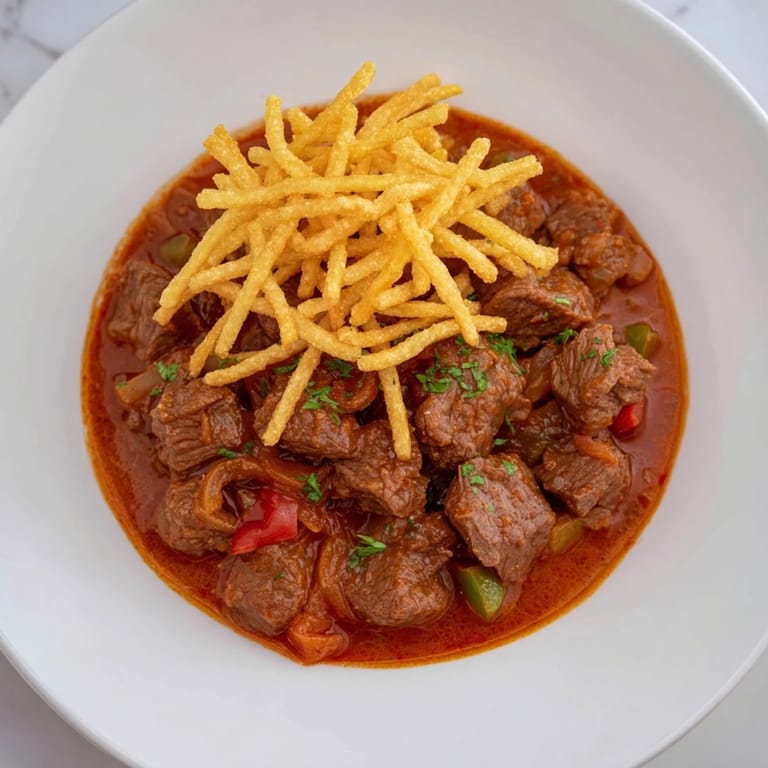
Pin My first encounter with Czech goulash came on a crisp autumn evening when a neighbor invited me over after I'd mentioned being tired of my usual weeknight rotations. She'd spent the afternoon tending to a pot of stewed beef and paprika while telling stories about her grandmother in Prague, and the smell that greeted me at her door—all caramelized onions, caraway, and deep red spice—instantly made me understand why this dish had traveled with her family across continents. That night, topped with golden fried potato strips that shattered between my teeth, it became clear this wasn't just comfort food; it was edible nostalgia made accessible in my own kitchen.
I'll never forget the Saturday when I made this for friends who were skeptical about Eastern European cooking until they took that first bite—one of them actually closed their eyes mid-chew and asked for the recipe before finishing her bowl. That moment taught me that goulash has a quiet confidence; it doesn't need to announce itself as special because the flavors speak loudly enough.
Ingredients
- Beef chuck, 800 g cut into 2.5 cm cubes: This cut has just enough fat and connective tissue to become silky when braised, unlike leaner cuts that dry out after extended cooking.
- Sweet Hungarian paprika, 2 tbsp: Don't reach for the regular supermarket paprika—Hungarian paprika carries a fragrant depth that's essential to the dish's identity, and it burns easily, so stir it quickly with the garlic.
- Caraway seeds, 1 tsp: These tiny seeds add an almost licorice-like note that ties the whole dish together in a way nothing else quite can.
- Beef broth, 750 ml: Use homemade or quality store-bought; this is where your sauce's foundation lives.
- Large potatoes, 4 for frying: Waxy varieties like Yukon Gold or Maris Piper give you that perfect golden exterior while staying creamy inside, not mealy.
- Vegetable oil, 500 ml for frying: Keep it neutral-flavored so the potato's natural sweetness can shine.
- Onions, 2 large finely chopped: The long, slow cook transforms these into a sweet base that cradles the beef.
- Garlic, 3 cloves minced: Add this just after the onions soften so it perfumes the oil without burning.
- All-purpose flour, 1 tbsp: This small amount thickens the sauce without making it heavy or starchy-tasting.
- Tomato paste, 2 tbsp: A concentrated punch of umami that deepens the sauce's complexity.
- Bell pepper, 1 diced: Add this about halfway through so it stays slightly al dente rather than dissolving into the sauce.
- Marjoram, 1 tsp: This herb is characteristic of Czech cooking and adds a gentle herbaceous warmth that's different from oregano's boldness.
- Bay leaf, 1: Remember to fish this out before serving, or warn your guests.
- Salt and black pepper to taste: Season conservatively early on since the sauce will reduce and concentrate.
Tired of Takeout? 🥡
Get 10 meals you can make faster than delivery arrives. Seriously.
One email. No spam. Unsubscribe anytime.
Instructions
- Build your flavor base with the onions:
- Heat the oil in your pot over medium heat and let the chopped onions go golden and soft, about 8 minutes—you're not rushing this, you're creating the foundation that everything else rests on. Listen for that gentle sizzle and keep stirring so they turn translucent and sweet rather than brown.
- Toast the spices quickly:
- Add the minced garlic, caraway seeds, and paprika all at once, stirring constantly for exactly 1 minute—this is the moment you wake up all those spices, but too long and the paprika turns bitter. Your kitchen will smell impossibly good.
- Sear the beef until caramelized:
- Working in batches if needed, add the beef cubes and let them brown on all sides, about 5 minutes total—you're not cooking them through, just building color and depth. Don't crowd the pan.
- Build the sauce:
- Stir in the tomato paste, marjoram, salt, pepper, and bay leaf, then sprinkle the flour over everything and stir well, coating the beef completely. Pour in your beef broth and add the diced bell pepper, then bring the whole thing to a boil.
- Low and slow is the secret:
- Reduce the heat to low, cover the pot, and let it simmer for 1.5 to 2 hours, stirring occasionally—the beef should be so tender it breaks apart with a wooden spoon, and the sauce should have thickened into something rich and velvety. Taste about halfway through and adjust seasoning if needed.
- Prepare your potatoes while everything simmers:
- Peel your potatoes and cut them into thin matchsticks using a mandoline or a very sharp knife—uniform thickness means they'll cook evenly and all reach that golden-crispy stage together. Immediately soak them in cold water for 10 minutes, then pat them completely dry with a clean towel (wet potatoes will splatter dangerously in hot oil).
- Get your oil to the right temperature:
- Heat your vegetable oil to 180°C (350°F)—use a thermometer if you have one, or test with a single potato stick, which should sizzle immediately and turn golden in about 30 seconds. Too cool and they'll be limp and greasy; too hot and they'll burn outside while staying raw inside.
- Fry in batches for maximum crispness:
- Working in batches so you don't crowd the pan and drop the oil temperature, fry the potato strips until they're golden and crispy, about 3 to 4 minutes. Transfer each batch to paper towels and season with salt while still warm.
- Finish the goulash:
- When the beef is tender enough to break with a spoon and the sauce has thickened, remove the bay leaf, taste the whole thing one more time, and adjust the salt, pepper, or add a pinch more paprika if it needs it.
- Plate and serve:
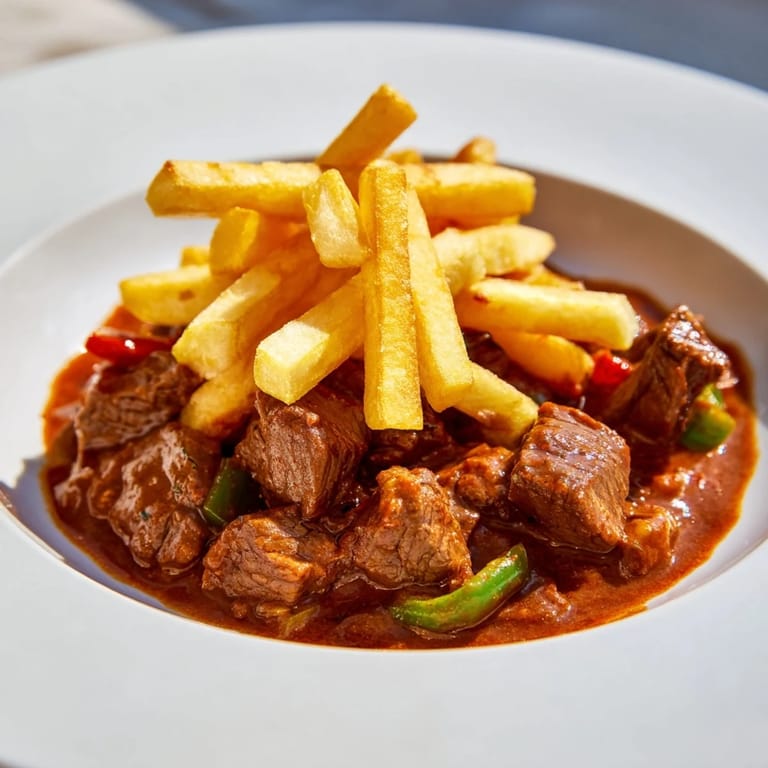
- Ladle the hot goulash into bowls and top each serving with a generous handful of those crispy potato strips—they'll soften slightly from the steam but stay crunchy enough to give you that textural surprise.
 Pin
Pin There's a moment, maybe five minutes before you turn off the heat, when you lift the lid and the aroma hits you like a memory you didn't know you had—that's when you know you've done it right. That's the moment this stops being a recipe and becomes something you'll crave on cold evenings for years to come.
Why the Paprika and Caraway Matter
These aren't flavors that play quietly in the background—they're the whole reason this tastes distinctly Czech and not like a generic beef stew. The paprika gives you that gentle warmth and the caraway seeds add a complexity that most people can't quite name but absolutely notice. When you taste them, you're tasting the food traditions of a country that understands how spices should work together.
The Potato Strip Contrast
What makes this dish more interesting than goulash alone is that textural surprise—the soft, tender beef and velvety sauce meeting crispy, salty potato strips. It's the interplay between them that makes each spoonful feel dynamic rather than monotonous. Every culture that serves stewed meat with fried potatoes has figured out something fundamental about how food satisfaction works.
Serving and Storage
This goulash actually improves the next day once the flavors have had time to meld and deepen—store it covered in the refrigerator for up to three days, then gently reheat over low heat with a splash of broth if it's thickened too much. The potato strips are best made fresh for maximum crispness, but if you want to prepare the goulash ahead, simply reheat it gently and fry your potatoes while it comes up to temperature.
- A dollop of cool sour cream melting into the hot goulash adds richness and a slight tang that balances the paprika beautifully.
- Fresh chopped parsley scattered over the top adds color and a bright, green freshness that cuts through the heaviness of the beef.
- If you want heat, a pinch of hot paprika or a few chili flakes stirred into individual bowls gives you control over the spice level without changing the whole pot.
 Pin
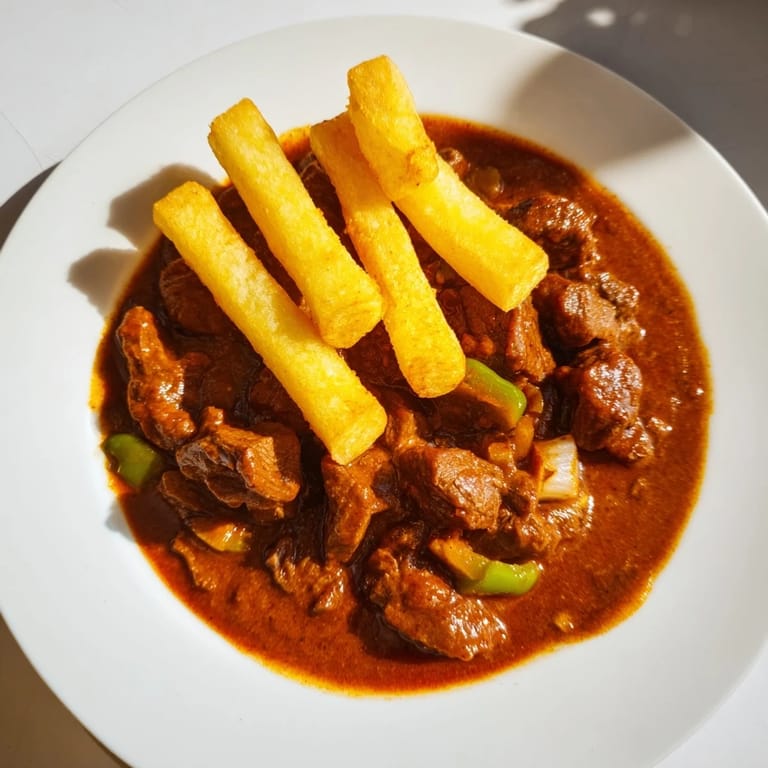
Pin Czech goulash with crispy potato strips is the kind of meal that turns an ordinary Tuesday into something worth remembering. Make it once and you'll understand why it travels across generations and continents.
Recipe Q&A
- → What cut of beef is best for this dish?
Beef chuck cut into cubes is ideal for slow cooking as it becomes tender and flavorful after simmering.
- → How can I make the sauce thicker?
Stirring in a small amount of flour before simmering helps thicken the sauce naturally as it cooks.
- → What is the purpose of frying the potato strips?
Frying the potatoes until golden and crisp provides a crunchy contrast to the tender beef and rich sauce.
- → Can this dish accommodate gluten-free diets?
Yes, by substituting all-purpose flour with gluten-free flour, the dish remains gluten-free without compromising thickness.
- → What spices give this dish its signature flavor?
Sweet Hungarian paprika, caraway seeds, and marjoram create the distinctive warm and aromatic flavor profile.
- → How long should the beef simmer for best results?
Simmering the beef for about 1.5 to 2 hours ensures it becomes tender and allows flavors to meld deeply.