 Pin
Pin My mother-in-law called on a Saturday morning asking if I could handle making Eggs Benedict for her birthday brunch, and I'll admit my stomach dropped a little. Hollandaise has a reputation, you know—temperamental, quick to break, requiring the kind of attention that made me nervous. But then I remembered watching my grandmother whisk sauce over steaming water with such calm confidence, never rushing, and I realized the secret wasn't technique at all. It was patience, and honestly, believing the sauce wanted to work with me.
The funny part is what happened that morning—I was so focused on not curdling the hollandaise that I nearly burned the Canadian bacon to a crisp, and my teenage son caught it in time, laughing at me. We ended up salvaging everything by laughing about it, and when those plates went out, everyone raved about how the slight char on the bacon added depth. Sometimes your mistakes teach you more than your careful planning ever could.
Ingredients
- English muffins: Look for ones with decent texture and nooks because they'll cradle the butter and hollandaise beautifully—cheap ones fall apart when toasted.
- Canadian bacon: This isn't regular bacon, and that's the whole point; it's leaner and meatier, adding substance without greasiness.
- Large eggs: Fresh ones poach better, with whites that hold together instead of turning wispy and sad.
- White vinegar: Just a splash keeps the egg white from spreading everywhere; it doesn't make the eggs taste vinegary despite what you might worry.
- Egg yolks for hollandaise: Room temperature yolks whisk into the sauce more smoothly than cold ones straight from the fridge.
- Unsalted butter, melted and warm: Warm is the key word here—if it's too hot, it scrambles your yolks; too cool and the sauce won't emulsify.
- Lemon juice, freshly squeezed: Bottled lemon juice feels lazy in hollandaise; fresh juice brightens the whole thing and keeps it from tasting heavy.
- Cayenne pepper: A pinch—not a shake, a genuine pinch—adds warmth without heat or color.
Tired of Takeout? 🥡
Get 10 meals you can make faster than delivery arrives. Seriously.
One email. No spam. Unsubscribe anytime.
Instructions
- Build your hollandaise foundation:
- Set a bowl over barely simmering water (the water shouldn't touch the bottom of the bowl), and whisk together your room-temperature egg yolks with lemon juice until they thicken slightly and turn pale—this takes maybe two minutes of steady whisking. The whisking is doing something crucial: it's incorporating air and gently warming the yolks, making them ready to accept butter without scrambling.
- Introduce the butter slowly and steadily:
- Drizzle melted butter in while whisking constantly, as if you're having a conversation with the sauce—pause occasionally, let it catch up, then continue. You'll watch it transform from streaky and thin into glossy and thick, almost like magic happening right in front of you.
- Season and shelter your sauce:
- Remove from heat, taste it, add salt and a pinch of cayenne, then cover it loosely with foil to keep it warm without cooking it further. It'll stay perfect for about 20 minutes this way.
- Warm the bacon gently:
- Over medium heat in a skillet, lay down your Canadian bacon slices and cook about a minute per side until they're just touched with brown—they're already cooked, so you're really just warming them through. Set them aside on a clean plate; they'll stay warm while you work on the eggs.
- Poach with intention:
- Bring a wide saucepan of water to a gentle simmer (not a rolling boil, which tears the eggs apart), splash in a bit of vinegar, then create a gentle whirlpool with a spoon. Crack one egg into a small bowl first, then slip it into the center of the whirlpool—this keeps the white intact and together.
- Cook in batches if you must:
- Add eggs one at a time rather than all at once, and give them 3 to 4 minutes depending on how soft you like the yolk. You'll know they're ready when the white is set but the yolk still jiggles slightly when you nudge it with the spoon.
- Remove and drain with care:
- Use a slotted spoon to lift each egg out, letting the water drip through the slots, then set it briefly on a paper towel to blot any excess moisture. This step saves you from watery plates.
- Build each plate like you mean it:
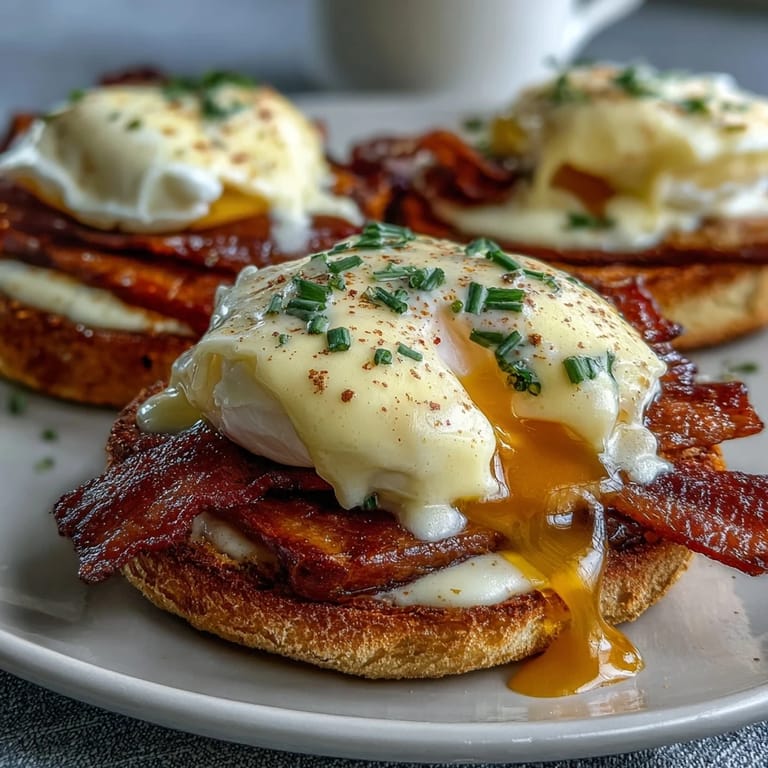
- Start with two warm, toasted muffin halves, add a slice of warm bacon to each, then top with a poached egg—at this point you've got three beautiful components aligned. Spoon hollandaise generously over the egg, sprinkle with chives if you have them, taste the seasoning one last time, and serve immediately while everything's still warm.
 Pin
Pin My mother-in-law took one bite and got quiet in that way that means something just made her happy, and she looked up and said it tasted like a celebration. That's when I understood why people make this for special mornings—it's not really about the technique or impressing anyone with how fancy you are. It's about saying with your hands that someone matters.
Making Hollandaise Less Scary
The reputation hollandaise has is mostly undeserved because the sauce itself isn't difficult—it's just four ingredients and some attention. The real trick is understanding that you're emulsifying, which means you're using whisking to bind butter and egg yolks together into something creamy and unified. I learned this works best if you stop thinking about trying not to fail and start thinking about the butter and yolks genuinely wanting to become one thing. The worst that happens if it breaks is you start over with a clean bowl and about two minutes—it's not the cooking disaster people make it sound like.
Poaching Eggs Like You've Done It Before
Poaching intimidated me until I realized the vinegar and swirling water were doing most of the work for me. Once you make a gentle whirlpool and drop the egg into the center, you're just waiting; the water and physics handle keeping everything together. The first time feels experimental, but by the third egg, your hands know what to do. I've found that starting with the water at a bare simmer rather than boiling prevents the whites from spreading into sad, feathery wisps everywhere.
Timing Everything So It Comes Together Warm
The hardest part of Eggs Benedict isn't any single step—it's orchestrating everything to finish at roughly the same moment. I usually toast the muffins last so they're still steaming when I plate, warm the bacon while the eggs poach, and keep the hollandaise sitting over warm (not hot) water until the very end. Think of it like conducting three small songs that need to end at the same beat; it takes focus but becomes intuitive after you've done it once or twice.
- Toast the muffins right before plating so they're still warm and crispy, not sitting around getting soggy.
- Have your bacon already cooked and your hollandaise already made before you even start poaching eggs.
- Set everything out in order on the plates the moment the last egg is done—don't wait, don't plate one at a time, just go.
 Pin
Pin This is the kind of breakfast that feels like a hug in food form, and honestly, once you've made it successfully once, you'll keep coming back to it. It's special enough for occasions but simple enough that you'll make it just because Sunday morning deserves something better than the usual.
Recipe Q&A
- → How do I poach eggs perfectly?
Use simmering water with a tablespoon of vinegar to help the egg whites set quickly. Crack eggs gently and slide them into swirling water to keep them compact. Poach for 3-4 minutes until whites are firm but yolks remain soft.
- → What is the best way to make hollandaise sauce smooth?
Whisk egg yolks and lemon juice over gentle heat and slowly drizzle in warm melted butter while constantly whisking. This gradual mixing prevents curdling and creates a glossy, thick sauce.
- → Can I substitute Canadian bacon with other ingredients?
Yes, sautéed spinach or avocado work well as vegetarian alternatives, providing a similar richness and complementing the poached eggs and sauce.
- → How do I keep hollandaise sauce warm without curdling?
Keep the sauce in a warm spot away from direct heat, or use a warm water bath to maintain temperature gently. Avoid reheating over high heat to prevent breaking.
- → What sides pair well with this dish?
Fresh fruit, mixed greens, or a crisp white wine like Sauvignon Blanc complement the richness and balance the flavors beautifully.