 Pin
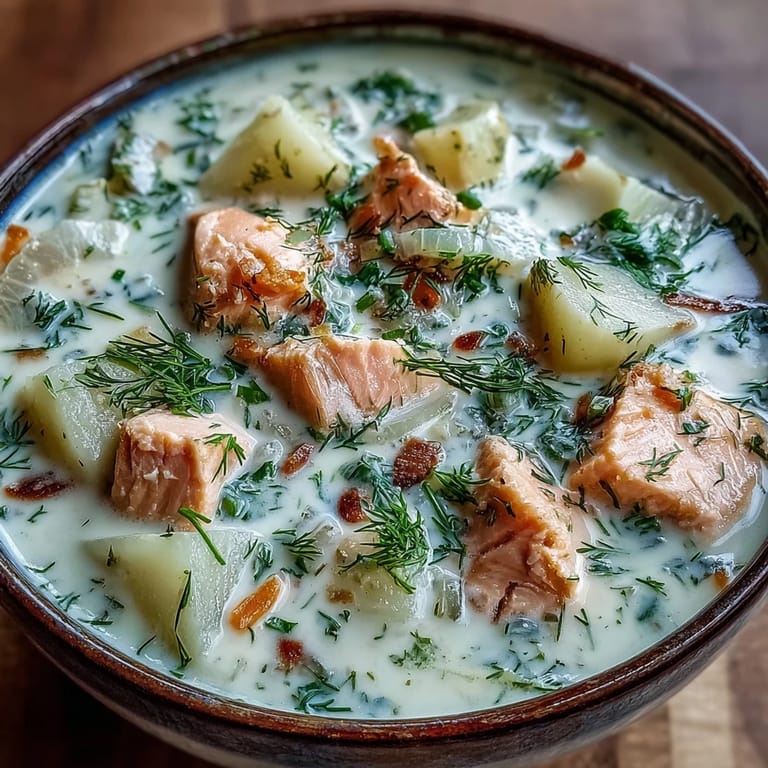
Pin I remember the fog rolling off the Baltic Sea on a Tuesday afternoon when I first tried this soup in a tiny Helsinki cafe. The windows were steamed up and the air smelled like butter and dill. It felt less like a meal and more like a warm blanket for the soul. I realized then that the secret to surviving a cold climate is definitely hidden in a bowl of cream and fish.
One evening I invited a few friends over and realized I had forgotten to buy the fancy appetizers I planned. I served this soup instead and the room went silent as everyone took their first spoonful. We spent the rest of the night tearing pieces of dark rye bread and soaking up every last drop of the broth. It taught me that simple ingredients usually lead to the best conversations.
Ingredients
- Salmon Fillet: Look for a bright pink piece and make sure to remove the skin so every bite is tender.
- Potatoes: I prefer starchy varieties because they release a bit of magic that naturally thickens the broth.
- Leeks: Using the white and light green parts adds a subtle sweetness that regular onions just cannot match.
- Carrot: Slicing these thinly ensures they cook at the same rate as the leeks and onions.
- Yellow Onion: Sauteing this first creates a savory depth that lingers in every spoonful of the creamy broth.
- Heavy Cream: This is what transforms the soup from a simple broth into a velvety masterpiece.
- Fresh Dill: Do not be shy with this herb because it provides the quintessential Finnish aroma that defines the dish.
- Fish Stock: Using a high quality liquid base is essential because it carries all the other flavors.
- Bay Leaf: I always tuck one into the liquid while it simmers to provide a woody background note that balances the fish.
- White Pepper: It gives a gentle heat that lingers without the visual speckles of black pepper.
- Salt: Add this gradually to enhance the sweetness of the vegetables and the richness of the salmon.
- Butter: This provides the fat needed to carry the aromatics of the leeks and onions throughout the pot.
Tired of Takeout? 🥡
Get 10 meals you can make faster than delivery arrives. Seriously.
One email. No spam. Unsubscribe anytime.
Instructions
- Softening the Base:
- Melt the butter and let the leeks and carrots sweat until they look translucent and smell sweet. This builds the foundational flavor before any liquid even touches the pot.
- Simmering the Roots:
- Pour in the stock and let the potatoes gently bubble until they are just tender enough to be pierced by a fork. Keep the heat steady to prevent the vegetables from turning into mush.
- Poaching the Salmon:
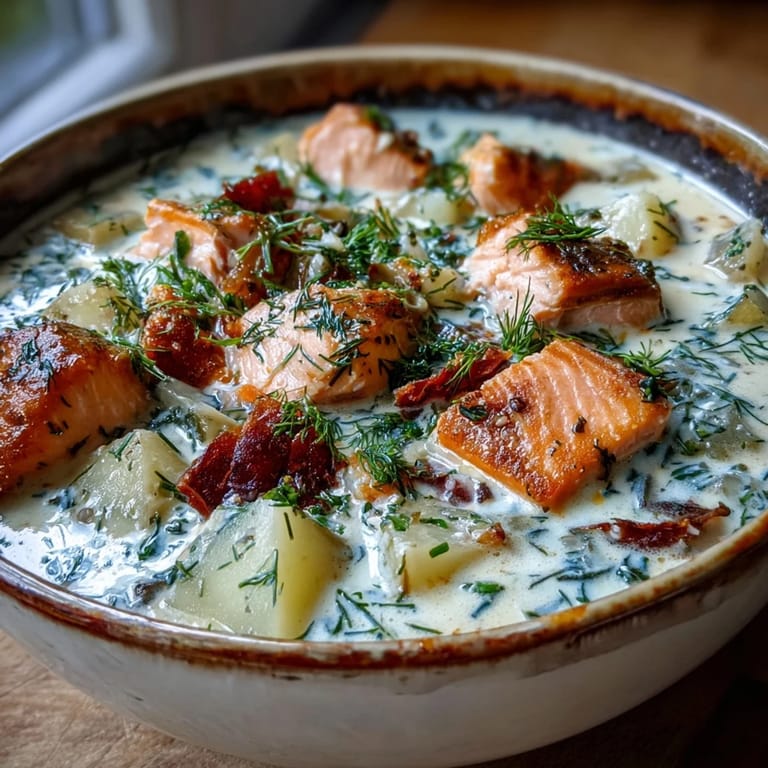
- Drop the salmon cubes into the pot and watch them turn from translucent to a soft opaque pink. It only takes a few minutes for them to become perfectly flakey and moist.
- Finishing Touches:
- Stir in the cream and dill allowing the heat to meld everything together without letting it reach a rolling boil. A final pinch of salt and white pepper brings the whole landscape of flavors into focus.
 Pin
Pin 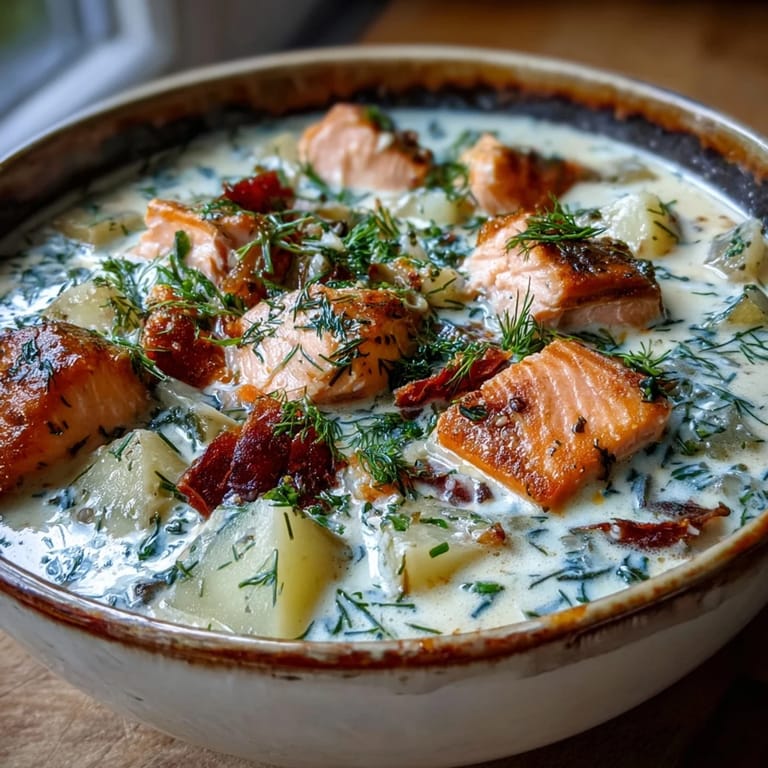 Pin
Pin There is a specific quietness that happens in my kitchen every time I sprinkle the final handful of dill over the pot. It feels like the day has finally slowed down and everything is going to be alright.
Choosing Your Fish
Sometimes I use a mix of fresh and smoked salmon to add a layer of complexity to the bowl. The smoke cuts through the richness of the cream and makes the whole kitchen smell like a seaside campfire.
The Importance of Stock
Using a high quality fish stock makes a world of difference compared to just using plain water. If you can find stock made from roasted shells or bones the depth of flavor will be significantly more intense.
Serving Suggestions
In Finland this soup is almost always served with a side of dense buttered rye bread. The earthy crunch of the bread provides a necessary contrast to the creamy soup.
- Always serve the soup in pre warmed bowls to keep the cream from cooling too quickly.
- A small squeeze of lemon juice right at the end can brighten the heavy flavors.
- Add a small extra knob of butter to each bowl for a truly decadent finish.
 Pin
Pin 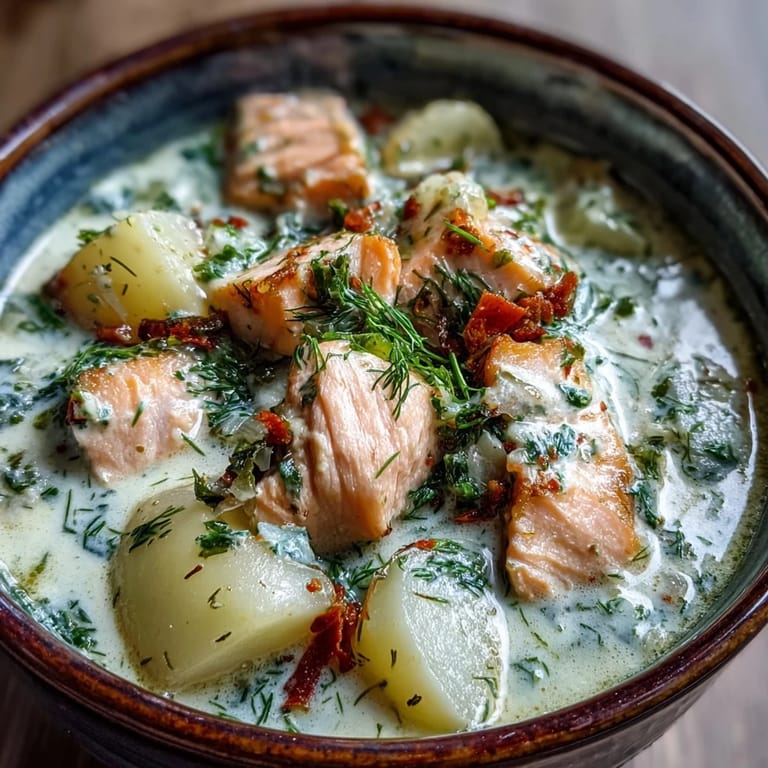 Pin
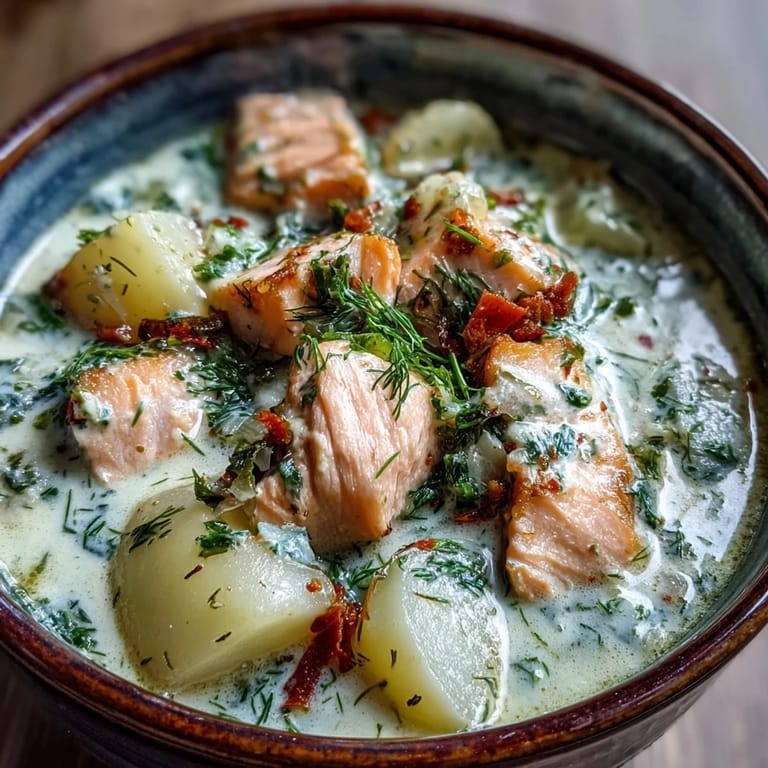
Pin I hope this soup brings as much warmth to your table as it has to mine over the years. Happy cooking and enjoy every spoonful of this Nordic treasure.
Recipe Q&A
- → Can I use frozen salmon instead of fresh?
Yes, frozen salmon works well in this soup. Thaw it completely before cutting into cubes, and pat dry with paper towels to remove excess moisture. Add it to the simmering broth as directed, though it may need an extra minute or two to cook through.
- → What makes this soup traditionally Finnish?
This soup follows the classic Finnish preparation known as lohikeitto, which combines salmon, potatoes, and cream with plenty of fresh dill. The use of fish stock rather than chicken or vegetable broth, along with the combination of leeks and carrots, creates the authentic Nordic flavor profile that Finnish families have enjoyed for generations.
- → Can I make this soup dairy-free?
Yes, substitute the heavy cream with full-fat coconut milk or a dairy-free cream alternative. The texture will remain rich and creamy, though the flavor profile will shift slightly. For the closest result, use unsweetened coconut cream rather than milk, and consider adding a splash of lemon juice to balance the sweetness.
- → How should I store and reheat leftovers?
Store cooled soup in an airtight container in the refrigerator for up to 2 days. The potatoes may absorb some liquid, so add a splash of water or stock when reheating. Reheat gently over low heat, stirring occasionally, and avoid boiling to prevent the cream from separating. The salmon may flake apart more upon reheating, which is perfectly natural.
- → What's the best way to serve this soup?
Finnish salmon soup is traditionally served with dark rye bread or crispbread on the side for soaking up the creamy broth. A simple green salad with a vinaigrette provides a nice contrast to the rich soup. For a complete Nordic meal, consider serving with pickled herring or a side of roasted root vegetables. A wedge of lemon on the table allows diners to add brightness to their bowls.
- → Can I substitute other fish for salmon?
While salmon is traditional, you can use other fatty fish like Arctic char, trout, or whitefish. These options maintain the rich texture and flavor profile. Lean white fish like cod works but will produce a lighter, less rich soup. Adjust cooking time slightly depending on the thickness of your fish cubes.