 Pin
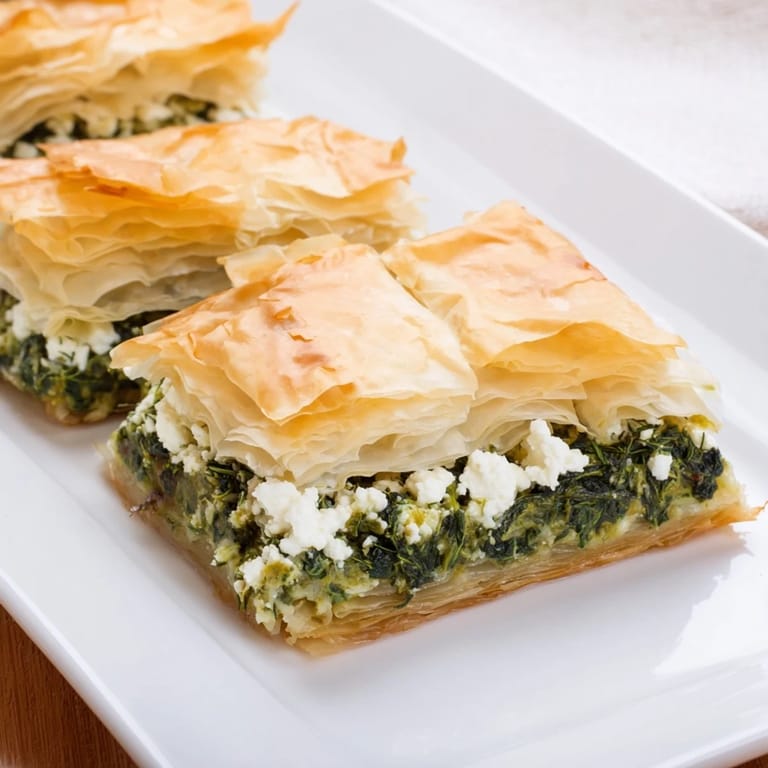
Pin The first time I made spanakopita, I was standing in my friend Maria's Athens kitchen on a humid afternoon, watching her mother move through the phyllo sheets like they were made of silk. She didn't measure anything—just knew when the spinach was dry enough, when the cheese was mixed right, when each paper-thin layer was brushed with enough oil. Years later, when I finally made it myself, I understood why she never rushed it: this dish rewards patience with that impossible crispness, that way the pastry shatters when you bite into it while the filling stays creamy and herbaceous inside.
I remember bringing a warm spanakopita to a neighborhood picnic one spring, and watching people come back for seconds without even asking what was in it. There's something about this pie that feels both humble and impressive at the same time—it's the kind of dish that makes you look like you know what you're doing in the kitchen, even if you're just learning.
Ingredients
- Fresh spinach (2 lbs): If using fresh, chop it generously and don't skip washing—grit ruins the whole thing. Frozen works beautifully too, but squeeze every drop of moisture out or your phyllo will get soggy and upset you halfway through baking.
- Yellow onion and scallions: The onion softens into sweetness, while scallions keep things bright; together they're the backbone of flavor that makes this taste like someone who knows Greek cooking made it.
- Fresh dill and parsley: Fresh herbs make this sing—dried dill works in a pinch, but fresh parsley is worth seeking out because it adds a green, clean note that bottled herbs can't quite capture.
- Feta cheese (8 oz): Don't cheap out here; quality feta has a tang and creaminess that transforms the whole filling. Crumble it with your hands rather than a food processor so it stays textured.
- Ricotta or cottage cheese (optional): This is my secret weapon for a silkier filling that doesn't crack as it bakes, but if you skip it, the pie will still be delicious.
- Eggs: They bind everything together and help the filling set; beat them lightly so they distribute evenly through all that green.
- Phyllo dough (1 lb): Thaw it slowly in the fridge overnight if you can, and keep it under a barely damp towel while you work—it dries out faster than you'd think.
- Olive oil or melted butter: Use good olive oil if you want that authentic flavor, or butter if you prefer richness; either way, brush generously between every single layer.
Tired of Takeout? 🥡
Get 10 meals you can make faster than delivery arrives. Seriously.
One email. No spam. Unsubscribe anytime.
Instructions
- Set yourself up for success:
- Preheat your oven to 350°F and grease that baking dish so nothing sticks and frustrates you later. Having everything prepped and within arm's reach—that's the whole game with phyllo work.
- Build your flavor base:
- Heat olive oil in a large skillet and let the onion and scallions soften until they're golden and sweet, about five minutes. You'll smell when it's right.
- Cook down the spinach:
- Add your chopped spinach in batches if it's fresh, stirring until it releases all its water and collapses into itself, then remove from heat and let it cool enough to handle. The drier it gets, the crispier your phyllo will stay.
- Make the magic filling:
- Once the spinach mixture is cool, squeeze it one more time in your hands to get out any hidden moisture, then toss it with dill, parsley, crumbled feta, ricotta if using, beaten eggs, pepper, nutmeg, and salt. Taste it and adjust seasoning—it should taste almost too salty and herbaceous, because it's about to get mellowed by all that phyllo.
- Layer the phyllo base:
- Lay your first sheet of phyllo in the prepared dish, let the edges hang over, and brush it with oil or melted butter. Repeat with six or seven more sheets, brushing each one—this is where the crispiness comes from, so don't skip it.
- Spread the filling:
- Pour that green mixture evenly over your phyllo base and spread it so it reaches the corners. You want it distributed evenly so every bite tastes the same.
- Top it with more phyllo:
- Layer the remaining sheets on top, brushing each with oil or butter just like you did on the bottom, then tuck all those overhanging edges down into the dish so nothing burns or escapes.
- Score for serving:
- Use a sharp knife to cut gentle lines across the top in squares or diamonds—not all the way through, just enough so people can break pieces off cleanly once it's baked.
- Bake until golden:
- Slide it into the oven for thirty-five to forty minutes until the top is burnished and crispy and the whole kitchen smells like herbs and butter. Let it cool for ten minutes before serving so the filling sets.
 Pin
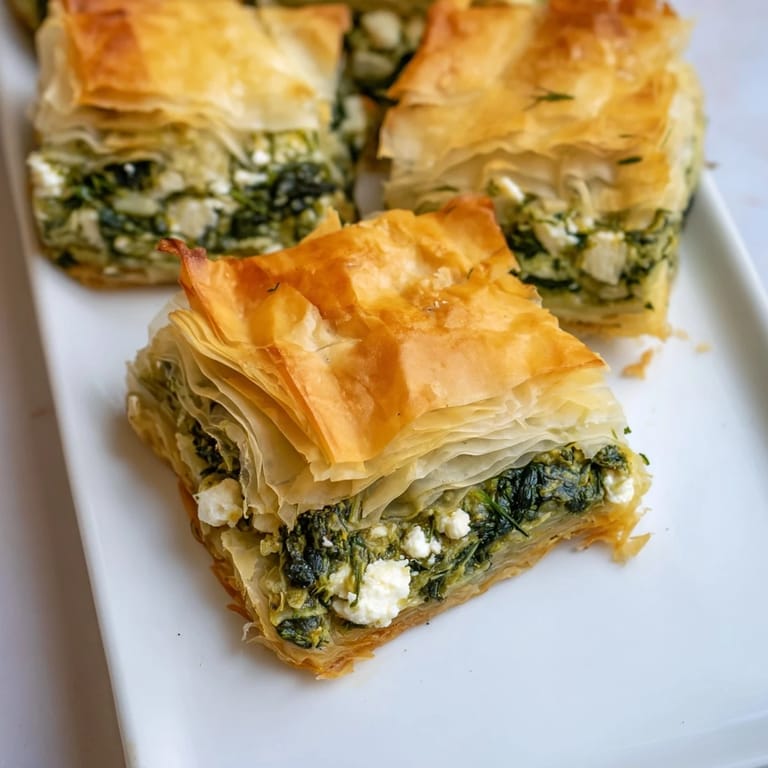
Pin There's a moment when spanakopita comes out of the oven, when that sound hits you—the phyllo crackling and settling as it cools—that makes you feel like you've accomplished something real in the kitchen. It's the same feeling my friend Maria had, and now it's mine too.
Timing and Prep Strategy
The beauty of this recipe is how you can break it into chunks: make the filling a day ahead and refrigerate it, then do all your phyllo layering when you're ready to bake. I usually prep the spinach mixture the night before so I'm not juggling hot pans and delicate phyllo sheets at the same time. On baking day, everything feels calm and focused, which somehow makes the whole thing turn out better.
Variations and Swaps
I've made this with lacinato kale when spinach looked sad at the market, and honestly, it was incredible—earthier, slightly nuttier. Chard works too, or even a mix of greens if you're feeling experimental. The filling is adaptable because what matters is that you've got plenty of herbs, good cheese, and moisture controlled. Some cooks add a pinch of cinnamon to echo Mediterranean tradition, others throw in toasted pine nuts for texture; these are the little tweaks that make it feel like yours.
- Swap spinach for kale, chard, or a mix for different flavors and textures.
- Add toasted pine nuts or a tiny pinch of cinnamon for your own signature twist.
- Make it lighter by using less oil, but expect a less crispy result—it's a trade-off.
Serving and Pairing
Serve this warm or at room temperature with something bright to drink—a crisp white wine like Assyrtiko cuts through the richness beautifully, or even a cold beer works if that's what's in your fridge. It's perfect as an appetizer before a bigger meal, or as the main event with a simple salad alongside. I've brought it to picnics, potlucks, and quiet dinners, and it's never disappointed.
 Pin
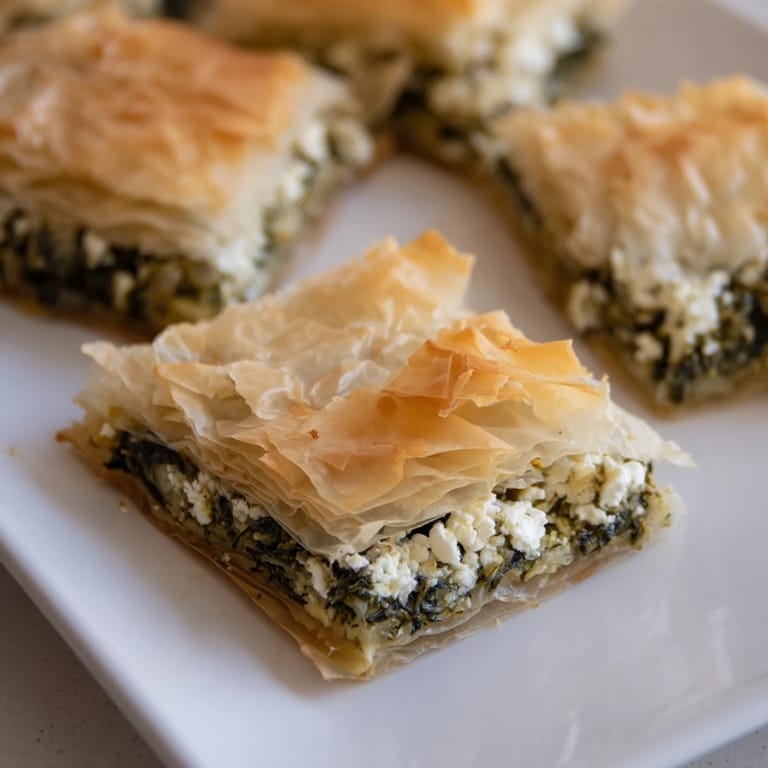
Pin Making spanakopita taught me that good cooking is mostly about respecting your ingredients and not rushing the quiet moments. Every time you make it, it gets easier, and every time it tastes like you've been doing this for years.
Recipe Q&A
- → Can I substitute other greens for spinach?
Yes, chard or a mix of leafy greens can be used as alternatives to spinach, providing a similar texture and flavor profile.
- → What type of cheese works best in this pie?
Feta cheese is traditional for its tangy creaminess, but ricotta or cottage cheese can be added for a milder, creamier texture.
- → How should phyllo dough be handled to prevent drying out?
Keep the phyllo covered with a damp cloth while working and brush each layer generously with oil or melted butter to maintain moisture and crispiness.
- → What is the best way to bake for even crispiness?
Bake at 350°F (175°C) until the phyllo turns golden brown and crisp, usually about 35-40 minutes, then let cool slightly before serving.
- → Are there any recommended wine pairings?
Light, crisp white wines like Assyrtiko or Sauvignon Blanc complement the rich flavors and flaky texture perfectly.