 Pin
Pin My first encounter with Hungarian goulash happened on a grey Budapest afternoon when a friend's grandmother opened her kitchen door and the smell hit me like warmth itself—that earthy, sweet paprika filling every corner. She barely glanced at her notes as she moved around the stove, her hands moving with the confidence of someone who'd made this same stew a hundred times. What struck me most wasn't the technique but how she'd taste, adjust, taste again, like she was having a conversation with the pot. I've spent years trying to recreate that exact moment, and this recipe is as close as I've gotten.
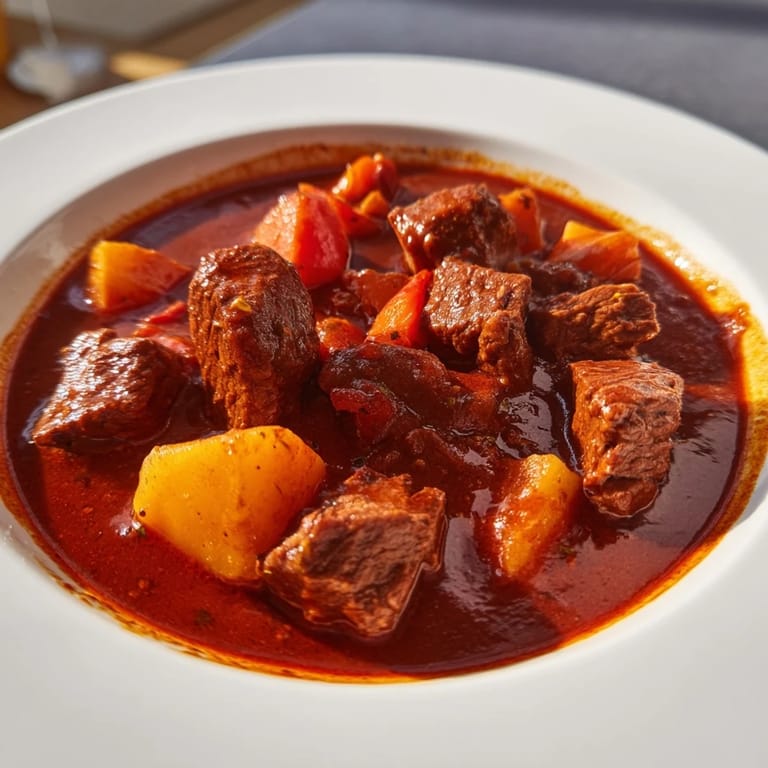
I made this for my partner on a Sunday when we'd both had rough weeks, and halfway through eating, they put their spoon down and just sat there quietly for a moment. That's when I knew this wasn't just a recipe—it was the kind of food that reminds you why you cook in the first place. The beef had turned so tender it practically melted, and the broth had deepened into this rich, almost wine-dark color that made everything feel intentional and cared for.
Ingredients
- Beef chuck (2 lbs), cut into 1-inch cubes: Chuck is forgiving and becomes silky as it braises—don't skimp on size or it'll disappear into the broth.
- Large onions (2), finely chopped: They're the base of everything, so take an extra minute to really soften them golden before anything else happens.
- Carrots (2 medium), sliced: Their sweetness balances the paprika's depth and they add a natural thickening quality as they break down.
- Red bell pepper (1 large), diced: This isn't just garnish—it softens into the sauce and gives you little pockets of brightness.
- Garlic (2 cloves), minced: A quick minute in the oil prevents it from becoming bitter, which matters more than you'd think.
- Potatoes (2 medium), peeled and cubed: Optional but recommended—they soak up the sauce and make this more of a complete meal.
- Hungarian sweet paprika (3 tbsp): This is non-negotiable and worth seeking out from a specialty store; the difference between mediocre and magical lives here.
- Caraway seeds (1 tsp): They add an unexpected earthiness that makes people pause and ask what that flavor is.
- Dried marjoram (1 tsp): Subtle but essential—it's what gives goulash its Hungarian accent.
- Black pepper (1/2 tsp), freshly ground: Fresh makes a surprising difference in a slow-cooked dish.
- Salt (1 tsp, plus more to taste): You'll add more as the stew reduces, so taste as you go.
- Bay leaf (1): A quiet contributor that you'll forget about until you taste it missing.
- Beef broth (4 cups): Good broth tastes like beef, not just salt—it's worth the extra money.
- Tomato paste (2 tbsp): Concentrated umami that darkens the color and deepens everything.
- Vegetable oil or lard (2 tbsp): Lard adds a richness that vegetable oil can't quite match, but either works fine.
Tired of Takeout? 🥡
Get 10 meals you can make faster than delivery arrives. Seriously.
One email. No spam. Unsubscribe anytime.
Instructions
- Build your base with onions and oil:
- Heat the oil in a large heavy pot over medium heat and add your chopped onions. This isn't a race—let them soften and turn golden, about 8 minutes, stirring now and then. You want them almost caramelized, because this is where your flavor foundation lives.
- Bloom the garlic:
- Add the minced garlic and let it cook for just 1 minute until it turns fragrant and pale. Stop here; any longer and it turns bitter.
- Brown the beef to lock in flavor:
- Add your beef cubes in batches if needed—don't crowd the pot. Let each batch sit for a minute or two before stirring, until they've developed a dark golden crust on most sides. This takes about 5 minutes total and is worth every second.
- Toast the paprika carefully:
- Sprinkle the paprika over the meat and onions and stir quickly, constantly, for about a minute. The heat will wake it up and fill your kitchen with that distinctive sweet pepper smell, but stir fast so it doesn't scorch.
- Layer in the aromatics and spices:
- Add the tomato paste, caraway seeds, marjoram, black pepper, and salt. Stir everything together until it's coating the meat like a spiced paste.
- Add the vegetables and broth:
- Add the carrots, bell pepper, and bay leaf, then pour in the beef broth slowly while scraping the bottom of the pot to lift any browned bits. That fond is liquid gold and deserves to be part of your stew.
- Begin the long, slow simmer:
- Bring everything to a gentle simmer, then reduce the heat to low, cover the pot, and let time do the work. Stir occasionally, about every 15-20 minutes, just to make sure nothing's sticking. After an hour, the beef should be starting to surrender.
- Finish with potatoes and final cook:
- Add your cubed potatoes if using them, and continue simmering uncovered for another 45 to 60 minutes. Watch as the stew slowly thickens and darkens, the beef becoming so tender it nearly dissolves when you test it with a spoon.
- Taste and adjust before serving:
- Pull out the bay leaf and taste. Add more salt or paprika if it needs it—this is your last chance to fine-tune before it hits the table.
 Pin
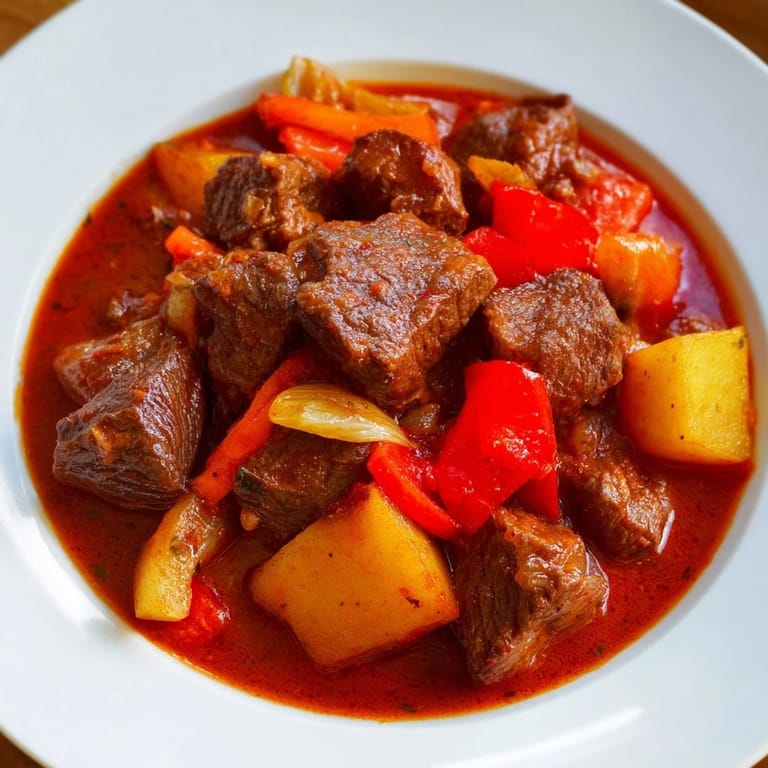
Pin There's a moment, usually right around hour 1.5, when you lift the lid and realize the broth has transformed from a thin liquid into something velvety that clings to the beef. That's when you know you're not just following steps anymore—you're actually making goulash.
The Magic of Time and Low Heat
Goulash isn't a recipe that rewards impatience or high heat. The long, gentle simmer is what melts the tough muscle fibers in chuck and develops those layers of flavor that make people ask for seconds. If you're used to quick weeknight dinners, this feels almost rebellious—permission to slow down and trust that nothing interesting happens fast.
Hungarian Paprika Matters More Than You'd Expect
Not all paprika is created equal, and this is one of the few recipes where that distinction truly matters. Hungarian paprika has a particular sweetness and depth that domestic paprika just doesn't reach. A good spice shop or online source is worth the extra effort; it transforms this from a serviceable beef stew into something with actual character and soul.
Serving and Storage Wisdom
Serve this with crusty bread, egg noodles, or if you're feeling ambitious, homemade csipetke dumplings. The real secret, though, is that goulash is even better the next day—the flavors marry overnight and the whole thing tastes rounder and more confident. Store it in the fridge for up to four days, or freeze it for months.
- Cold weather or a quiet night in calls for this more than any other meal I know.
- Don't skip the bread; you'll want something to drag through the broth at the end.
- If you're feeding more people, this scales beautifully—just add more beef and adjust the cooking time slightly.
 Pin
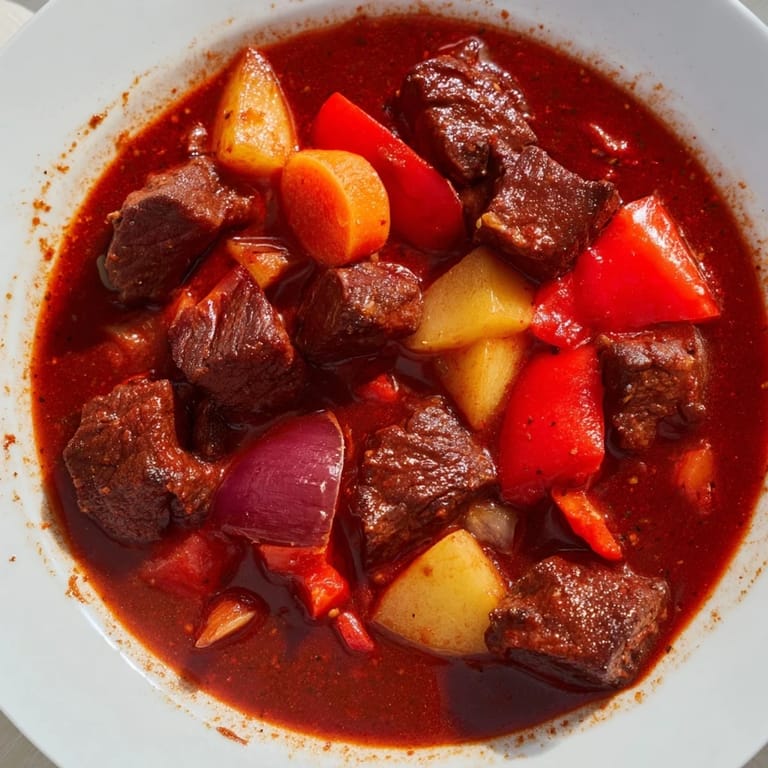
Pin This recipe is the kind of cooking that makes you feel capable and feeds people in a way that matters. It's patient, forgiving, and always worth the time.
Recipe Q&A
- → What cut of beef is best for this stew?
Beef chuck is ideal due to its marbling, which breaks down during slow cooking, resulting in tender, flavorful meat.
- → Can I adjust the spice level?
Yes, adding a pinch of hot paprika or chopped chili peppers will increase the heat without overpowering the other flavors.
- → Is it necessary to brown the beef before simmering?
Browning the beef adds rich caramelized flavors and improves the overall depth of the stew.
- → What side dishes pair well with this stew?
Rustic bread, egg noodles, or traditional csipetke dumplings complement this stew nicely by soaking up its flavorful broth.
- → Can potatoes be omitted?
Yes, potatoes are optional; the stew remains hearty and satisfying without them.