 Pin
Pin One Tuesday evening, my kitchen filled with the most intoxicating aroma of ginger and garlic hitting hot oil, and I realized I'd been craving something both comforting and alive on my tongue. I'd picked up some gorgeous ground beef at the market with no real plan, but when I spotted fresh ginger in the crisper drawer, the whole dish clicked into place. This Korean-inspired bowl came together almost by accident that night, yet it tasted like I'd been perfecting it for years. The combination of savory beef, bright pickled vegetables, and whatever base I chose felt impossibly versatile and genuinely exciting. Now it's become my go-to when I want something that feels special without needing hours in the kitchen.
I made this for my sister last month when she mentioned wanting something "healthier but not boring," and watching her face light up when she took that first bite reminded me why I love cooking for people. She actually asked for the recipe before she even finished eating, which basically never happens with her. The way everyone customized their bowls afterward—one adding extra gochujang, another piling on double the pickles—made me realize this dish brings people together in the most casual, unpretentious way.
Ingredients
- Ground beef (500 g/1 lb lean): Choose the leanest cut you can find; excess fat will make the sauce greasy rather than glossy, and you'll appreciate how the meat actually tastes without the heaviness.
- Soy sauce (2 tablespoons): This is your umami anchor, so don't skip it or substitute with something lighter—grab tamari if you're avoiding gluten and the flavor will be just as deep.
- Toasted sesame oil (1 tablespoon): The word "toasted" matters enormously here; regular sesame oil is pale and mild, but toasted gives you that nutty, almost smoky richness that makes people wonder what your secret ingredient is.
- Brown sugar (1 tablespoon): This balances the salty-savory with just enough sweetness to round out the ginger and garlic without tasting dessert-like.
- Fresh ginger (2 teaspoons grated): Never use ground ginger here; the fresh stuff gives you those little fibrous bits that release warmth as you chew, completely changing the eating experience.
- Garlic (3 cloves minced): Mince it yourself rather than using pre-minced; the aroma alone tells you it's fresher and more potent.
- Gochujang or sriracha (1 teaspoon optional): This is your heat and depth—gochujang brings fermented complexity while sriracha is brighter and sharper, so choose based on your mood.
- Green onions (2 sliced): Add these at the very end so they stay crisp and bright rather than wilting into the hot beef.
- Sesame seeds (1 tablespoon plus extra): Toast them lightly in a dry pan first if you have time; it unlocks an almost popcorn-like flavor that makes people notice the difference.
- Rice or cauliflower rice (4 cups cooked): Jasmine rice absorbs flavors beautifully, but cauliflower rice lets the beef and pickles truly shine if you're keeping it lighter.
- Carrot (1 cup julienned): The sweetness of raw carrot against the pickled brine is revelatory—don't skip this or you'll miss the textural balance.
- Cucumber (1 cup thinly sliced): Use a mandoline if you have one; the paper-thin slices pickle faster and taste more delicate.
- Radish (½ cup thinly sliced): This adds a peppery bite that wakes up your palate between bites of rich beef.
- Rice vinegar (½ cup): Its gentleness means the pickles stay bright rather than harsh, which is crucial here.
- Sugar and salt for pickling (1 tablespoon sugar, ½ teaspoon salt): This ratio is forgiving; taste as you go and adjust if you prefer things sweeter or more brined.
Tired of Takeout? 🥡
Get 10 meals you can make faster than delivery arrives. Seriously.
One email. No spam. Unsubscribe anytime.
Instructions
- Start the pickles first:
- Whisk rice vinegar, sugar, and salt in a bowl until the sugar fully dissolves—this takes just a minute but matters more than you'd think, because undissolved sugar grains won't distribute evenly. Add your carrot, cucumber, and radish, toss everything together, and set it aside; even 15 minutes makes a real difference, but if you need to prep other components, an hour is even better.
- Get your rice base ready:
- Cook jasmine or cauliflower rice according to package directions and keep it warm on the stove or in a covered bowl. This step seems obvious, but timing it so the rice is still steaming when you plate makes the whole bowl feel more cohesive.
- Brown the beef deeply:
- Heat a large skillet over medium-high until it's genuinely hot—you want to hear a sizzle when the beef hits the pan. Break the meat into small pieces as it cooks, stirring every minute or so, and let it cook undisturbed for 2-3 minutes between stirs so it develops that beautiful brown crust rather than steaming itself into gray crumbles.
- Build the sauce:
- Once the beef is cooked through, add soy sauce, sesame oil, brown sugar, ginger, garlic, and gochujang if you're using it, stirring constantly for the first 30 seconds so everything combines smoothly. Keep cooking for 2-3 more minutes until the mixture becomes aromatic and slightly reduced, which is when you know the flavors have really melded.
- Finish with brightness:
- Remove from heat and stir in your sliced green onions and sesame seeds, letting the heat wilt them just slightly so they stay mostly crisp. Taste here and adjust salt or heat as needed; this is your chance to make it perfectly yours.
- Assemble with intention:
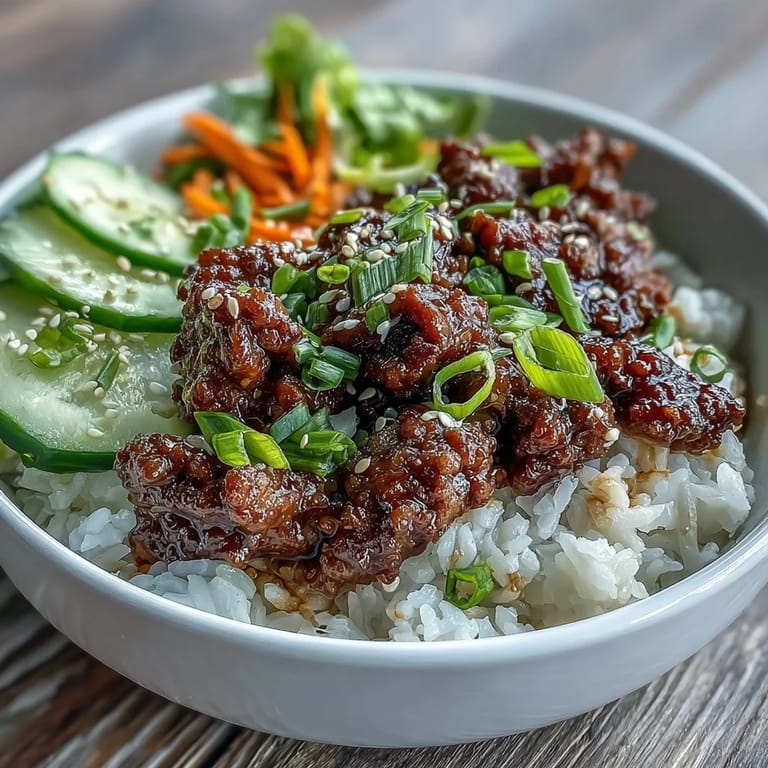
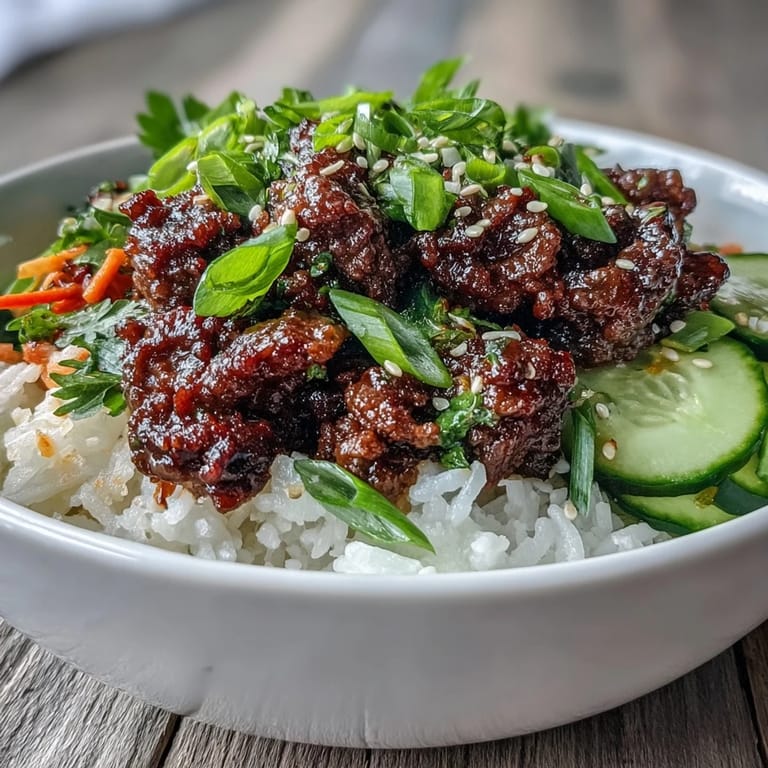
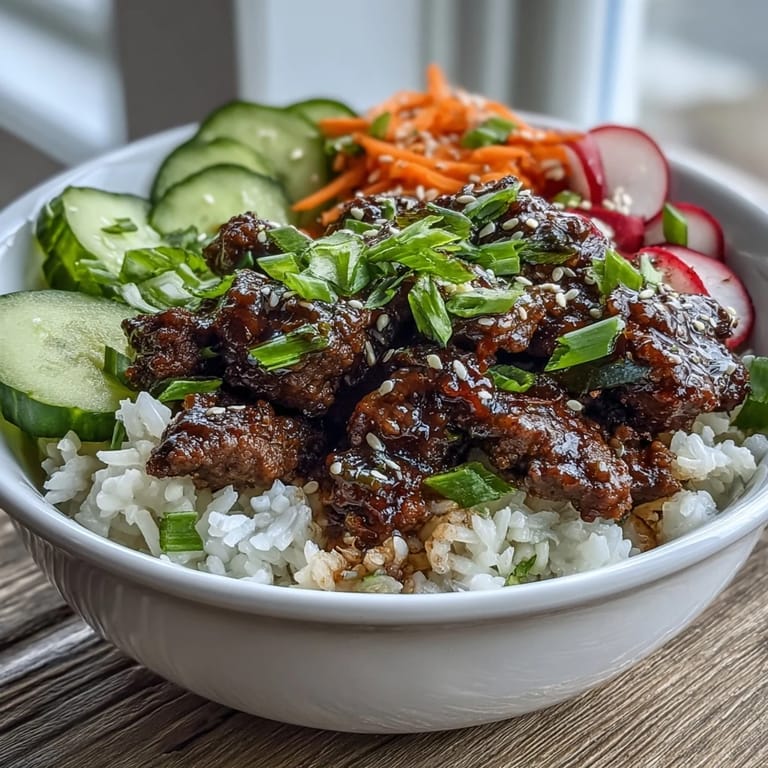
- Divide warm rice among bowls, top generously with seasoned beef and its sauce, then add a big handful of pickled vegetables so you get all three textures in every bite. Finish with extra green onions and sesame seeds, then serve immediately while everything is still at its best temperature.
 Pin
Pin There's a moment when everyone in my household converges in the kitchen while this is cooking, drawn in by the smell of ginger and sesame, and they hover around the stove asking "is it ready yet?" That's when I know the recipe is working. It's not fancy or pretentious, but it's genuinely delicious in a way that makes people feel cared for.
Why the Pickles Matter Most
The pickled vegetables are genuinely the soul of this bowl, and I learned this the hard way by serving it without them and watching people push food around looking for something to break up the richness. Those quick-pickled carrot, cucumber, and radish slices do something almost magical—they cut through the umami-heavy beef, reset your palate between bites, and add a brightness that makes the whole bowl taste fresher than it has any right to be. The pickling liquid itself is just rice vinegar, sugar, and salt, nothing complicated, but it transforms raw vegetables into something that tastes intentional and special. The fact that it all happens while you're cooking the beef means there's zero extra work, just smart timing.
Rice Versus Cauliflower Rice
I've made this with both jasmine rice and cauliflower rice depending on the week and my mood, and honestly, they're equally valid choices that completely change the eating experience. Jasmine rice is more forgiving and absorbent, soaking up the beef's savory sauce so every grain tastes like part of the whole composition, which is deeply satisfying. Cauliflower rice keeps things lighter and lets the beef and pickles become the true stars, which works beautifully if you're already feeling full or want to emphasize the fresh vegetable component. Neither is "better"—pick based on what your body needs that day, because this recipe is flexible enough to support whatever choice you make.
Building Your Perfect Bowl
The assembly process is where you get to make this dish completely your own, which is one of my favorite parts about it. Some people layer everything carefully for Instagram-worthy presentation, others just pile it all together because they're hungry, and both approaches taste equally good. The key is remembering that you want rice, then beef with its sauce, then a generous amount of pickled vegetables so you're getting textural variety in every spoonful—this isn't about looking perfect, it's about tasting perfect.
- Add a fried or soft-boiled egg on top: The runny yolk becomes an instant sauce that makes everything richer and more luxurious.
- Toast your sesame seeds in a dry pan first: Just a minute or two over medium heat unlocks a deeper, almost popcorn-like flavor that makes people ask what you did differently.
- Taste the pickled vegetables as they sit: They'll continue absorbing flavor, so after 30 minutes they're noticeably more flavorful than at 15 minutes—choose based on how much tang you want.
 Pin
Pin This bowl has become my answer to the 5 PM question of "what's for dinner?" because it's fast enough to make on a weeknight but special enough to serve when people are coming over. Every element comes together in about 35 minutes, and you'll find yourself making it again and again because it just works.
Recipe Q&A
- → Can I make the pickled vegetables ahead of time?
Absolutely! The pickled vegetables actually develop more flavor when made ahead. They'll keep in the refrigerator for up to a week in an airtight container, making them perfect for meal prep or quick additions to other dishes throughout the week.
- → What's the best way to reheat leftovers?
Store components separately for best results. Reheat the beef gently in a skillet over medium heat with a splash of water to prevent drying. Warm the rice in the microwave or on the stovetop. The pickled vegetables are best served cold or at room temperature.
- → Can I use other vegetables for the pickled component?
Certainly! While carrot, cucumber, and radish create a classic combination, you can also include thinly sliced red onion, bell pepper strips, or even daikon radish. The key is cutting vegetables thinly so they absorb the pickling liquid quickly and evenly.
- → Is gochujang necessary for the seasoning?
Gochujang adds authentic Korean flavor with its fermented chili paste complexity, but it's completely optional. Sriracha works as a substitute if you want heat, or simply omit both for a milder dish that still delivers plenty of flavor from garlic, ginger, and sesame.
- → How can I make this bowl spicier?
Increase the heat by adding more gochujang or sriracha to the beef mixture. You can also add sliced fresh chili peppers to the pickling vegetables or top the finished bowl with Korean chili flakes (gochugaru) for an extra kick that builds on the existing flavors.
- → What other toppings work well with this bowl?
A fried or soft-boiled egg adds richness and protein. Kimchi brings additional fermented flavor and crunch. Sliced avocado, fresh cilantro, or cucumber ribbons also complement the seasoned beef beautifully while adding different textures and flavors to the bowl.