 Pin
Pin There's something almost defiant about making pasta with just three ingredients. One Wednesday night, standing in my kitchen with almost no energy left, I opened the fridge and found butter, a wedge of Parmesan, and dried pasta in the cupboard. What emerged from that constraint wasn't a compromise—it was pure, silky comfort in a bowl. The simplicity forced me to pay attention, to feel the pasta water transform into something luxurious. Since then, this has become my go-to when life gets loud and my kitchen energy is quiet.
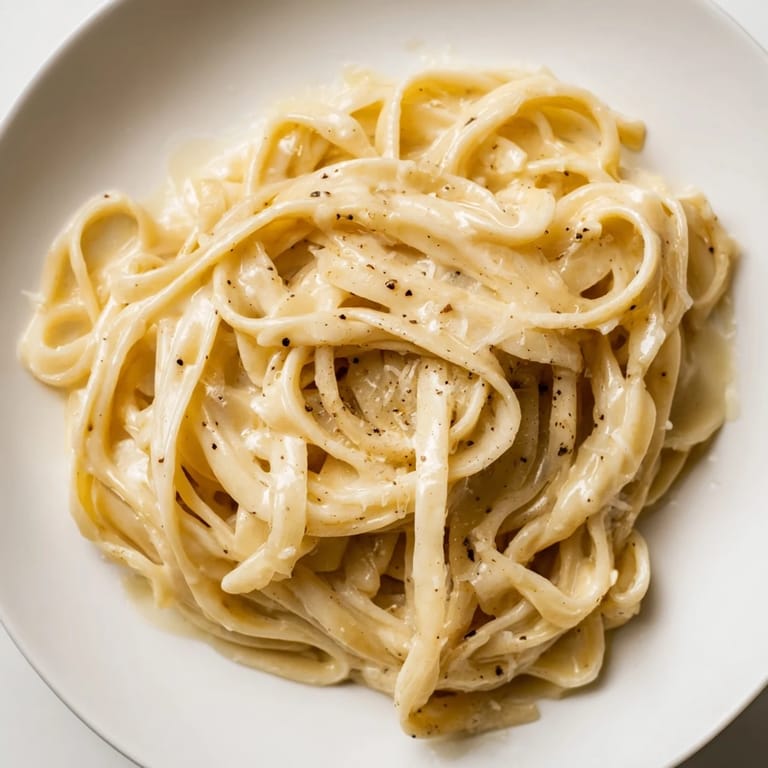
I made this for my partner on a chaotic Friday when everything else felt too complicated, and watching them take the first bite—how their shoulders relaxed—reminded me that sometimes the best meals are the ones that ask the least of you but give back so much. The pasta was golden and clinging to itself with buttery richness, and I realized that constraint isn't about limitation; it's about clarity.
Ingredients
- Dried pasta (200 g): Spaghetti, linguine, or fettuccine work beautifully because their shape holds onto the sauce; use whatever you have, but thinner shapes tend to feel silkier.
- Unsalted butter (50 g): The quality here actually matters—good butter has a gentler, more nuanced flavor that isn't drowned out by just two other ingredients.
- Freshly grated Parmesan cheese (60 g): Pre-grated won't emulsify the same way; the starch coating prevents the creamy magic, so grate it fresh if you can.
- Salt, to taste: Use it generously in the pasta water, then taste as you finish—the Parmesan brings saltiness too.
- Freshly ground black pepper (optional): A small grind at the end gives brightness without changing the minimalist spirit.
Tired of Takeout? 🥡
Get 10 meals you can make faster than delivery arrives. Seriously.
One email. No spam. Unsubscribe anytime.
Instructions
- Set the foundation with salted water:
- Fill a large pot with water and salt it so it tastes like the sea. Bring it to a rolling boil before adding the pasta; you want that initial shock of heat to cook the exterior evenly.
- Cook the pasta al dente:
- Follow the package timing, but taste it a minute or two before the suggested time. You're looking for that tender bite, where the pasta still has a slight resistance in the very center.
- Save the liquid gold:
- Before you drain anything, scoop out about 150 ml of that starchy, cloudy pasta water into a measuring cup or small bowl. This water is what transforms butter and cheese into a cohesive, creamy sauce.
- Build the sauce off the heat:
- Return the hot, drained pasta to the pot, take it off the heat, and add the butter in chunks. Toss it constantly so the residual heat melts the butter and distributes it evenly through the strands.
- Emulsify the magic:
- Rain the Parmesan over the pasta while tossing vigorously, then add the pasta water a little at a time. You're not stirring; you're tossing with intention, watching as the butter, cheese, and starch come together into something creamy and cohesive.
- Taste and adjust:
- Add more pasta water if it looks too thick, or let it sit for 30 seconds if it's too loose. Season with salt and pepper, taste again, then serve immediately while everything is still hot and silky.
 Pin
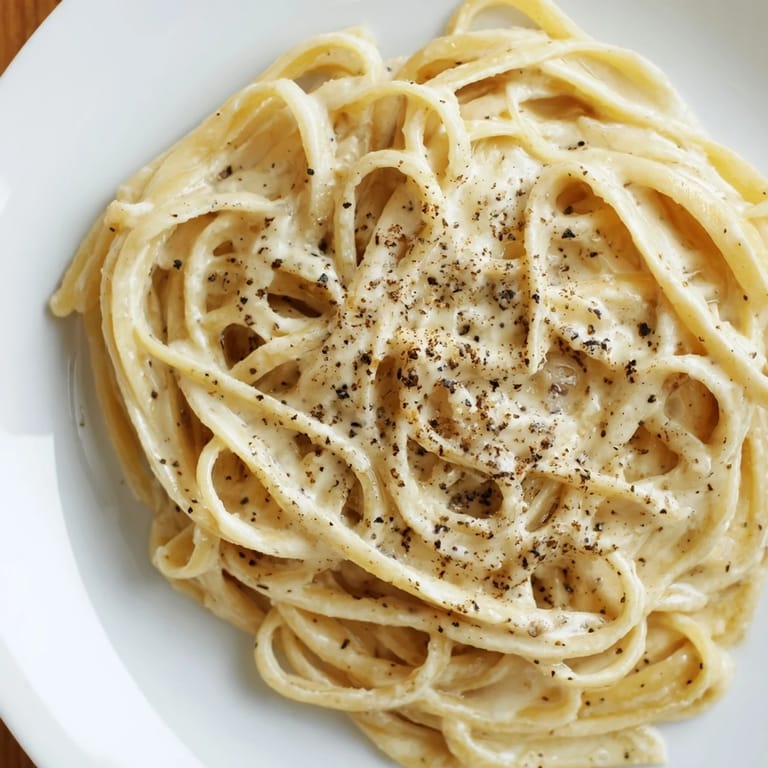
Pin I'll never forget the moment I realized that a three-ingredient pasta could taste restaurant-quality without pretense or fuss. It shifted something in how I think about cooking—that restraint and presence matter more than a long list of things. This dish became my anchor on overwhelming days, proof that simplicity doesn't mean sacrifice.
The Art of Emulsification
What looks like a simple sauce is actually an emulsion, where the starch in the pasta water acts as a bridge between the fat in the butter and the protein in the Parmesan. Understanding this changes everything: you stop seeing it as mixing ingredients and start seeing it as a technique where temperature, timing, and movement matter. The vigorous tossing isn't just for show—it's what keeps the components unified into something creamy and glossy rather than separated and greasy.
Why This Works for Lazy Nights
The genius of this pasta is that it lives in the space between effort and reward. You're not chopping vegetables, you're not browning garlic, you're not watching something simmer for twenty minutes. But you're also not eating something that tastes lazy or half-hearted. It's intentional simplicity: every ingredient present because it matters, every step quick but purposeful, and the result tastes like someone cared about what they were eating—even if that someone is exhausted you on a Wednesday night.
Variations and Gentle Additions
The beauty of this foundation is that it welcomes small, considered additions without losing its spirit. A whisper of freshly grated nutmeg brings warmth, a handful of fresh herbs adds brightness, a crack of red pepper flakes introduces heat. But these are all optional—the recipe is complete on its own, and sometimes the kindest thing you can do for a tired evening is to leave well enough alone.
- Swap the Parmesan for Pecorino Romano if you want something sharper and more assertive.
- Add a tiny pinch of nutmeg or a torn basil leaf if you have it, but only if it feels right in the moment.
- Leftover pasta reheats gently with a splash of water in a pan, returning to silkiness without much effort.
 Pin
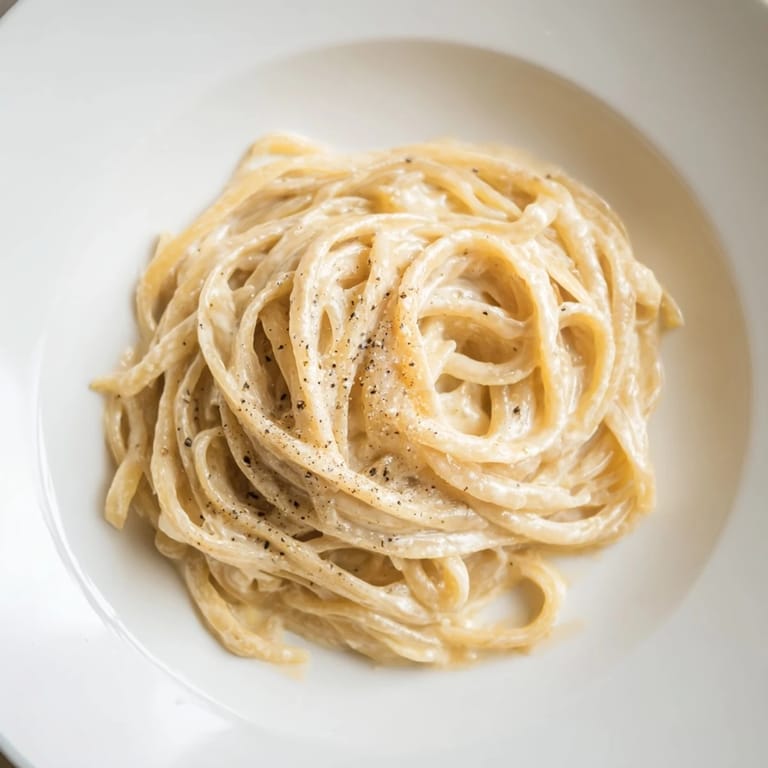
Pin This pasta is proof that the most comforting meals don't need to be complicated. It's the recipe I come back to when everything else feels impossible, a small act of care made simple.
Recipe Q&A
- → How do I achieve the creamy sauce texture?
Reserve pasta cooking water and mix it with butter and Parmesan off heat. The starchy water emulsifies with cheese and butter, creating a smooth sauce.
- → Can I use different types of pasta?
Yes, spaghetti, linguine, or fettuccine work well for coating with the sauce evenly.
- → What can I add for extra flavor?
A pinch of freshly grated nutmeg or fresh chopped herbs enhances the dish's taste without overpowering its simplicity.
- → Is it possible to make this gluten-free?
Substituting regular pasta with gluten-free pasta is a simple way to accommodate dietary needs without changing the cooking process.
- → How should I season the pasta?
Season with salt to taste during cooking and add freshly ground black pepper optionally after mixing the sauce.