 Pin
Pin The smell of garlic and onion hitting hot olive oil always pulls me straight into the kitchen, no matter what else I'm doing. This soup became a weeknight fixture after a particularly chaotic Tuesday when I needed something that could feed everyone without much fuss. I threw in what I had in the fridge, and the pot bubbled away while I helped with homework. By the time we sat down, the kitchen smelled like a hug, and every bowl was scraped clean.
I made this for my neighbor when she came home from the hospital, and she told me later it was the first thing that tasted like comfort instead of obligation. Her kids kept asking for seconds, and she didnt have to do a thing except reheat it. That moment reminded me that soup isnt just food, its care in a bowl, and this one delivers every single time.
Ingredients
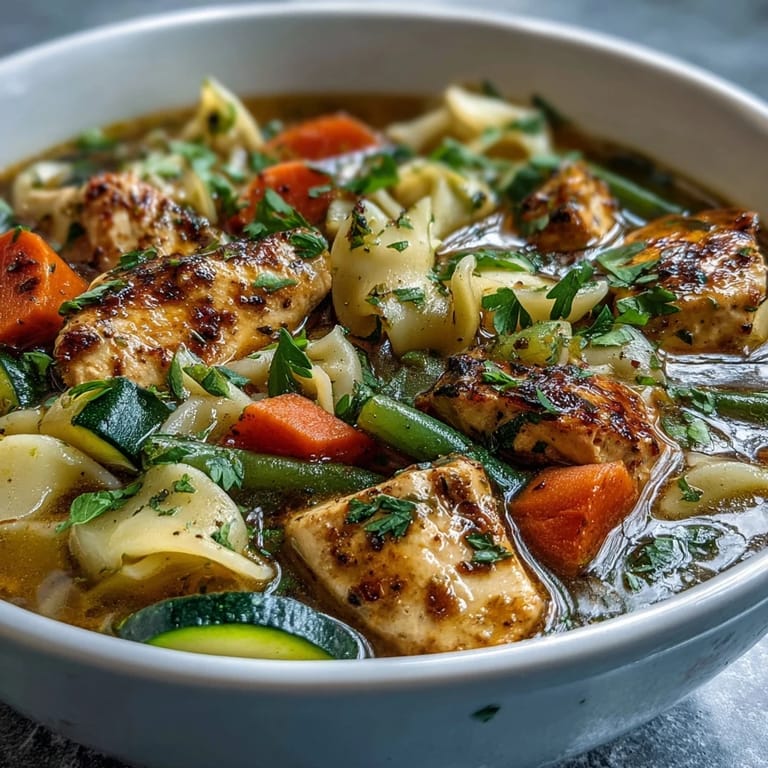
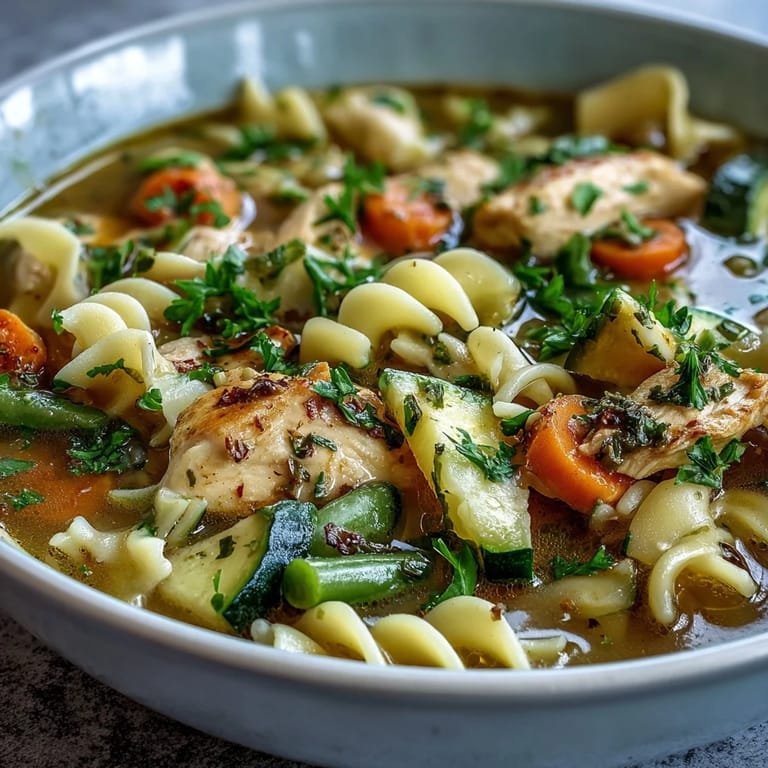
- Boneless, skinless chicken breasts: I cut them into small cubes so they cook quickly and stay tender, and every spoonful gets a bit of protein without feeling too meaty.
- Carrots: They add natural sweetness and hold up beautifully during the simmer, never turning to mush if you slice them evenly.
- Celery: This gives the broth that classic soup backbone, and I always chop it the same size as the carrots for even cooking.
- Onion: A finely chopped onion melts into the base and builds the savory foundation the whole pot needs.
- Garlic: Two cloves minced and added after the onion softens will perfume your entire kitchen without burning.
- Zucchini: I dice it into bite sized pieces, and it soaks up all the flavors while adding a slight freshness.
- Green beans: Trimmed and cut into one inch pieces, they bring color and a little snap to each bite.
- Frozen peas: I add these near the end so they stay bright green and dont turn gray from overcooking.
- Diced tomatoes: The can with juices adds acidity and body, balancing the richness of the broth.
- Fresh parsley: Stirred in at the very end, it wakes up the whole pot with a burst of green flavor.
- Small pasta shapes: Ditalini or elbow macaroni are perfect because they fit on a spoon and cook right in the soup.
- Low sodium chicken broth: Using low sodium lets you control the salt, especially once the pasta releases its starch.
- Olive oil: Just one tablespoon to start the base without making the soup greasy.
- Dried thyme and basil: These herbs layer in warmth and a hint of Italian comfort without overpowering the vegetables.
- Bay leaf: It adds a subtle depth you cant quite name, but youll miss it if you leave it out.
- Salt and black pepper: Always taste before serving, because every broth and tomato can varies in seasoning.
Tired of Takeout? 🥡
Get 10 meals you can make faster than delivery arrives. Seriously.
One email. No spam. Unsubscribe anytime.
Instructions
- Start the base:
- Heat the olive oil in a large soup pot over medium heat, then add the onion, carrots, and celery. Saute for about five minutes, stirring occasionally, until everything softens and the onion turns translucent.
- Add the garlic:
- Stir in the minced garlic and cook for just one minute, letting it become fragrant without browning. This step is quick, so stay close to the stove.
- Brown the chicken:
- Add the chicken cubes and cook for four to five minutes, stirring often, until theyre lightly browned on the outside. They dont need to be fully cooked yet, theyll finish in the broth.
- Build the flavor:
- Stir in the zucchini, green beans, diced tomatoes with their juices, thyme, basil, bay leaf, salt, and pepper. Mix everything together so the spices coat the vegetables and chicken evenly.
- Simmer the soup:
- Pour in the chicken broth and bring the pot to a boil, then reduce the heat to low. Cover and let it simmer gently for fifteen minutes so the vegetables soften and the flavors marry.
- Cook the pasta:
- Add the pasta and frozen peas, then simmer uncovered for ten to twelve minutes, stirring occasionally. The pasta should be al dente and the chicken fully cooked through.
- Finish and season:
- Remove the bay leaf and discard it, then stir in the fresh parsley. Taste and adjust the salt and pepper if needed before serving.
- Serve hot:
- Ladle into bowls and, if you like, sprinkle with extra parsley or a little grated Parmesan. This soup is best enjoyed with crusty bread on the side.
 Pin
Pin One Sunday afternoon, I made a double batch and froze half in individual containers. A few weeks later, when I was too tired to think, I pulled one out and had dinner ready in minutes. That small act of kindness to my future self felt like the best gift I could have given, and now I always make extra.
Making It Your Own
This soup is incredibly flexible, and Ive swapped vegetables based on whatever was about to go bad in my crisper drawer. Corn, spinach, and bell peppers all work beautifully, and sometimes I toss in a handful of kale during the last few minutes for extra greens. If you want a richer, deeper flavor, use shredded rotisserie chicken instead of raw breasts and add it when you stir in the pasta so it just warms through without drying out.
Storage and Reheating
Leftover soup keeps well in the fridge for up to four days in an airtight container, though the pasta will soften a bit more each day. When reheating, I add a splash of broth or water to loosen it up, and a quick stir over medium heat brings everything back to life. For longer storage, freeze the soup before adding the pasta, then cook fresh pasta when you reheat so it stays perfectly tender.
Pairing and Serving Suggestions
I love serving this with a thick slice of sourdough or a warm baguette for dipping into the broth. A crisp green salad with lemon vinaigrette balances the heartiness, and if youre pouring wine, a chilled Sauvignon Blanc complements the vegetables and chicken without overpowering the delicate flavors.
- Sprinkle freshly grated Parmesan on top for a salty, nutty finish.
- Add a squeeze of lemon juice just before serving to brighten the whole bowl.
- If feeding kids, serve with oyster crackers or goldfish on the side for a fun crunch.
 Pin
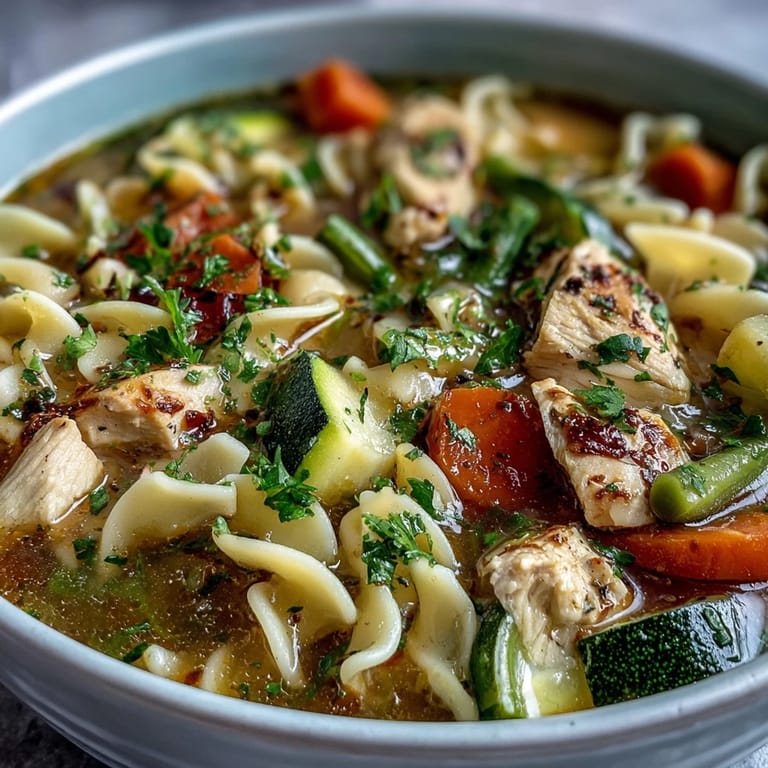
Pin This soup has become one of those recipes I turn to when I need something reliable, nourishing, and easy to share. I hope it brings the same warmth to your table that it has to mine.
Recipe Q&A
- → Can I use rotisserie chicken instead of raw chicken breasts?
Yes, rotisserie chicken works wonderfully and saves time. Simply shred the cooked chicken and add it when you add the pasta, allowing it to heat through for the final 10-12 minutes of cooking.
- → What pasta shapes work best for this soup?
Small pasta shapes like ditalini, elbow macaroni, orzo, or small shells work perfectly. They're easy to eat with a spoon and cook evenly in the broth. Avoid large pasta shapes that may overpower the other ingredients.
- → How can I make this soup gluten-free?
Simply substitute regular pasta with your favorite gluten-free pasta variety. Also check that your chicken broth is certified gluten-free, as some brands may contain trace amounts of gluten.
- → Can I freeze this soup for meal prep?
Yes, but for best results, freeze the soup without the pasta. Pasta can become mushy when frozen and reheated. Add freshly cooked pasta when reheating the thawed soup.
- → What vegetables can I substitute or add?
This soup is very versatile. Try adding corn, bell peppers, spinach, kale, or mushrooms. You can swap zucchini for yellow squash or replace green beans with snap peas or broccoli florets.
- → How do I prevent the pasta from absorbing too much broth?
Cook the pasta just until al dente and serve the soup immediately. If storing leftovers, the pasta will absorb more liquid. You can add extra broth when reheating to restore the desired consistency.