 Pin
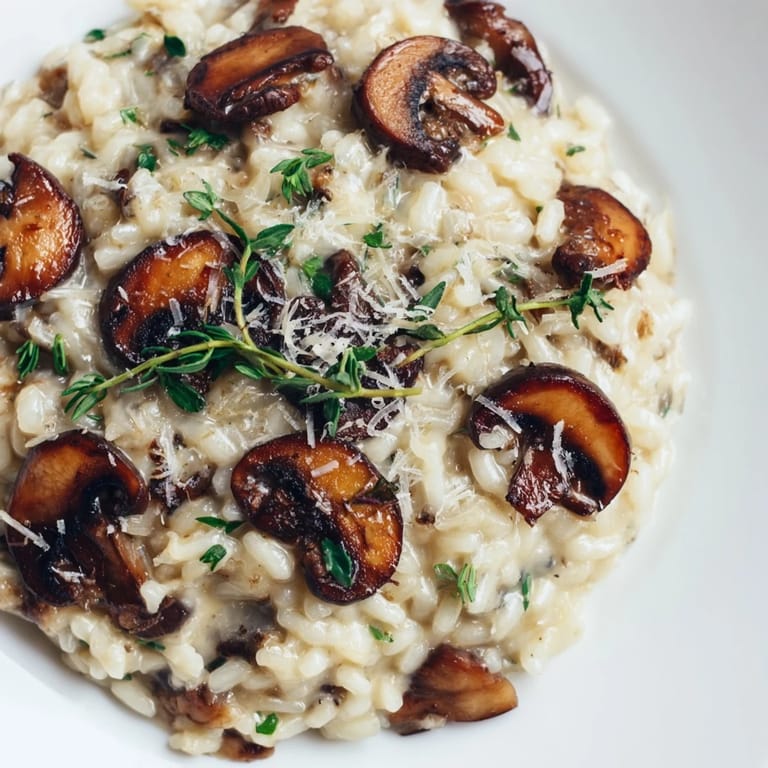
Pin The smell of mushrooms roasting hits differently when you're standing in a cold kitchen on a Sunday afternoon, watching them shrink and darken into something almost meaty. I wasn't trying to impress anyone the first time I made this risotto, just craving something warm that required my full attention. Stirring became meditative, the kind of task that clears your head without you noticing. By the time I plated it, the kitchen smelled like a trattoria I'd never been to. That bowl made me feel like I'd earned something quiet and good.
I made this for a friend who claimed she didn't like risotto because it was always too mushy. She stood in my kitchen, glass of wine in hand, watching me add the broth in slow stages. When I handed her a spoon to taste, she paused, then went back for another bite. She didn't say much, just nodded and asked if I'd write it down for her. That quiet approval meant more than any loud compliment.
Ingredients
- Mixed mushrooms (400 g): Use a variety like cremini, shiitake, and button for layers of texture and flavor; roasting them concentrates their earthiness in a way pan frying never quite does.
- Olive oil (2 tbsp for mushrooms, 1 tbsp for risotto): Good olive oil matters here because it coats the mushrooms and helps them caramelize without burning.
- Sea salt and black pepper: Season the mushrooms before roasting so the salt draws out moisture and intensifies their flavor as they cook.
- Fresh thyme (2 tsp): Thyme and mushrooms are old friends; the herb clings to the mushrooms and perfumes the whole dish without overpowering it.
- Vegetable broth (1.5 L): Keep it warm on a back burner so you don't shock the rice with cold liquid, which slows down the cooking and messes with the creaminess.
- Unsalted butter (2 tbsp): Butter and olive oil together give you the best of both worlds, richness and a higher smoke point for the base.
- Yellow onion (1 medium): Dice it fine so it melts into the risotto and becomes part of the creamy background rather than a distinct bite.
- Garlic (2 cloves): Add it after the onion softens so it doesn't burn and turn bitter in the hot pan.
- Arborio rice (320 g): The short, starchy grains release their starch slowly, creating that signature creaminess you can't get from long grain rice.
- Dry white wine (120 ml): It adds acidity that cuts through the richness and helps deglaze the pan; don't skip it even if you're not a wine person.
- Parmesan cheese (60 g): Grate it fresh right before stirring it in; pre grated stuff doesn't melt the same way and can make the risotto grainy.
- Fresh parsley (2 tbsp): A handful of chopped parsley at the end brightens everything and adds a pop of color against all that cream and brown.
Tired of Takeout? 🥡
Get 10 meals you can make faster than delivery arrives. Seriously.
One email. No spam. Unsubscribe anytime.
Instructions
- Roast the mushrooms:
- Preheat your oven to 220°C (425°F) and toss the sliced mushrooms with olive oil, salt, pepper, and thyme until every piece is lightly coated. Spread them on a baking sheet in a single layer and roast for 20 to 25 minutes, stirring once halfway through, until they're golden and their edges have crisped up.
- Start the risotto base:
- While the mushrooms roast, heat the butter and olive oil in a large, heavy bottomed saucepan over medium heat, then add the finely chopped onion and cook for about 5 minutes until it's soft and translucent. Stir in the minced garlic and cook for another minute until the kitchen smells warm and inviting.
- Toast the rice:
- Add the arborio rice to the pan and stir constantly for about 2 minutes, letting each grain get coated in the fat and lightly toasted. You'll hear the rice start to crackle softly, and it'll smell faintly nutty.
- Deglaze with wine:
- Pour in the white wine and stir until it's almost completely absorbed, scraping up any bits stuck to the bottom of the pan. The rice will sizzle and the alcohol will cook off, leaving behind a subtle tang.
- Add broth gradually:
- Start adding the warm vegetable broth one ladleful at a time, stirring frequently and waiting until each addition is mostly absorbed before adding the next. This slow process, which takes about 25 to 30 minutes, coaxes the starch out of the rice and creates that creamy texture.
- Finish with mushrooms and cheese:
- When the rice is tender but still has a slight bite, stir in the roasted mushrooms (save a few for garnish if you want), the grated Parmesan, and the chopped parsley. Taste and adjust the seasoning with salt and pepper as needed.
- Serve immediately:
- Spoon the risotto into shallow bowls, top with the reserved mushrooms and extra Parmesan, and serve right away while it's still creamy. Risotto waits for no one.
 Pin
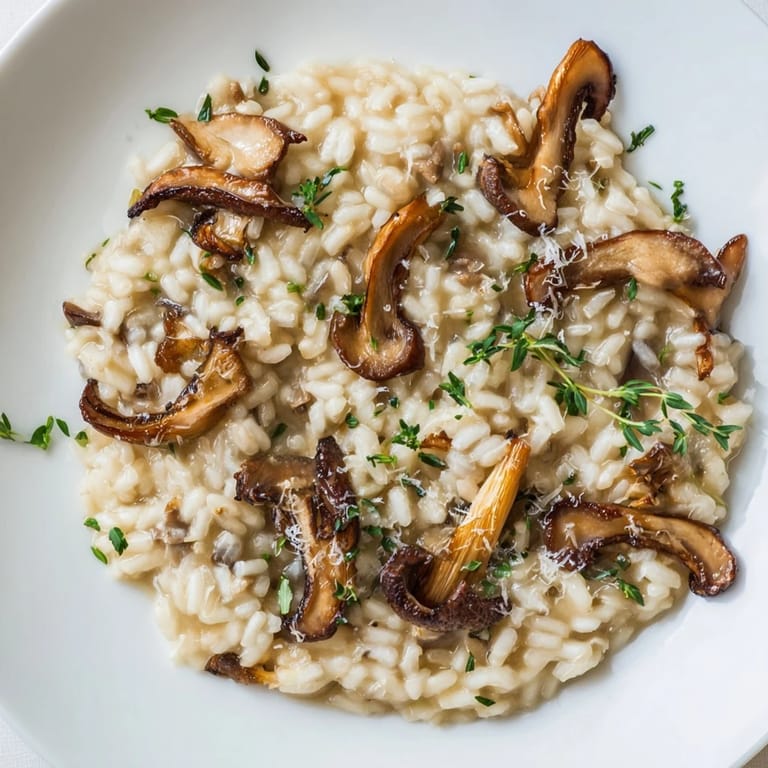
Pin There was a night I made this after a long week, and I realized halfway through that I'd bought the wrong kind of rice. I used what I had, and it turned out fine, not perfect, but good enough that I ate two bowls standing at the stove. Sometimes the dish teaches you that close enough is still worth celebrating. That night, the risotto wasn't about precision; it was about the act of making something warm when everything else felt cold.
Choosing Your Mushrooms
Not all mushrooms roast the same way, and that's actually a good thing. Cremini and button mushrooms release a lot of water, so they shrink down and caramelize beautifully, while shiitake hold their shape and add a chewy, almost smoky depth. I like mixing at least two kinds because the variety gives you different textures in every bite. If you can find oyster or maitake, even better; they crisp up on the edges and turn almost lacy. Just avoid portobello caps unless you slice them thin, because they can get a little slimy if they're too thick.
The Broth Matters More Than You Think
I used to think any broth would do, but the quality really shows up in risotto because there's nowhere for it to hide. A good vegetable broth with some body, maybe one that's been simmered with herbs and root vegetables, makes the whole dish taste fuller. If your broth is bland, the risotto will be too, no matter how much cheese you add. I keep a pot of broth on low heat on the back burner so it's always ready to ladle in without cooling down the rice. Cold broth shocks the rice and slows everything down, and suddenly your 30 minute risotto turns into 45.
Making It Your Own
Risotto is one of those dishes that invites you to improvise once you've made it a few times. I've stirred in a handful of spinach at the end, folded in leftover roasted squash, even added a spoonful of miso paste for extra umami. The technique stays the same, but the flavors can shift depending on what's in your fridge or what sounds good that day. Some nights I skip the wine and use a splash of vermouth, or I swap the Parmesan for Pecorino when I want something sharper.
- Try adding a handful of peas or asparagus in the last few minutes for a pop of green and sweetness.
- A squeeze of lemon juice at the end can brighten the whole dish if it feels too heavy.
- If you want it richer, stir in an extra tablespoon of butter right before serving; it makes the risotto glossy and even more luxurious.
 Pin
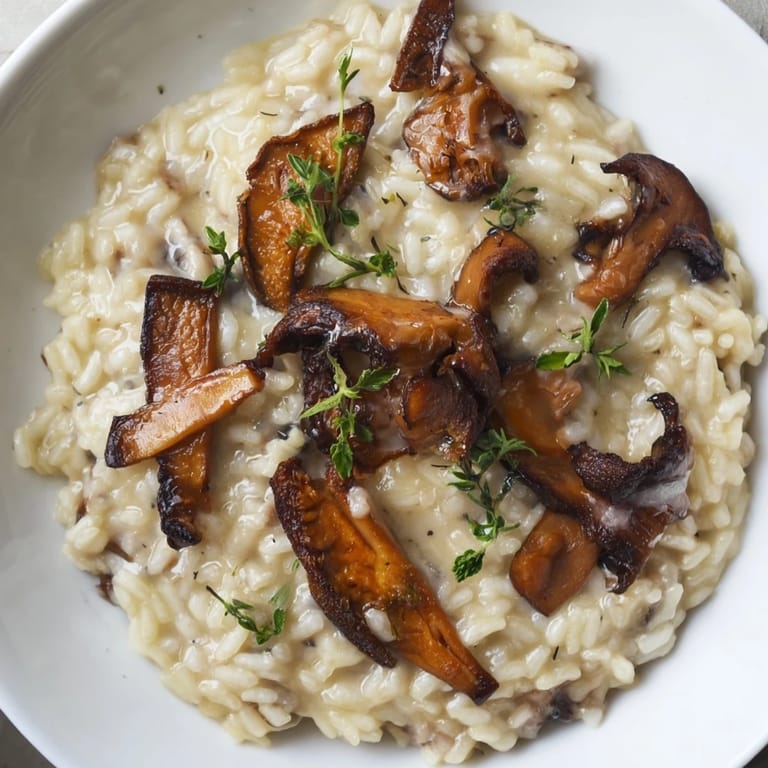
Pin This risotto has become the thing I make when I want to feel grounded, when I need to slow down and pay attention to something simple. It's forgiving, it's warm, and it never feels like a mistake.
Recipe Q&A
- → What makes risotto creamy without cream?
The creaminess comes from the starch released by the arborio rice as you stir it with warm broth. This starch emulsifies with butter and Parmesan to create a naturally velvety texture without any heavy cream needed.
- → Can I prepare this dish in advance?
Risotto is best served immediately after cooking. However, you can roast the mushrooms several hours ahead and reheat them gently before folding into the risotto. The broth can also be prepared and kept warm ahead of time.
- → What type of mushrooms work best?
A combination of cremini, shiitake, and button mushrooms provides varied earthy flavors and textures. You can substitute or add porcini, oyster, or chanterelles depending on availability and preference for deeper umami notes.
- → Why is constant stirring important?
Stirring releases the starches from the arborio rice and distributes heat evenly, creating the signature creamy consistency. It also prevents sticking and ensures the rice cooks uniformly to achieve that perfect al dente texture.
- → Can I use a different wine?
Dry white wine is traditional, but you can substitute a dry vermouth or even omit it entirely by using additional broth. Avoid sweet wines as they'll throw off the savory balance of the dish.
- → How do I know when the risotto is done?
The rice should be tender but still have a slight firmness when bitten—this is al dente. The risotto should flow slightly on the plate like lava rather than standing stiffly. Total cooking time is typically 25-30 minutes from when you start adding broth.