 Pin
Pin I discovered this recipe on a rainy Tuesday when my neighbor brought over a jar of gochujang and said, "Trust me, you need this." That evening, I had salmon in the freezer and oranges on the counter, and something about combining them felt right. The first time I made it, the glaze caught the broiler heat just perfectly, caramelizing into this sticky, glossy coating that made the whole kitchen smell like a Korean street market mixed with citrus. My partner came home to that aroma and immediately asked what was for dinner, and I knew I'd stumbled onto something special.
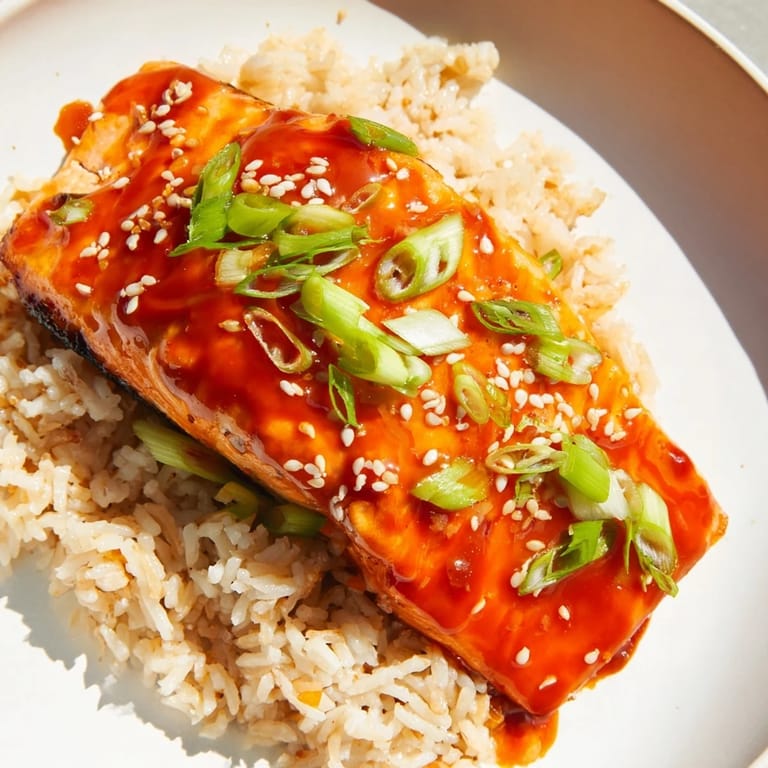
The real test came when I made this for my sister's book club potluck, and I brought it in a covered dish, nervous about reheating salmon. But when people opened the lid, they actually gasped at the color and that sticky glaze catching the light. Someone asked for the recipe before they'd even taken a bite, which felt like the ultimate compliment. That's when I realized this wasn't just dinner for us anymore—it was a dish that somehow made people feel celebrated.
Ingredients
- Salmon fillets (4, skin-on, 150g each): The skin keeps the fish tender while the broiler crisps it, so don't skip it. Pat them dry before cooking—that small step makes all the difference for even browning.
- Gochujang (2 tablespoons): This Korean chili paste is umami-packed and slightly sweet, which is why it works so beautifully with orange. Make sure you're buying actual gochujang and not gochugaru (the dried powder version).
- Fresh orange juice (1/4 cup): Squeeze it yourself if you can—bottled juice tastes flat here, and you want that bright, living flavor to shine.
- Soy sauce (2 tablespoons): Use regular soy sauce unless you're sensitive to sodium; low-sodium versions can taste thin.
- Honey (2 tablespoons): This balances the heat and saltiness, creating that sticky glaze that caramelizes under high heat.
- Rice vinegar (1 tablespoon): The acidity keeps everything from becoming cloying and adds a subtle complexity.
- Fresh ginger (1 teaspoon grated): Grate it just before mixing—pre-grated loses its punch.
- Garlic (1 clove, minced): One clove is enough; the gochujang is already assertive, and you want balance.
- Sesame oil (1 teaspoon): This is a finishing oil, not a cooking oil, so use it sparingly and choose toasted for maximum flavor.
- Jasmine rice (1 1/2 cups): It's fluffy and delicate, and the mild flavor won't compete with the bold glaze.
- Water (3 cups): For cooking rice—the ratio matters more than you'd think.
- Unsalted butter (2 tablespoons): This makes the rice rich and silky without overpowering the other flavors.
- Salt (1/2 teaspoon): You'll taste the saltiness from the soy sauce in the glaze, so the rice should be gently seasoned.
- Scallions (3, thinly sliced): These add a fresh bite and visual pop that cuts through the richness of the salmon and butter.
- Toasted sesame seeds (1 teaspoon, optional): They add crunch and a nutty depth—I almost never skip them.
- Orange zest (optional): A small pinch brightens the whole plate and ties the sauce back to its main flavoring.
Tired of Takeout? 🥡
Get 10 meals you can make faster than delivery arrives. Seriously.
One email. No spam. Unsubscribe anytime.
Instructions
- Make the glaze:
- In a medium bowl, whisk together gochujang, orange juice, soy sauce, honey, rice vinegar, ginger, garlic, and sesame oil until smooth and unified. The mixture should be glossy and pour easily. If your gochujang is lumpy, press it against the bowl with the back of your whisk—it breaks up quickly once it hits the liquid.
- Marinate the salmon:
- Pat your salmon fillets completely dry with paper towels, then lay them skin-side up in a shallow dish. Spoon 2 tablespoons of the glaze over each fillet, turning them over once to coat the flesh side. The marinade doesn't need long—just 10 minutes gives the flavors time to sink in while you start the rice.
- Cook the rice:
- Rinse your jasmine rice under cold running water, stirring gently with your fingers until the water runs clear—this removes excess starch and keeps the grains separate. In a medium saucepan, combine the rinsed rice, water, butter, and salt, then bring it to a boil over high heat. Once boiling, reduce the heat to low, cover with a tight-fitting lid, and simmer undisturbed for exactly 15 minutes. Remove from heat and let it stand, still covered, for 5 minutes, then fluff gently with a fork.
- Prepare the broiler:
- While the rice cooks, set your broiler rack about 5-7 inches from the heat source and preheat on high. Line a baking sheet with aluminum foil and brush it lightly with oil—this prevents sticking and makes cleanup easier.
- Broil the salmon:
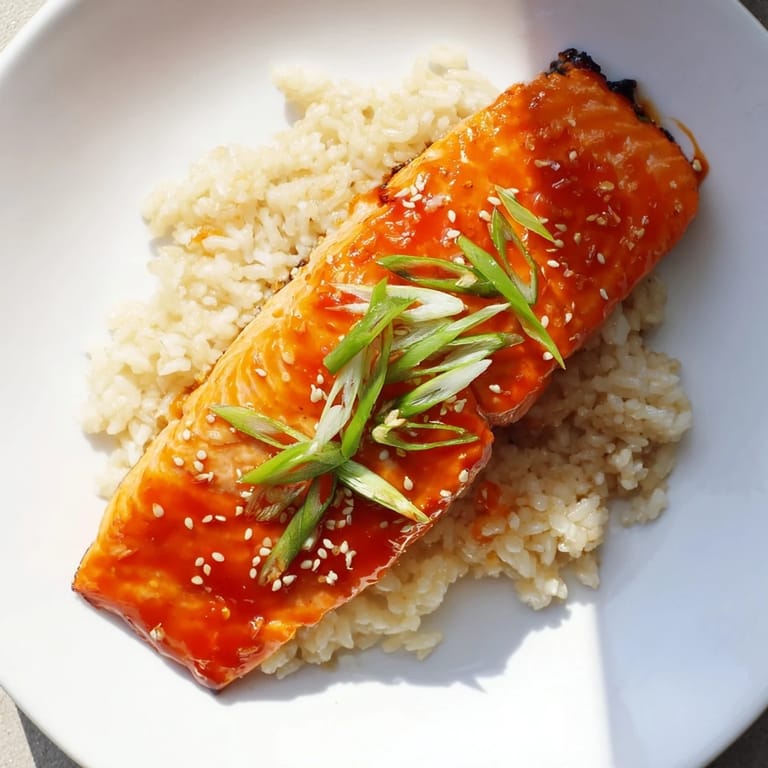
- Arrange your marinated salmon fillets skin-side down on the prepared baking sheet, then brush the flesh side generously with more glaze. Broil for 3-4 minutes, then pull the sheet out and brush with additional glaze one more time. Return to the broiler for another 3-4 minutes, until the glaze is bubbling and caramelized and the salmon flakes easily with a fork—you're aiming for an internal temperature of 52-54°C (125-130°F) for medium, which gives you moist, buttery flesh.
- Finish the sauce:
- While the salmon finishes cooking, pour any remaining glaze into a small saucepan and simmer over medium heat for 2-3 minutes, stirring occasionally, until it thickens slightly and coats the back of a spoon. This concentrates the flavors and creates a luxurious consistency.
- Plate and serve:
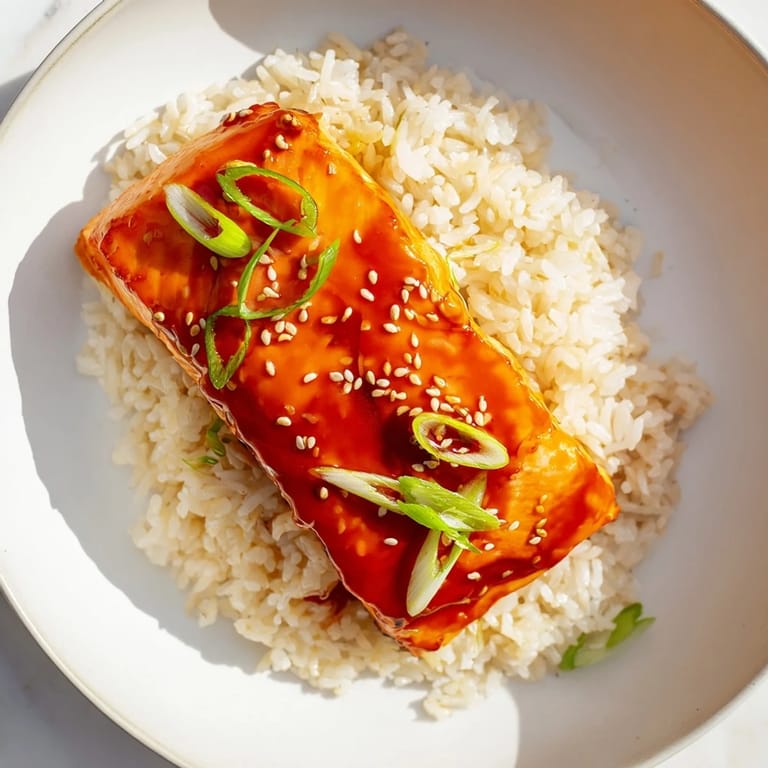
- Divide the fluffy rice among bowls, setting a salmon fillet on top of each portion with the skin side facing up for visual appeal. Drizzle the thickened sauce over the salmon and rice, then scatter scallions, sesame seeds, and a pinch of orange zest across the top if you have them.
 Pin
Pin I'll never forget the first time my six-year-old nephew tried this and went completely silent, which is rare for him. He finished his entire plate, then asked for more salmon but less glaze, which felt like the most honest food criticism I've ever received. That's when I understood that this dish works because it's bold without being overwhelming, elegant without pretending to be something it's not.
Why the Broiler Matters
Broiling is faster than oven-roasting and creates a completely different texture on the salmon—the high, direct heat caramelizes the glaze and crisps the skin while keeping the flesh inside still tender. The first time I tried making this in a regular oven, the glaze barely browned and the whole thing felt flat. Once I switched to the broiler, everything changed. The high heat is what makes this recipe sing, so don't be tempted to bake it at 400 degrees instead. You need that aggressive heat and close proximity to pull off the sticky, glossy finish that makes people reach for seconds.
Playing With the Flavors
One night I got adventurous and added a pinch of chili flakes to the glaze, and it became something different entirely—still sweet, still tangy, but with a gentle heat that built slowly on the tongue. I've also experimented with swapping the sesame oil for chili oil when I want more heat, and using lime juice instead of orange juice for a sharper, more herbaceous feel. The beauty of this glaze is that it's flexible enough to bend with your mood while staying fundamentally itself. The gochujang and soy sauce are non-negotiable anchors, but everything else can shift a bit without losing what makes the dish work.
Rice and Sides
Jasmine rice is my go-to because it's delicate and slightly floral, which complements rather than competes with the bold salmon. But I've had equally good results with short-grain sushi rice, which is stickier and holds the sauce beautifully, or even creamy risotto on nights when I want to be fancier. The butter in the rice is important—it creates this luxurious base that makes the salmon and glaze feel even more special. For something different, brown rice or even quinoa work if you want more protein or a nuttier flavor, though you'll need to adjust cooking time slightly since both take longer than jasmine. The rice should feel like a gentle vehicle for the main event, never demanding attention.
- If your rice turns out too wet, spread it on a plate and let it cool uncovered for a few minutes—it firms up as it cools.
- Leftovers taste great cold the next day, which makes this an excellent meal-prep recipe.
- You can make the glaze up to a day ahead and keep it in the fridge, which saves precious time on busy evenings.
 Pin
Pin This recipe has become my answer to the question "What should we have for dinner?" when I want something that feels special but doesn't demand hours in the kitchen. It's the kind of meal that tastes like you know what you're doing, even if you threw it together because you had salmon and an orange on hand.
Recipe Q&A
- → What gives the salmon its sticky glaze?
A combination of gochujang, orange juice, soy sauce, honey, rice vinegar, ginger, garlic, and sesame oil is whisked together to create a tangy-sweet glaze that caramelizes beautifully on the salmon.
- → How is the jasmine rice prepared for this dish?
Jasmine rice is rinsed thoroughly, then cooked with water, unsalted butter, and salt until fluffy and buttery, providing a smooth base for the flavorful salmon.
- → Can I substitute the salmon with another fish?
Yes, other firm, skin-on fish fillets like cod or trout can be used, but cooking times and textures may vary slightly.
- → What level of heat does the gochujang add?
Gochujang adds mild to moderate heat with a rich chili flavor, balanced by the sweetness of honey and citrus notes from orange juice.
- → How long should the salmon marinate in the glaze?
Marinating the salmon for about 10 minutes allows the flavors to infuse without overpowering the fish.
- → What garnishes enhance this dish?
Fresh scallions, toasted sesame seeds, and a hint of orange zest add brightness, texture, and an aromatic finish.