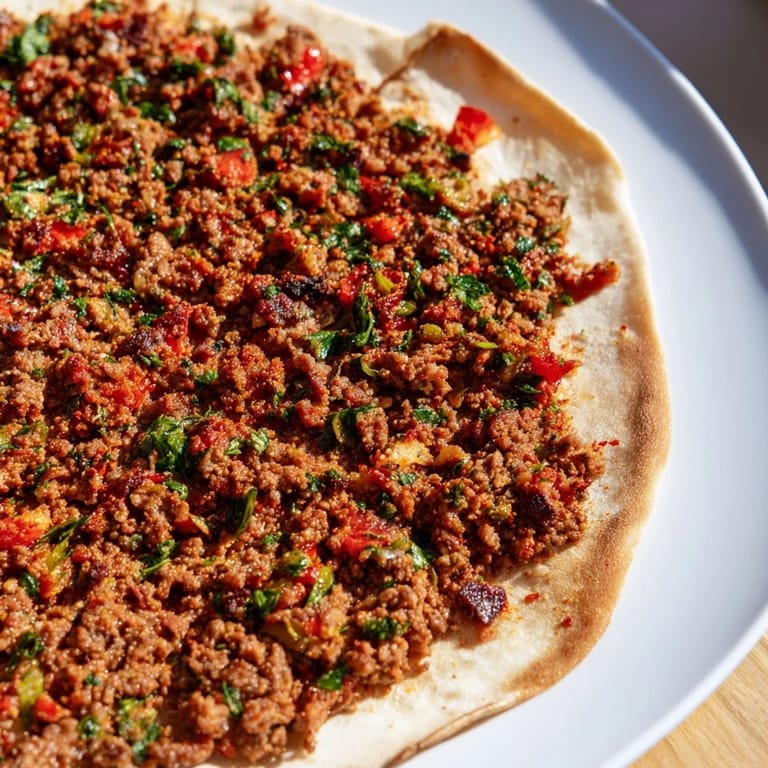
 Pin
Pin The first time I made lahmacun, I was standing in my friend Zeynep's kitchen in Istanbul, watching her hands move with practiced efficiency as she stretched the dough impossibly thin. She barely looked at what she was doing, talking all the while about her grandmother's version, until suddenly there it was—a perfect golden circle ready for topping. What struck me most wasn't the technique, though; it was how quickly the smell of cumin and paprika filled the entire apartment, a signal that something special was about to come out of the oven.
I remember bringing a batch of these to a dinner party on a chilly evening, nervously transferring them from my baking stone to a wooden board. The moment my guests picked them up, wrapped them with fresh herbs and squeezed lemon over the top, the whole energy of the gathering shifted—suddenly everyone was crowded around, laughing and asking for seconds before I'd even sat down myself.
Ingredients
- All-purpose flour: The foundation of everything; I learned to measure by weight if you have a scale, since it makes the dough far more predictable than scooping directly from the bag.
- Instant yeast: Don't let it sit in hot water too long or you'll kill it; dissolving it in warm water is just about creating the right temperature to wake it up gently.
- Warm water: If it feels uncomfortably hot on your wrist, it's too hot for the yeast, so test it like you're checking a baby's bath.
- Ground lamb or beef: Lamb gives you that authentic flavor, but beef works beautifully too; the real secret is not skipping the browning step in your mind—use raw meat and let the oven do the work.
- Onion, garlic, tomato, red bell pepper: Dice these as finely as you can; larger pieces will slide around during baking and won't cook into the meat mixture the way they should.
- Tomato paste: Two tablespoons might seem small, but it carries so much flavor that a little goes a long way, concentrating the umami that makes the whole topping sing.
- Fresh parsley: Add most of it to the topping mixture and save some for garnish; it brings a brightness that cuts through the richness of the meat beautifully.
- Cumin and paprika: These two spices are the soul of lahmacun; I always use good quality because they're doing most of the flavor work.
- Chili flakes: Optional but honestly necessary if you want a gentle kick rather than just savory spice.
- Olive oil: Use it in both the dough and the topping; it keeps everything tender and adds a subtle richness that's distinctly Mediterranean.
Tired of Takeout? 🥡
Get 10 meals you can make faster than delivery arrives. Seriously.
One email. No spam. Unsubscribe anytime.
Instructions
- Bring the yeast to life:
- Dissolve your yeast in warm water with a pinch of sugar and let it sit for a minute; you're looking for it to smell slightly yeasty and maybe show a tiny bit of foam. This tells you the yeast is ready to work.
- Build your dough foundation:
- Combine flour, salt, and sugar in a bowl, then add the yeast mixture and olive oil, stirring until a shaggy dough forms. Knead for 5 to 7 minutes—your hands will know when it's ready because the dough will feel smooth and slightly elastic, no longer sticky.
- Let it rise and relax:
- Cover the bowl and set it somewhere warm for about 30 minutes; you're waiting for it to roughly double in size, which is your sign that the yeast has done its job and your dough is ready to stretch.
- Mix the meat topping with intention:
- Combine all your topping ingredients in a separate bowl and mix thoroughly, breaking up the meat so it's evenly distributed with the vegetables and spices. Don't be shy about getting your hands in there.
- Heat your oven aggressively:
- Turn the oven to its highest setting and slide a baking tray or pizza stone inside to preheat; this heat is what gives you those crackling crispy edges.
- Divide and shape your dough:
- Divide the risen dough into 8 pieces and roll each one on a floured surface into a very thin oval or circle, about 20 centimeters across. The thinner you go, the crispier your lahmacun will be.
- Spread the topping with a light hand:
- Distribute the meat mixture in a thin, even layer over each dough round; don't pile it on or it will weigh down the dough and prevent it from crisping. A little goes a long way.
- Bake until the edges sing:
- Transfer your topped dough to the hot baking tray or stone and bake for 6 to 8 minutes, watching for the edges to turn golden and crispy while the meat cooks through. The timing depends on your oven, so start checking at the 6-minute mark.
- Finish and serve immediately:
- Pull them from the oven and immediately garnish with fresh parsley and a generous squeeze of lemon; serve warm with fresh herbs, sliced onions, and sumac on the side so everyone can customize their own.
 Pin
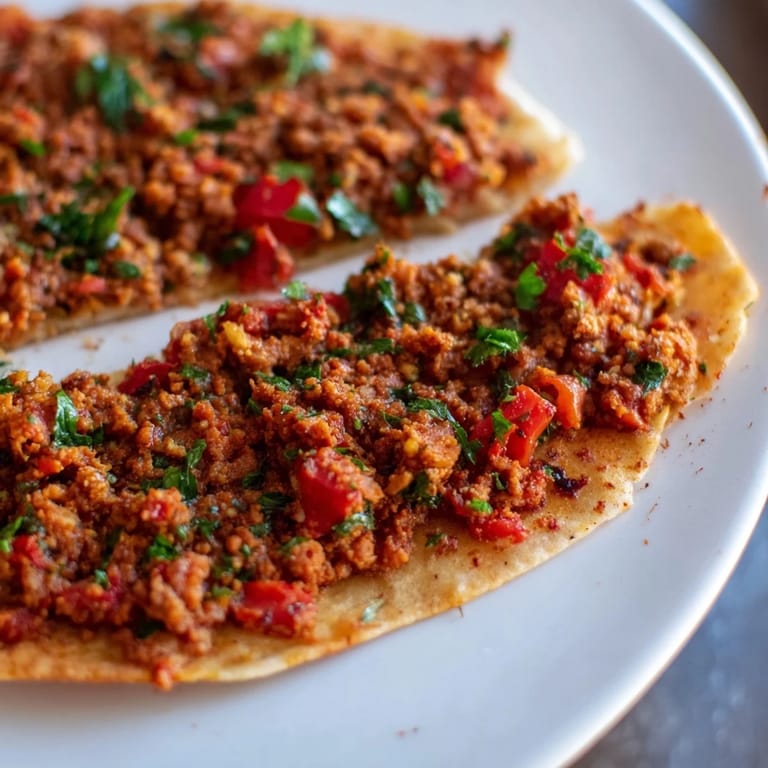
Pin There's something magical about the moment you pull a perfectly baked lahmacun from the oven—the smell alone is enough to gather people into your kitchen, but then when you tear into it still warm and the crispy edges shatter between your teeth, you understand why this dish has been fed to friends and family for generations.
The Art of Stretching Thin
Getting your dough paper-thin is the technique that separates good lahmacun from great lahmacun, and honestly it's easier than you might think. I used to worry I'd tear the dough, but after a few attempts I realized it's actually quite forgiving—you just need patience and a gentle touch. Start from the center and work outward with your rolling pin, rotating the dough as you go, and if you do get a small tear, a light sprinkle of flour and a gentle press will usually seal it right back up.
Serving and Eating Like a Local
The way you serve lahmacun matters almost as much as how you make it, because the whole point is that it's interactive and personal. I always set out the lemon wedges, fresh herbs, sliced onions, and sumac in separate little dishes so everyone can assemble their own—it slows down the meal in the best way, turning a simple flatbread into an experience. Watching people construct their perfect bite, deciding how much of each topping they want, reminds me why this dish has stayed so beloved for centuries.
Making It Your Own
Once you've made lahmacun a few times, you'll find yourself tweaking it based on what you have on hand or what sounds good that day. The core is sturdy enough to handle variations—some people add a touch of pomegranate molasses to the meat mixture for extra depth, others skip the tomato paste and use fresh tomato sauce instead, and I've had beautiful versions with a mix of lamb and beef. The spices are also flexible within reason; if you love more cumin, use more cumin, and if you prefer your food milder, scale back the paprika and chili flakes accordingly.
- Store leftover lahmacun wrapped in foil in the fridge for up to three days and reheat gently in a warm oven until they're crispy again.
- Uncooked lahmacun freeze brilliantly—assemble them on a tray, freeze until solid, then transfer to a bag and bake straight from frozen, adding just a minute or two to the cooking time.
- Serve alongside ayran or a crisp white wine to balance the richness of the meat and spices.
 Pin
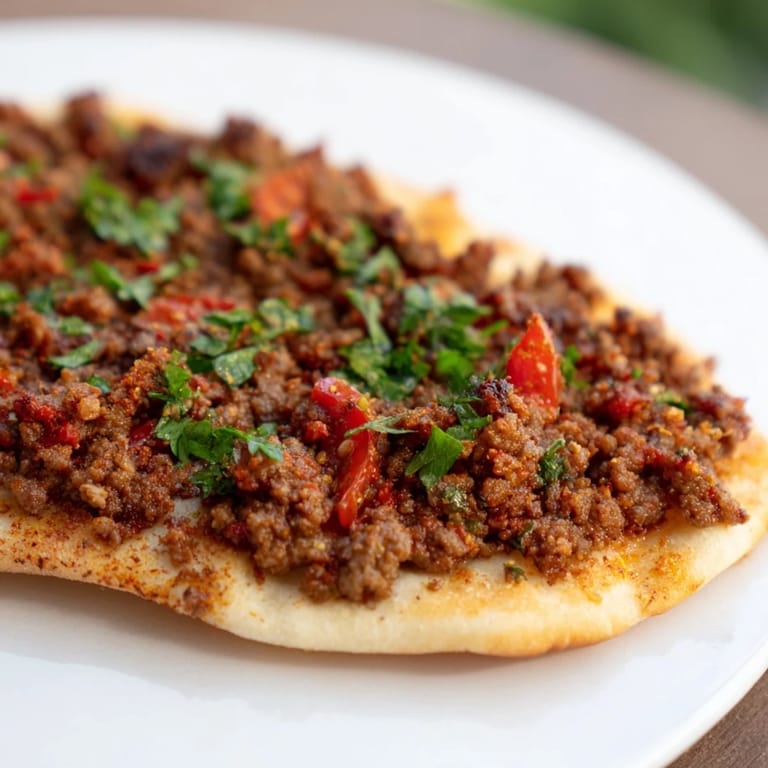
Pin Lahmacun is the kind of dish that brings people together in the simplest, most honest way—no fuss, no fancy plating, just incredibly good food that tastes like it came straight from someone's grandmother's kitchen. Once you've mastered it, you'll find yourself making it again and again, each time slightly different, always delicious.
Recipe Q&A
- → What dough ingredients are essential for Lahmacun?
Flour, warm water, instant yeast, sugar, salt, and olive oil are combined to create a soft, elastic dough that rises well and bakes thin and crisp.
- → Which spices enhance the meat topping's flavor?
Cumin, paprika, black pepper, and optionally chili flakes provide warmth and depth, complementing the ground lamb or beef and fresh vegetables.
- → How thin should the dough be rolled?
Each dough ball is rolled to about 20 cm (8 inches) in diameter, creating a very thin base to ensure crispness after baking.
- → What temperature and equipment are best for baking?
Preheat the oven to 250°C (480°F) with a pizza stone or baking tray inside to achieve a high heat, enabling quick, even cooking and crisp edges.
- → How can Lahmacun be served for added freshness?
Serve with lemon wedges, fresh parsley or mint, and optionally sliced onions with sumac for an extra burst of flavor and brightness.
- → Are there vegetarian alternatives to the meat topping?
Yes, substituting meat with a minced mixture of mushrooms and walnuts creates a flavorful vegetarian version that maintains texture and richness.