 Pin
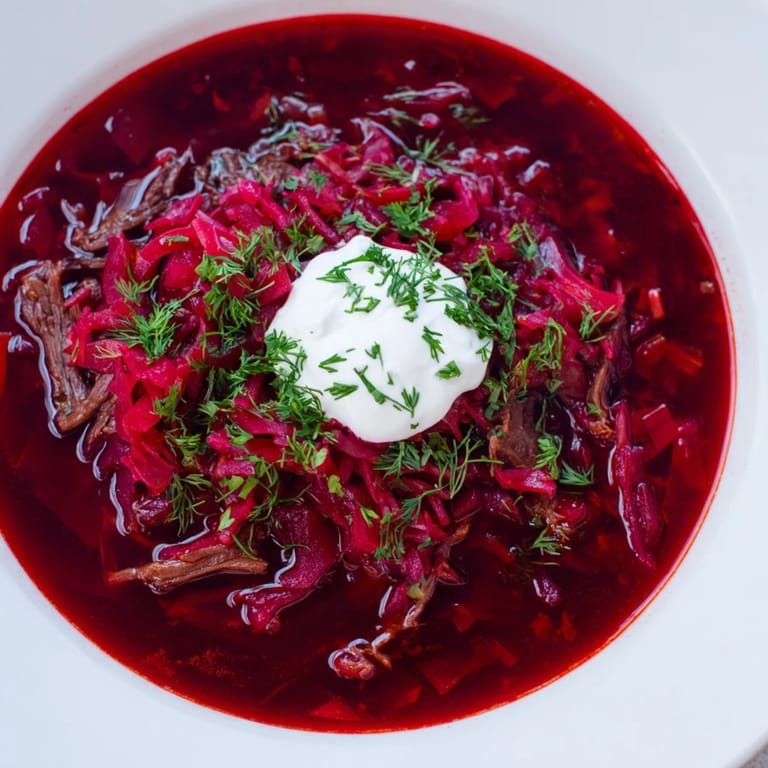
Pin The first time I made borscht properly, I wasn't expecting the soup to turn that impossible shade of ruby red—so vivid it looked almost unreal in the pot. My grandmother had given me the recipe years ago, scrawled on the back of an envelope, but I'd always been intimidated by it. Then one October afternoon, when the weather turned sharp and cold overnight, I decided to finally try it. The kitchen filled with this warm, earthy smell that made everything feel instantly cozier, and by the time I served it with a generous dollop of sour cream, I understood why people make this soup over and over.
I made this for a dinner party on a February evening when snow was falling outside, and everyone arrived cold and hungry. One guest—who'd grown up eating borscht—took a spoonful and got this quiet, almost emotional look. She told me it tasted like home. That moment taught me something about food: the best recipes aren't just about technique, they're about connection.
Ingredients
- Beef chuck or brisket (400g / 14 oz): These tougher cuts become incredibly tender after simmering and add real depth to the broth—don't use lean meat or it'll taste thin.
- Water (1.5 liters / 6 cups): The foundation of everything, so use filtered water if you have it.
- Bay leaves and black peppercorns: These quiet players do most of the work in flavoring the broth while the beef cooks.
- Beets (3 medium, grated): These give borscht its soul—the color, the sweetness, the whole identity of the dish.
- Carrots and onion (grated and chopped): Grating them means they soften quickly and distribute flavor evenly throughout.
- Potatoes and cabbage: The potatoes thicken the soup naturally while the cabbage adds a subtle, earthy note that people often can't quite place.
- Tomato paste (2 tablespoons): A little goes a long way—it adds complexity without making the soup taste tomato-forward.
- Sunflower oil, sugar, and vinegar: The sugar rounds out the beets' earthiness, and the vinegar brightens everything at the end.
- Sour cream and fresh dill: These aren't toppings, they're essential—they balance the richness and add a final note of freshness.
Tired of Takeout? 🥡
Get 10 meals you can make faster than delivery arrives. Seriously.
One email. No spam. Unsubscribe anytime.
Instructions
- Start the broth:
- In a large pot, combine beef, water, bay leaves, peppercorns, and salt. Bring to a boil and you'll see foam rise to the surface—skim that off, it keeps the broth clear and clean. Reduce heat and let it simmer gently for 45 minutes, which gives the beef time to become meltingly tender and the broth time to develop real flavor.
- Build the base:
- While the beef cooks, heat oil in a skillet over medium heat. The onions should turn translucent and sweet, which takes about 3 minutes. Add the grated carrots and beets, and sauté for 5 minutes until they start to soften and release their colors into the oil.
- Develop the flavor:
- Stir in tomato paste, sugar, and vinegar, then cook for 7 to 8 minutes, stirring occasionally. You'll notice the mixture becomes richer and deeper—that's the flavors combining and caramelizing slightly. This step is where the magic happens, so don't rush it.
- Combine everything:
- Remove the beef from the pot and set it aside to cool slightly. Pour the broth back into the pot and bring it to a simmer. Add the potatoes first since they need the most time, and cook for 10 minutes until they're about halfway done.
- Layer in the vegetables:
- Add the cabbage and the entire sautéed beet mixture to the pot. These cook together for another 10 minutes, until everything is tender and the flavors have started to meld.
- Finish strong:
- Shred or cube the cooked beef and return it to the pot along with the minced garlic. Taste and adjust the salt, pepper, and vinegar to your preference—this is your chance to make it exactly right. Let it simmer for 5 more minutes, then remove from heat and let it rest for 15 to 20 minutes. This rest period is crucial; it lets all the flavors settle and deepen.
- Serve with ceremony:
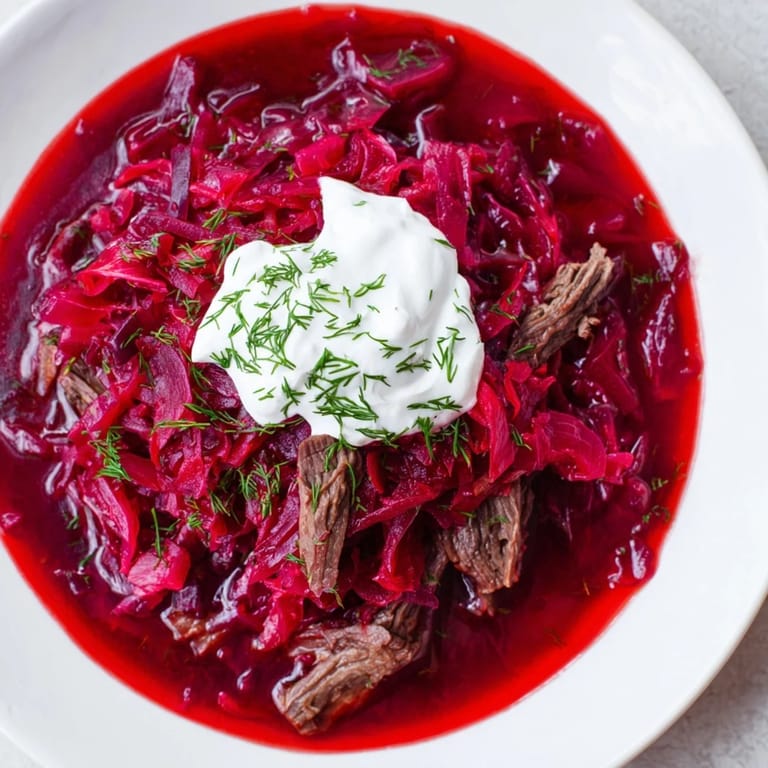
- Ladle the hot borscht into bowls and top each one with a generous spoonful of sour cream and a scatter of fresh dill or parsley.
 Pin
Pin What surprised me most about borscht is how it changed based on who was eating it. A Ukrainian friend added extra dill and cracked black pepper. Someone else swirled the sour cream into the whole bowl instead of dolloping it on top. It turned out everyone had their own small tradition with this soup, and that made me love it even more.
Why Borscht Tastes Better When You Slow Down
This soup rewards patience in small, noticeable ways. The beef needs time to surrender into tenderness, the vegetables need space to release their sweetness, and the broth needs quiet simmering to develop body and depth. There's no rushing borscht—or rather, you can rush it, but you'll taste the difference. I learned this the hard way when I once tried to speed things up by using pre-cut vegetables and a quick simmer, and the result was thin and one-dimensional. It taught me that borscht isn't about efficiency, it's about presence.
The Sour Cream Question
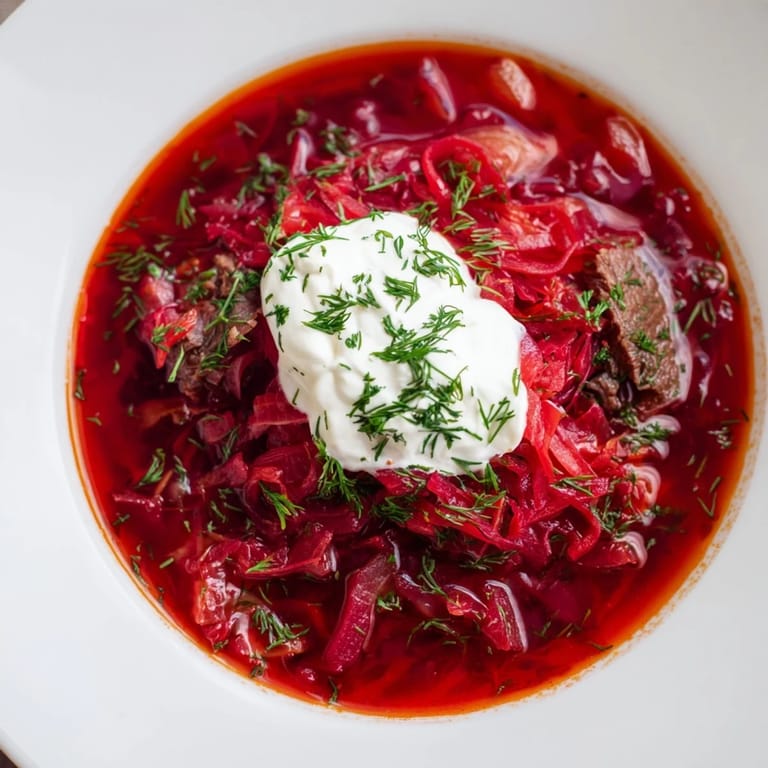
That final dollop of sour cream isn't just decoration—it's actually essential to the whole experience. The cool creaminess against the hot, earthy soup creates this perfect contrast that makes each spoonful more interesting. Some people think of sour cream as optional, but I've come to see it as fundamental, the same way salt is fundamental. It softens the intensity of the beets and adds a subtle tang that makes the flavors pop.
Making It Your Own
Once you understand how borscht works, you can make small changes that reflect your mood or what you have on hand. Some cooks add a splash of lemon juice for brightness, or a bit more vinegar if they like it sharper. I've added a diced apple before, which sounds strange but adds a subtle sweetness that rounds everything out beautifully. The foundation is strong enough to support these little experiments.
- A squeeze of fresh lemon juice right before serving adds a final spark that wakes up all the flavors.
- Serve it with thick slices of rye bread or soft Ukrainian garlic rolls if you can find them—they're meant to soak up the broth.
- Borscht freezes well, so making a big batch means you'll have comfort food ready on hard days.
 Pin
Pin Borscht is one of those recipes that improves with repetition, each time becoming more intuitive and personal. Make it once and you'll understand why people cherish it.
Recipe Q&A
- → What cut of beef works best for this soup?
Beef chuck or brisket cut into large pieces is ideal for slow simmering, providing tender, flavorful meat and a rich broth.
- → How do I achieve the soup’s vibrant red color?
Using fresh grated beets and sautéing them with tomato paste helps preserve and intensify the soup's characteristic vibrant red hue.
- → Can I prepare this dish vegetarian?
Omit the beef and use vegetable broth instead to maintain a rich vegetable flavor while keeping it meat-free.
- → Why is the soup often served with sour cream?
A dollop of sour cream adds creaminess and a slight tang that balances the earthy and sweet flavors of the soup.
- → How long should the soup rest before serving?
Letting the soup rest off the heat for 15-20 minutes allows the flavors to meld fully for a richer taste.