 Pin
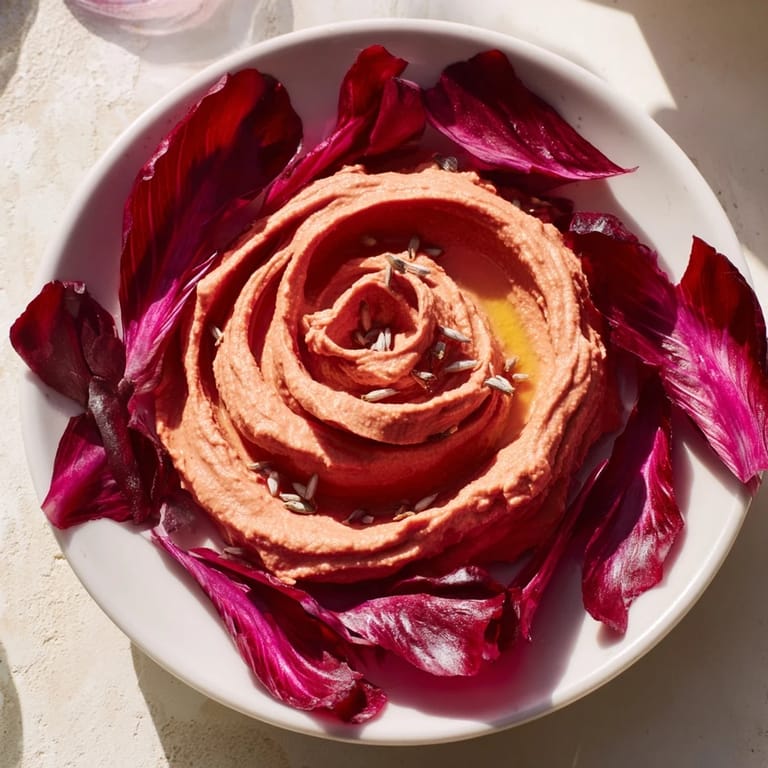
Pin I discovered this dish at a gallery opening where someone had arranged beet hummus into delicate roses on a slate plate, and I couldn't stop staring at it. The color was so impossibly deep and rich, a burgundy that seemed to glow under the gallery lights, and when I finally tasted it, the earthiness hit me first, then the brightness of lemon, then something almost buttery from the tahini. I went home that night determined to recreate it, and after a few messy attempts with a piping bag, I realized this wasn't just beautiful, it was genuinely delicious, and I wanted to share it.
I made this for a dinner party where one guest mentioned she was tired of hummus looking like, well, hummus, and I watched her face completely change when the plated version arrived. She didn't want to eat it at first because it was too pretty, and then she couldn't stop eating it, which is honestly the highest compliment a dish can receive.
Ingredients
- Beet (1 large, about 200 g): Roasting concentrates the sugars and gives the hummus that jewel-like depth of color that makes it instantly recognizable as something special.
- Chickpeas (1 can, 400 g): The backbone of the hummus, and draining and rinsing them removes the starchy liquid that would make your hummus gluey instead of silky.
- Tahini (2 tbsp): This is what transforms the hummus from grainy to genuinely creamy, and it adds a subtle nuttiness that plays beautifully against the earthy beet.
- Extra-virgin olive oil (2 tbsp plus 1 tbsp for drizzling): Use good oil here because you taste every drop, especially in the drizzle at the end.
- Garlic clove (1 small, minced): Just one clove keeps the hummus elegant and lets the beet shine instead of overpowering it with garlic.
- Lemon juice (from 1 lemon): The acid is what makes this taste alive instead of dull, so don't skip it or use bottled juice.
- Ground cumin (1/2 tsp): A pinch that adds warmth and depth without making anyone ask what the flavor is.
- Salt and black pepper (1/2 tsp salt, freshly ground pepper to taste): Season thoughtfully because salt also brings out the sweetness of the beet.
- Cold water (2-3 tbsp as needed): Add this slowly at the very end to get the texture exactly right for piping.
- Radicchio leaves (1 small head): The bitterness cuts through the richness and creates a visual echo of the rose shape you're creating.
- Flaky sea salt and microgreens or edible petals (optional): These are the final flourish that tells your guests you actually care about how food looks.
Tired of Takeout? 🥡
Get 10 meals you can make faster than delivery arrives. Seriously.
One email. No spam. Unsubscribe anytime.
Instructions
- Roast the beet until it surrenders:
- Wrap it tightly in foil so it steams in its own moisture, and after 40 to 45 minutes at 400°F, it should be tender enough to crush gently with a fork. Let it cool just enough to handle, then the skin practically slides off under running water.
- Build the base:
- Combine the cooled beet, drained chickpeas, tahini, olive oil, garlic, lemon juice, cumin, salt, and pepper in your food processor. Blend until completely smooth, stopping to scrape the sides because there's always one piece of beet clinging to the wall.
- Achieve the perfect texture:
- This is where patience matters: add cold water one tablespoon at a time and pulse again between additions, tasting as you go. You want it thick enough to hold a shape when piped but loose enough that it feels luxurious on the tongue.
- Taste and adjust:
- The hummus might need more salt or lemon depending on your beet, so adjust confidently now before plating.
- Create your rose:
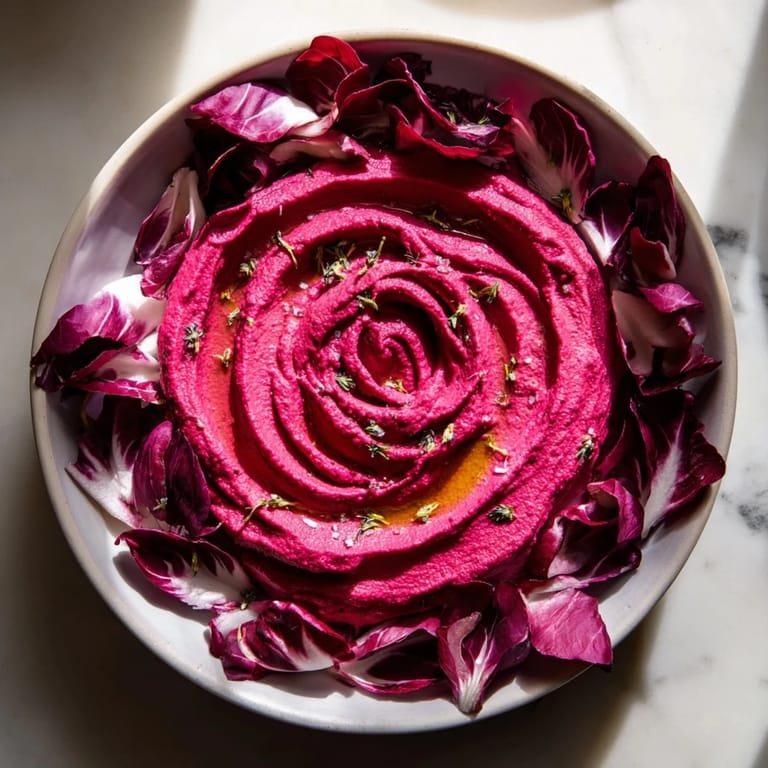
- If you have a piping bag with a large star tip, fill it and pipe the hummus onto your plate in a spiral pattern, starting in the center and moving outward. If you don't have a piping bag, just use the back of a spoon to create swirled peaks that catch the light.
- Arrange the radicchio petals:
- Position the deep purple radicchio leaves around the hummus so they frame it like the sepals of an actual rose, which is half the visual magic.
- Finish with intention:
- Drizzle with good olive oil, scatter flaky sea salt across everything, and add microgreens or edible petals if you have them. Serve immediately while the contrast between the cool hummus and crisp radicchio leaves is still fresh.
 Pin
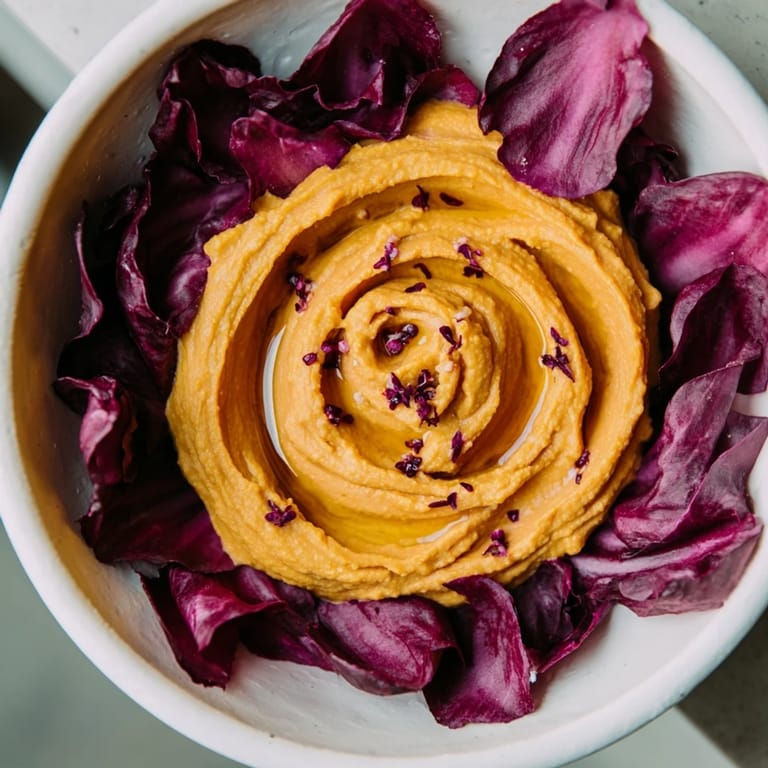
Pin The first time someone served this at a table where the lighting was just right, I watched how the hummus seemed to glow between the radicchio leaves, and I realized that sometimes food is as much about making a moment memorable as it is about flavor. That night, people slowed down and actually talked to each other instead of rushing through appetizers.
Why This Recipe Works as Appetizer Theater
Most appetizers exist in two categories: either they're impressive but forgettable, or they're delicious but forgettable. This one manages the rare trick of being both visually stunning and genuinely craveable, which means your guests will remember it weeks later. The color alone stops conversations, and the flavor actually justifies the presentation, which is rarer than you'd think.
The Secret Life of Beet Hummus
Beet hummus has this interesting quality where it tastes completely different depending on what you serve it with. On crisp radicchio, it feels almost luxurious and refined, but the same hummus scooped with pita chips becomes casual and approachable. The earthiness of the beet also means it pairs beautifully with sparkling wine in a way that plain hummus doesn't quite achieve, so think about serving it alongside something with bubbles if you're entertaining.
Making It Your Own
The beauty of this recipe is that it's actually a foundation you can build on without losing what makes it work. If you want more complexity, a pinch of smoked paprika adds a subtle depth that reads as somehow more sophisticated. You can also play with the vegetables you serve it with, using Belgian endive instead of radicchio for a milder flavor, or adding roasted chickpeas dusted with paprika alongside the radicchio for textural contrast.
- Try roasting a second beet longer until it's almost caramelized around the edges for an even deeper color.
- If you're serving this at a larger event, the hummus holds perfectly for up to four hours before piping, which takes the pressure off timing.
- Leftover hummus is genuinely delicious as a sandwich spread or stirred into grain bowls, so you're not wasting a thing.
 Pin
Pin This dish became my go-to when I wanted to impress without stress, and I keep the recipe in my back pocket for moments when I need something that looks like love. It's proof that beautiful food doesn't have to be complicated, just thoughtful.
Recipe Q&A
- → What makes the beet hummus creamy?
The chickpeas and tahini provide a smooth, rich texture, while a small amount of cold water helps achieve a luxuriously creamy consistency.
- → How do I create the rose shapes with hummus?
Use a spoon or a piping bag with a large star tip to swirl the hummus onto a plate, mimicking the delicate curves of rose petals.
- → Can I use other greens instead of radicchio?
Yes, endive or Belgian endive leaves are great alternatives, offering a similar crisp texture and slight bitterness.
- → How long should the beets be roasted?
Wrap whole beets in foil and roast at 400°F (200°C) for 40 to 45 minutes until fork-tender for optimal sweetness and softness.
- → What seasoning enhances the flavor of this dish?
Ground cumin and a squeeze of lemon juice brighten the earthy beets, while a pinch of smoked paprika can add a hint of warmth.