 Pin
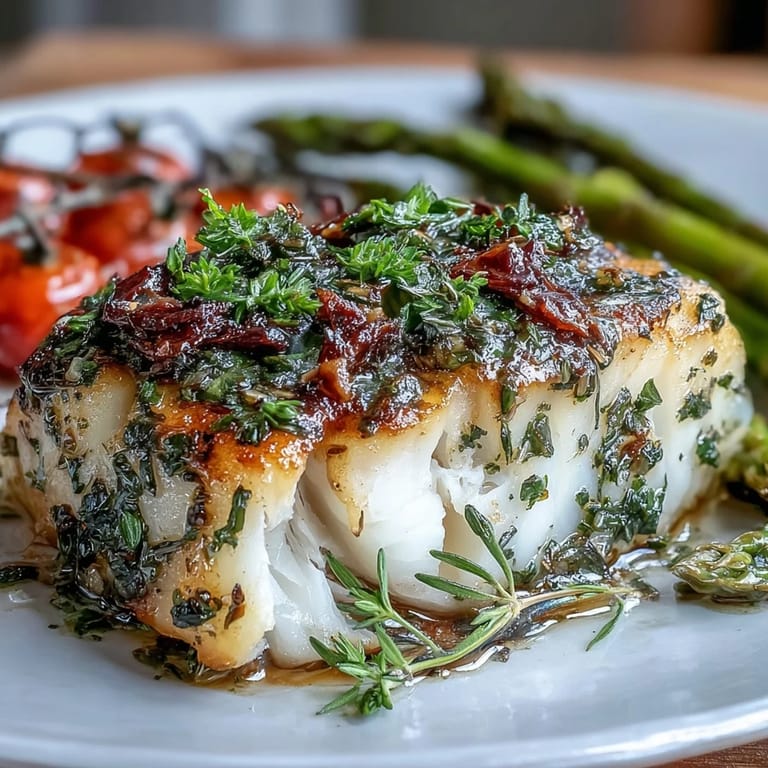
Pin There's something almost meditative about watching a sheet pan come together in the kitchen, especially when it requires so little effort yet delivers something so elegant. My neighbor knocked on the door one Tuesday evening with a bag of pristine cod fillets from the market, and we decided right then to throw together whatever we had on hand. What emerged from that oven twenty minutes later was restaurant-quality simplicity, the kind of meal that makes you wonder why you don't cook like this more often. The lemon brightened everything, the herbs whispered rather than shouted, and somehow the asparagus and tomatoes caramelized into something entirely their own. It's become my go-to when I want to feel accomplished without the stress.
I made this for my sister after her surgery, when she was tired of hospital food and wanted something that tasted like real life again. She sat at my kitchen counter while the fish baked, and the smell alone seemed to lift her spirits before she'd even taken a bite. The brightness of the lemon, the garden-like freshness of the herbs—it felt like medicine and comfort all at once. She's been making it ever since, texting me photos of her versions with different vegetable combinations. Food like this doesn't just nourish you; it reminds you that good things can come together quickly and without fuss.
Ingredients
- Cod fillets: These mild, delicate fillets are forgiving to cook and take on flavors beautifully without overwhelming them; if you can't find cod, haddock works just as well.
- Olive oil: Use a decent quality oil here since it's not hiding behind heavy cooking—it's the foundation of your herb mixture and your vegetable coating.
- Lemon zest and juice: The zest carries the most vibrant flavor and should go directly onto the fish; save the juice for the herbaceous oil that coats everything.
- Garlic and fresh herbs: Mince the garlic fine so it distributes evenly, and pick fresh parsley and thyme over dried if you possibly can—the difference is noticeable and worth it.
- Asparagus: Trim the woody ends by bending each spear until it snaps naturally at the tender point, then pat dry before roasting so it crisps properly.
- Cherry tomatoes: Halving them helps them release their juices and caramelize into sweet, concentrated flavor rather than staying firm and watery.
- Salt and pepper: Season both the fish and vegetables separately; this layering of flavor beats seasoning everything at once.
Tired of Takeout? 🥡
Get 10 meals you can make faster than delivery arrives. Seriously.
One email. No spam. Unsubscribe anytime.
Instructions
- Warm your kitchen and prep your canvas:
- Heat the oven to 200°C and line your baking sheet with parchment paper, which guarantees nothing sticks and makes cleanup almost laughably easy. Think of the parchment as giving yourself permission to relax once the cooking begins.
- Make the flavor base:
- In a small bowl, whisk together the olive oil, lemon zest and juice, minced garlic, parsley, thyme, salt, and pepper until it looks like a loose paste. Smell it—that's your preview of what's coming, and it should smell like a Mediterranean hillside.
- Prepare the fish with intention:
- Pat the cod fillets dry with paper towels because moisture is the enemy of browning and proper texture. Lay them on one side of the baking sheet and brush each fillet generously with your herb mixture, letting some pool around the edges.
- Arrange the vegetables thoughtfully:
- Place the trimmed asparagus and halved cherry tomatoes on the other side of the baking sheet, making sure they have some breathing room. Drizzle with olive oil, sprinkle with salt and pepper, and toss everything together so it's evenly coated.
- Let the oven do the work:
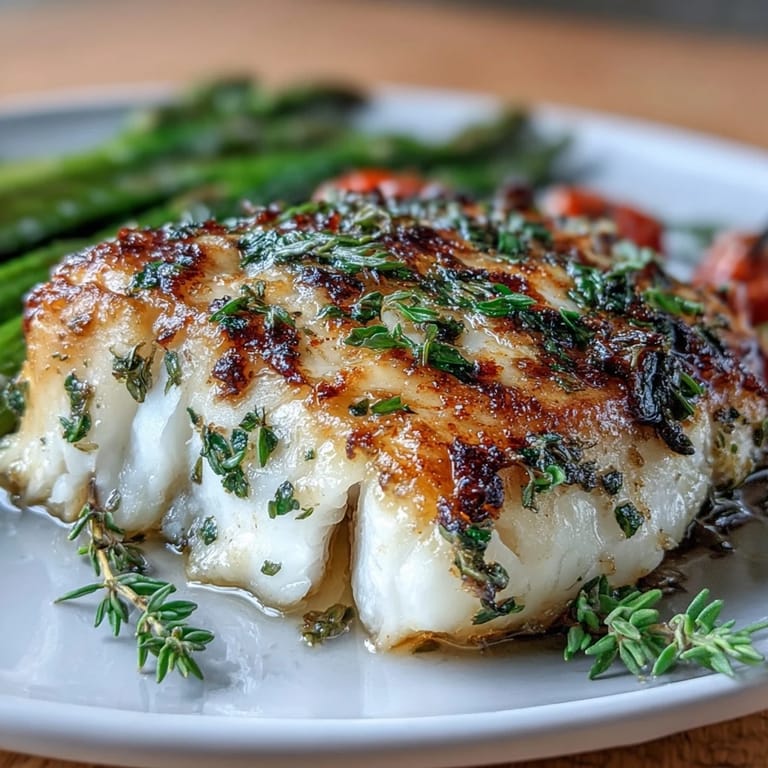
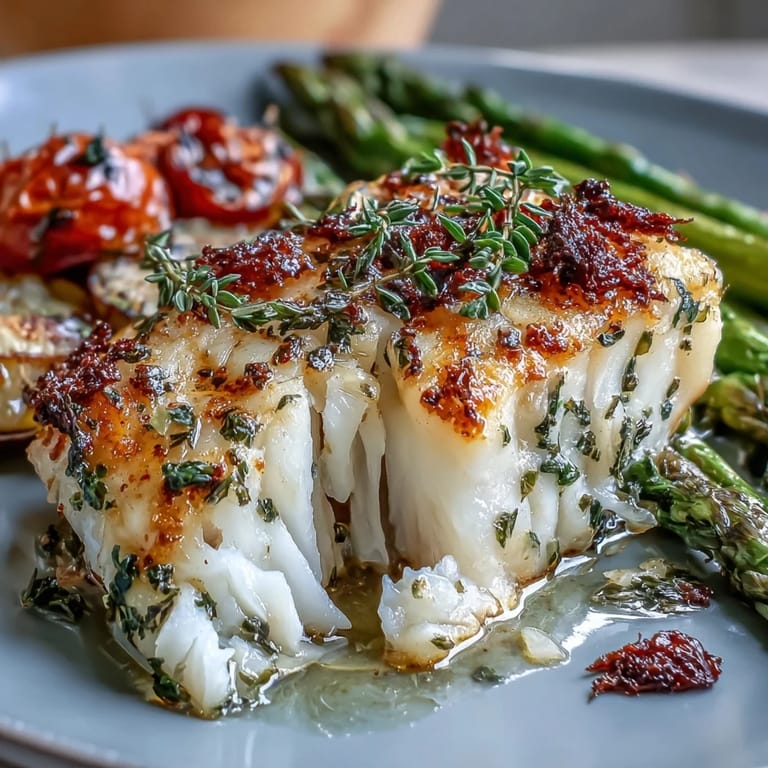
- Slide the baking sheet into the preheated oven and set your timer for 16 to 18 minutes. The fish is done when it flakes easily with a fork, not before—overcooked fish is sad, but this timing keeps it moist and tender.
- Plate with purpose:
- Divide the cod and vegetables among plates, letting the lemon herb oil spill over everything. Finish with lemon wedges and extra fresh herbs if you're feeling fancy, then serve immediately while everything is warm.
 Pin
Pin My mother tasted this for the first time and asked where I'd learned to cook like this, which made me laugh because it's essentially throwing good ingredients on a pan and trusting the oven. But that's what I love about it—the meal proves that cooking doesn't need to be complicated to be meaningful. It's the kind of food that brings people to the table without fanfare, and somehow that's exactly when the best conversations happen.
Why Sheet Pan Cooking Changes Everything
Once you start thinking about sheet pan meals, you realize how much time you've been wasting with multiple pots and pans. The fish and vegetables cook at the same temperature and finish at almost the same moment, which feels like magic until you realize it's just smart planning. The beauty is that you can actually watch your food cook through the oven window, which beats standing over a stove and wondering if anything is happening. Every vegetable gets some edge browning, every fillet stays moist in the middle, and the flavors mingle without becoming confused. This is the kind of cooking that makes you feel efficient without sacrificing quality.
Variations and Swaps That Work Beautifully
The architecture of this meal is flexible enough to dance with what you have on hand or what looks good at the market. Some weeks I use zucchini and red bell peppers instead of asparagus, other times I add a handful of Kalamata olives for briny depth. The fish itself can swap for halibut, sea bass, or even salmon if you're in that mood, though I'd keep the cooking time the same and just watch for the flaking test. You could scatter some capers over the top or finish with a drizzle of good balsamic. The herb mixture stays the same because it's the backbone, but everything else is genuinely yours to interpret.
Serving Suggestions and Pairings
This meal doesn't demand much, but it does appreciate being served warm on actual plates rather than eaten from the sheet pan, which I learned the hard way during a busy weeknight. A simple grain on the side—quinoa, farro, or even crusty bread for soaking up the oil—makes it feel more substantial if you're feeding hungry people. The brightness of the lemon calls for an equally bright wine, so a crisp Sauvignon Blanc or Pinot Grigio pairs so naturally that it feels inevitable. A simple green salad with a light vinaigrette provides another layer of freshness if you're cooking for people who like more vegetables than just what's roasted.
- Serve immediately while everything is still warm and the asparagus hasn't started to soften further.
- Add extra lemon wedges to the table because people always want more brightness than you expect.
- Don't skip the fresh herbs on top, even if they seem optional—they're what makes this feel special rather than just healthy.
 Pin
Pin This is the kind of meal that proves you don't need hours in the kitchen or a complicated ingredient list to cook something worth remembering. It's become my favorite way to feed people because it tastes like you care while feeling almost effortless to make.
Recipe Q&A
- → What is the best way to ensure the cod stays tender?
Patting the cod dry before applying the lemon herb mixture helps it bake evenly and stay tender without becoming watery.
- → Can other fish be used instead of cod?
Yes, alternatives like haddock or halibut work well and yield similar flaky texture and mild flavor.
- → How can I add extra flavor to the asparagus?
Sprinkling Parmesan cheese over the asparagus before baking adds a savory depth to the vegetables.
- → Is this dish suitable for low-carb diets?
Yes, this meal is naturally low in carbohydrates due to the protein-rich cod and fresh vegetables.
- → What side dishes complement this meal?
Serving with quinoa, rice, or crusty bread pairs nicely, enhancing the Mediterranean-inspired flavors.