 Pin
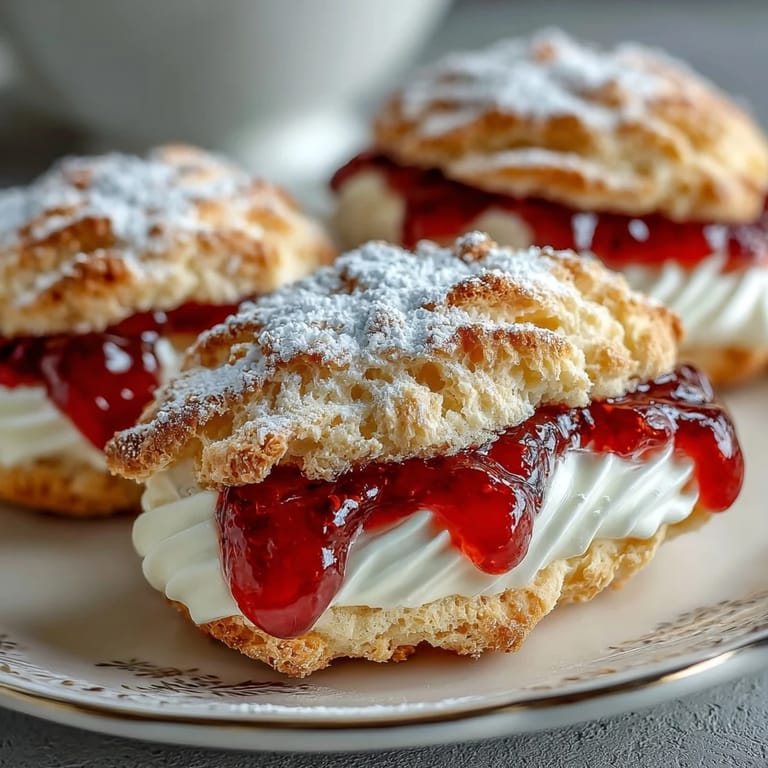
Pin My neighbor Margaret handed me a plate of these cookies last summer with the kind of knowing smile that said she'd been holding onto the recipe for years. The moment I bit into one, I understood why—that buttery snap giving way to creamy clotted cream and jammy sweetness felt like biting into a memory of a proper English afternoon, even though I'd never actually had one. What struck me most was how simple the ingredient list looked, yet how elegant the final result tasted. I spent the next week making batch after batch, each time tweaking the ratio of cream to jam until it felt absolutely right.
I brought these to my book club last month, and within minutes they were gone—people were actually fighting over the last one. One friend took a bite and closed her eyes like she'd transported somewhere, then asked for the recipe immediately. That's when I realized these cookies do something more than just taste good; they create a moment, a little pause in the day where cream and jam and butter feel like the most important things in the world.
Ingredients
- All-purpose flour (2 cups): This is your foundation—the structure that holds everything together. I've learned that scooping directly from the bag and leveling it off matters more than you'd think; it prevents dense cookies.
- Fine sea salt (1/4 tsp): Don't skip this tiny amount; it amplifies the sweetness and keeps the butter from tasting one-dimensional.
- Unsalted butter (1/2 cup), softened: Room temperature is non-negotiable here—cold butter won't cream properly, and you'll miss that pale, fluffy texture that makes these cookies tender.
- Granulated sugar (1/2 cup): The sweetness needs to be balanced, so measuring accurately prevents overly sweet cookies that taste like jam vessels instead of cookies with filling.
- Large egg yolk (1): Just the yolk, not the whole egg—it adds richness and helps bind without making the dough wet or tough.
- Pure vanilla extract (1 tsp): The real thing matters here because it adds a subtle warmth that bridges the cookie and fillings beautifully.
- Clotted cream (1/2 cup): This is the star player, the ingredient that makes these feel special and worthy of afternoon tea. If you can't find it, crème fraîche works, though you'll miss that specific luxurious thickness.
- Strawberry jam (1/3 cup): Use a good quality jam with actual fruit pieces if possible; the brightness of the berries against the richness of everything else is what makes these sing.
Tired of Takeout? 🥡
Get 10 meals you can make faster than delivery arrives. Seriously.
One email. No spam. Unsubscribe anytime.
Instructions
- Warm your kitchen and your mood:
- Preheat the oven to 350°F (175°C) and line two baking sheets with parchment paper. This isn't just setup; it's permission to slow down and be intentional about what you're about to make.
- Blend the dry foundations:
- Whisk together the flour and salt in a medium bowl until evenly combined. This simple step prevents pockets of salt and ensures everything distributes equally throughout the dough.
- Cream butter and sugar until clouds form:
- In a large bowl, beat the softened butter and sugar for about 2–3 minutes until the mixture is pale, fluffy, and noticeably lighter in color and texture. Listen for the change in sound—the mixer will go from dense thuds to airy whispers, and that's when you know you're there.
- Build the base:
- Beat in the egg yolk and vanilla until well combined, scraping down the sides as you go so nothing gets left behind. The mixture should look glossy and homogeneous.
- Marry wet and dry:
- Gradually mix in the flour mixture just until a soft dough comes together—stop as soon as you don't see dry streaks anymore. Overmixing turns these tender cookies tough, so err on the side of stopping early.
- Shape your potential:
- Roll the dough into 1-inch balls and place them 2 inches apart on your prepared baking sheets. The spacing matters because these spread slightly, and crowding them means they'll bake unevenly.
- Make your thumbprints with purpose:
- Use your thumb or the back of a teaspoon to press a deep indentation into the center of each ball—go deep enough that you're making a real well, but not so far that you hit the bottom. This is where the magic happens, so take a moment with each one.
- Fill with care and restraint:
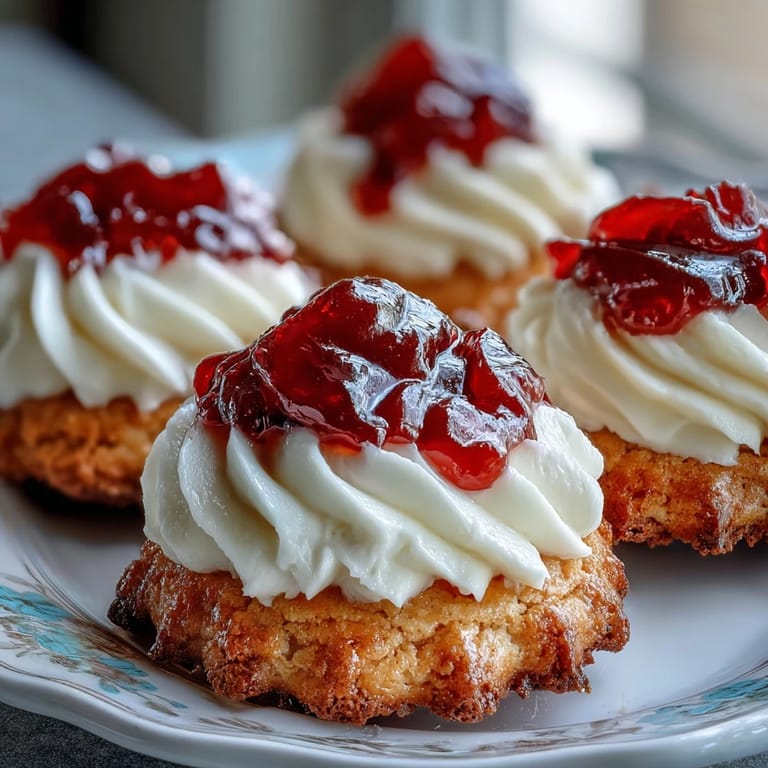
- Add about 1/2 teaspoon of clotted cream to each indentation, then top with 1/4 teaspoon of jam. The filling should peek above the dough slightly, creating that beautiful jewel-like effect.
- Bake until golden:
- Bake for 13–15 minutes, until the edges turn lightly golden but the centers still have a touch of softness. They'll continue cooking slightly on the hot pan after you remove them from the oven.
- Cool with patience:
- Let them rest on the baking sheet for 5 minutes to set before transferring to a wire rack to cool completely. This prevents them from breaking apart and gives the filling time to firm up slightly.
 Pin
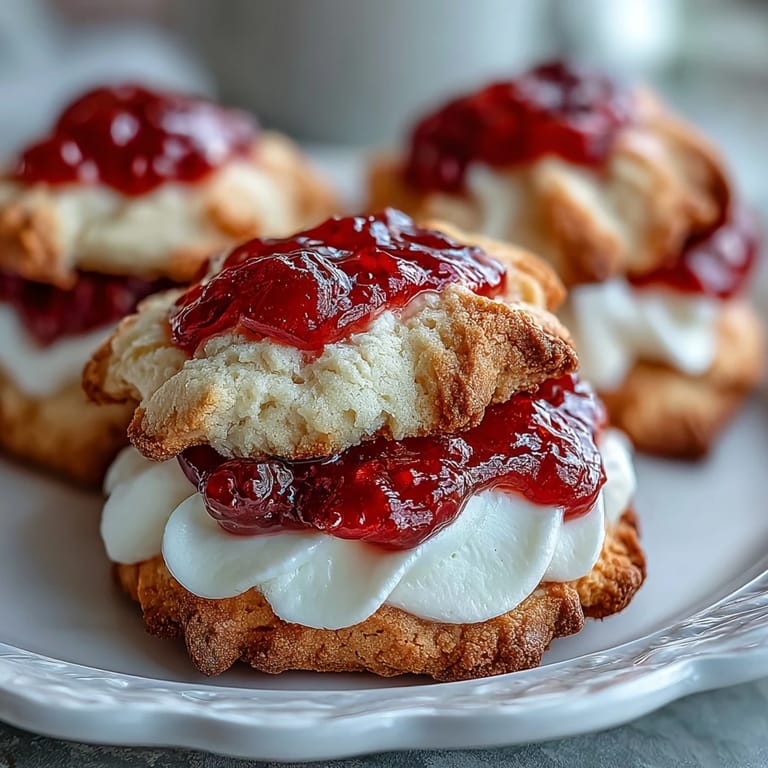
Pin Last weekend, my five-year-old carefully picked out the strawberry jam cookies from the batch I'd made and lined them up on his plate like tiny edible treasures. He told me they were "fancy cookies," and I realized that's exactly what they are—they don't require complicated technique or expensive equipment, yet they feel like a gift to whoever gets to eat them.
The British Tea Time Connection
These cookies are deeply rooted in the British tradition of afternoon tea, where the ritual matters as much as the food itself. There's something about serving something this elegant with a proper cup of tea—Earl Grey, English Breakfast, or even chamomile—that transforms an ordinary afternoon into something worth pausing for. The clotted cream is particularly British, a hallmark ingredient that makes these feel authentic and special.
Flavor Combinations Worth Exploring
While strawberry and clotted cream is the classic pairing, I've experimented with variations that work just as beautifully. Raspberry jam with clotted cream tastes slightly more sophisticated and berry-forward, while apricot jam brings a subtle tartness that balances the richness of the cream. Even blackberry with a tiny dollop of lavender-infused clotted cream (if you're feeling adventurous) creates something unexpectedly wonderful.
Storage, Substitutions & Final Thoughts
These cookies are surprisingly resilient and actually taste better after a day or two as the flavors meld together. If you can't find clotted cream, mascarpone or crème fraîche will work in a pinch, though the texture will be slightly different. The most important thing is to make them with intention and serve them to people who deserve a moment of joy.
- Store in an airtight container at room temperature for up to three days, or freeze the baked unfilled cookies for up to two weeks and fill them fresh whenever you like.
- If your clotted cream is rock solid from the fridge, let it sit on the counter for 15 minutes before filling to make the process easier.
- These make exceptional gifts when packaged in a pretty box with a handwritten label—people genuinely treasure homemade cookies made with this much care.
 Pin
Pin These cookies taught me that sometimes the most memorable baking moments come from the simplest recipes, the ones that let good ingredients shine without fussiness. Make a batch this afternoon and watch how quickly they disappear, and how the people eating them smile a little longer.
Recipe Q&A
- → What can I use instead of clotted cream?
Crème fraîche or mascarpone make excellent substitutes, providing a similar creamy texture.
- → How do I shape the cookies?
Roll dough into 1-inch balls, then press a thumb or spoon into the center to create an indentation for filling.
- → Can I use other jams?
Yes, raspberry or apricot jams work well as delicious alternatives.
- → What baking temperature is recommended?
Bake at 350°F (175°C) until edges turn lightly golden, typically 13–15 minutes.
- → How should the cookies be cooled?
Cool on the baking sheet for 5 minutes before transferring to a wire rack to cool completely.