 Pin
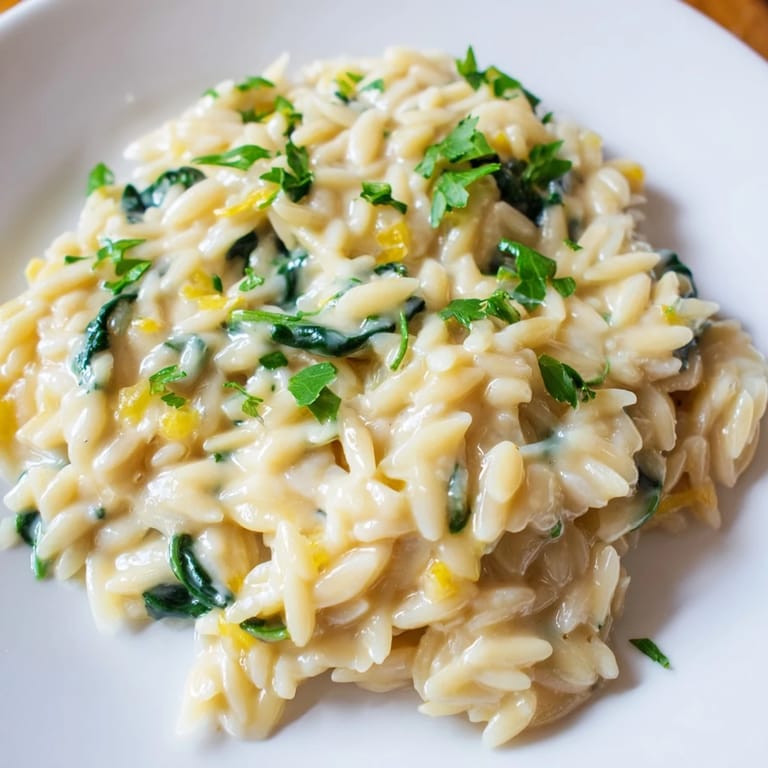
Pin There's something almost magical about watching a single pot transform into a complete dinner. I discovered this creamy orzo on a Tuesday evening when I had exactly thirty minutes, a craving for comfort, and nothing in the fridge but basics. The first time I made it, the kitchen filled with this buttery, garlicky aroma that felt like a hug, and by the time the cream swirled in, my roommate was hovering over my shoulder asking what smelled so good. That's when I knew this dish had staying power.
I made this for my partner after a particularly long day at work, and watching their face light up when they took that first bite reminded me why cooking matters. The way the pasta clung to that silky sauce, how the cheese melted into every grain—it felt like serving something that said I care, without making a fuss about it.
Ingredients
- Orzo pasta (1 1/2 cups): This tiny, rice-shaped pasta absorbs the broth beautifully without turning mushy if you keep stirring and pay attention to the timing.
- Unsalted butter (2 tablespoons): The foundation of flavor here, so use real butter—it makes a noticeable difference.
- Heavy cream (1/2 cup): This creates that signature luxurious texture that feels restaurant-quality.
- Freshly grated Parmesan cheese (1/2 cup): Always grate your own; pre-grated cheese has anti-caking agents that prevent that silky melt.
- Shredded mozzarella cheese (1/2 cup, optional): Adds extra creaminess and stretch, but the dish works beautifully without it.
- Yellow onion (1 small, finely diced): This builds the sweet, savory base that holds everything together.
- Garlic (3 cloves, minced): Mince these yourself and add them right after the onion softens so they perfume the entire dish.
- Baby spinach (2 cups, roughly chopped): It wilts down to almost nothing, adding nutrition without changing the vibe of the dish.
- Fresh parsley (1/4 cup, chopped): This bright finish lifts the whole thing at the last moment.
- Low-sodium vegetable broth (3 cups): This is the liquid magic; low-sodium lets you control the salt and prevents the dish from tasting over-seasoned.
- Milk (1/2 cup): A gentle dilution that keeps the sauce from becoming too heavy or thick.
- Salt, black pepper, and red pepper flakes: Taste as you go—the final seasoning is always personal.
Tired of Takeout? 🥡
Get 10 meals you can make faster than delivery arrives. Seriously.
One email. No spam. Unsubscribe anytime.
Instructions
- Melt the butter and soften the onion:
- Heat butter in a large, deep skillet over medium heat until it foams slightly. Add the diced onion and let it cook for 3–4 minutes, stirring occasionally, until it turns translucent and soft. You'll notice the kitchen starts to smell sweet and savory all at once.
- Toast the garlic:
- Add your minced garlic and stir constantly for just 1 minute—you want it fragrant, not brown. This moment sets the aromatic tone for everything that follows.
- Toast the orzo:
- Add the dry orzo and stir it constantly for 2 minutes so it coats evenly in butter and gets slightly golden. This small step adds a subtle nuttiness that you'll taste in every spoonful.
- Add the broth and milk:
- Pour in the vegetable broth and milk, stirring well to combine. Bring the mixture to a gentle simmer—not a rolling boil—and cook uncovered for 10–12 minutes, stirring frequently. The liquid will gradually absorb into the pasta, and the rice-shaped grains will transform from hard to tender.
- Make it creamy:
- Once the orzo is tender and most of the liquid has been absorbed, pour in the heavy cream and add the Parmesan and mozzarella if using. Stir gently but thoroughly until the cheese melts completely and the sauce becomes silky and cohesive.
- Wilt in the spinach:
- Add the chopped spinach and cook for 1–2 minutes, stirring, until it darkens and softens into the creamy sauce. This happens faster than you'd expect.
- Finish and serve:
- Taste and adjust the seasoning with salt, pepper, and red pepper flakes. Remove from heat, stir in the fresh parsley for brightness, and serve immediately while it's hot and steaming.
 Pin
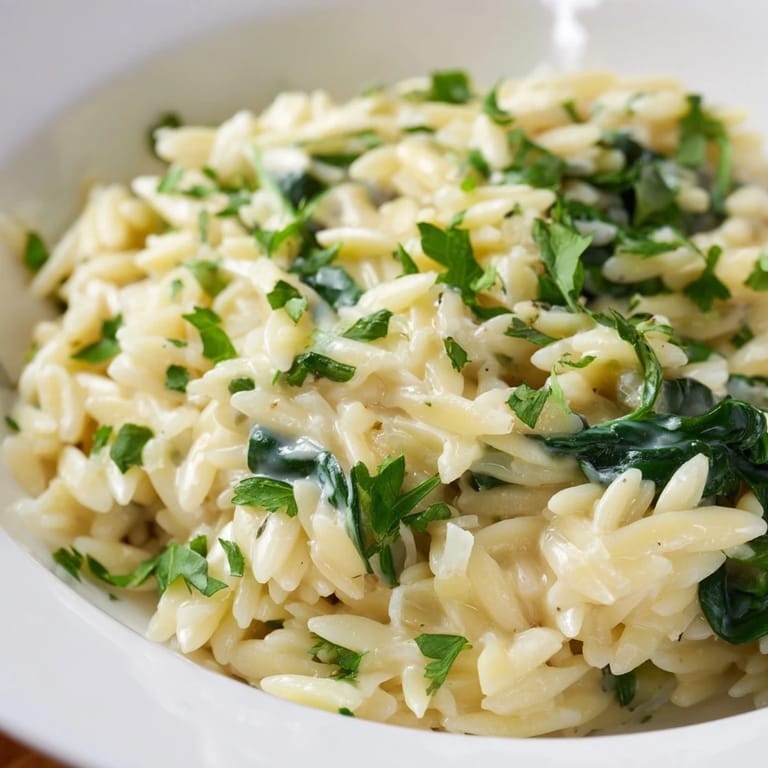
Pin I served this at a dinner party once, and someone asked if I'd made it in a restaurant kitchen because it tasted like restaurant food. The secret, I realized, wasn't technique or expensive ingredients—it was the fact that I'd paid attention, stirred it, and added the cream at exactly the right moment. That's when I understood: this dish rewards presence, not perfection.
Why This Works as a One-Pot Meal
One-pot cooking isn't just about convenience; it's about layers building on each other. The butter catches the heat first, then carries the flavor of the onion and garlic into the pasta itself. When you pour in the broth, all those flavors dissolve into the liquid, and the pasta drinks them in as it cooks. By the time the cream goes in, every grain is already infused with savory depth. It's efficiency that tastes like care.
Customization Without Losing the Soul
This dish is forgiving enough to bend with what you have on hand. Swap the spinach for kale or arugula if that's what's in your crisper drawer. Add sun-dried tomatoes for a sharp contrast to the creaminess, or stir in cooked chicken or shrimp if you want protein that feels less vegetarian. The beauty is that the creamy orzo base is sturdy enough to support these additions without losing its identity. I once made it with mushrooms sautéed separately and folded them in at the end—the earthiness played beautifully against the richness.
Making It Your Own
The simplest way to make this feel personal is to adjust the heat and acidity to your taste. If you like things spicier, don't be shy with the red pepper flakes—they add a subtle warmth that cuts through the cream. A squeeze of fresh lemon juice right before serving can brighten everything if you're in the mood for something sharper. Some nights I finish it with a pinch of fresh nutmeg, which sounds unusual but creates this elegant undertone that makes people pause and ask what they're tasting.
- Taste as you season—it's easier to add salt than to remove it.
- If the sauce seems too thick after sitting, a splash of warm milk or broth loosens it back to silky perfection.
- Leftovers reheat beautifully in a low oven with a little extra cream stirred in.
 Pin
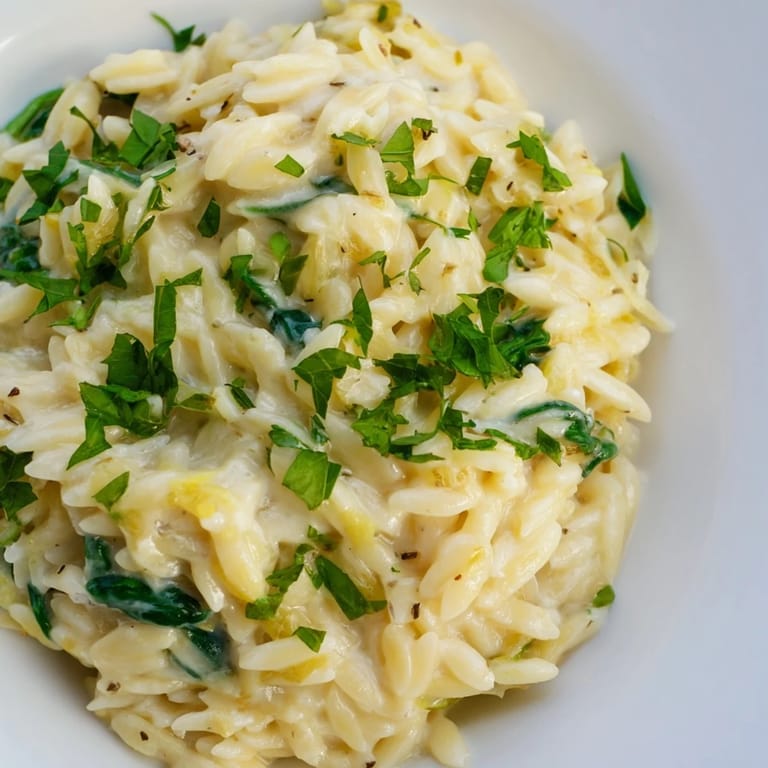
Pin This one-pot creamy orzo has become my answer to nights when I want to cook something that feels nourishing without being complicated. It's the kind of dish that makes you feel capable in the kitchen while feeding the people around you something they'll actually want to eat.
Recipe Q&A
- → How do I prevent the orzo from sticking during cooking?
Stir frequently while simmering the orzo in broth and milk to prevent sticking and ensure even cooking.
- → Can I substitute the cheeses for a dairy-free option?
Yes, plant-based cream and cheese alternatives work well to maintain creaminess while keeping it dairy-free.
- → Is it possible to add protein to this dish?
Adding cooked chicken, shrimp, or sautéed mushrooms provides extra protein and enhances texture.
- → What greens can I use besides spinach?
Kale or arugula are great substitutes, adding their own flavor profiles and nutrients.
- → Which wines pair well with creamy orzo dishes?
Crisp white wines like Pinot Grigio or Sauvignon Blanc complement the creamy texture and balance the flavors.