 Pin
Pin There's something almost meditative about watching a sheet pan of salmon and vegetables transform in the oven—the way the kitchen fills with that herbaceous, citrusy steam when you crack open the door. I discovered this recipe during a particularly chaotic week when I needed something that felt restaurant-quality but wouldn't demand my full attention at the stove. Twenty minutes later, I had a complete dinner that tasted like I'd spent hours planning it, when really I'd just thrown everything on one pan and trusted the heat to do the work.
I made this for my sister who'd been skeptical about cooking salmon at home, convinced it would end up rubbery or smell up the whole house. When she took that first bite—the lemon juice running into the flaky flesh, that fresh dill hitting just right—she actually closed her eyes, and I knew I'd won her over without saying a word. Now it's become her go-to dish when she wants to impress someone without revealing how easy it actually was.
Ingredients
- Salmon fillets (6 oz each): Look for fillets that are roughly the same thickness so they cook evenly; thinner pieces dry out faster than you'd expect.
- Olive oil: Don't splurge on premium here, but don't use the cheapest either—mid-range works beautifully.
- Lemon (zest and juice): Fresh lemon makes all the difference; bottled juice will do in a pinch but tastes noticeably different.
- Dill: Fresh is incredible, but dried works perfectly fine and actually holds up better to the heat.
- Garlic powder: Keeps things simple and prevents burnt garlic bits that fresh garlic sometimes creates.
- Salt and black pepper: These aren't just seasonings here—they're the backbone of the flavor profile.
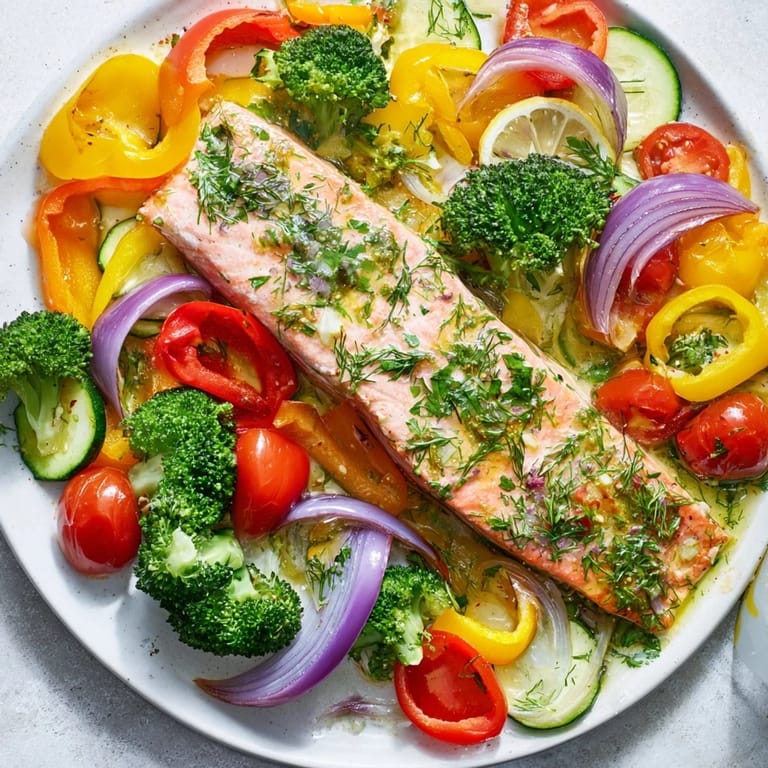
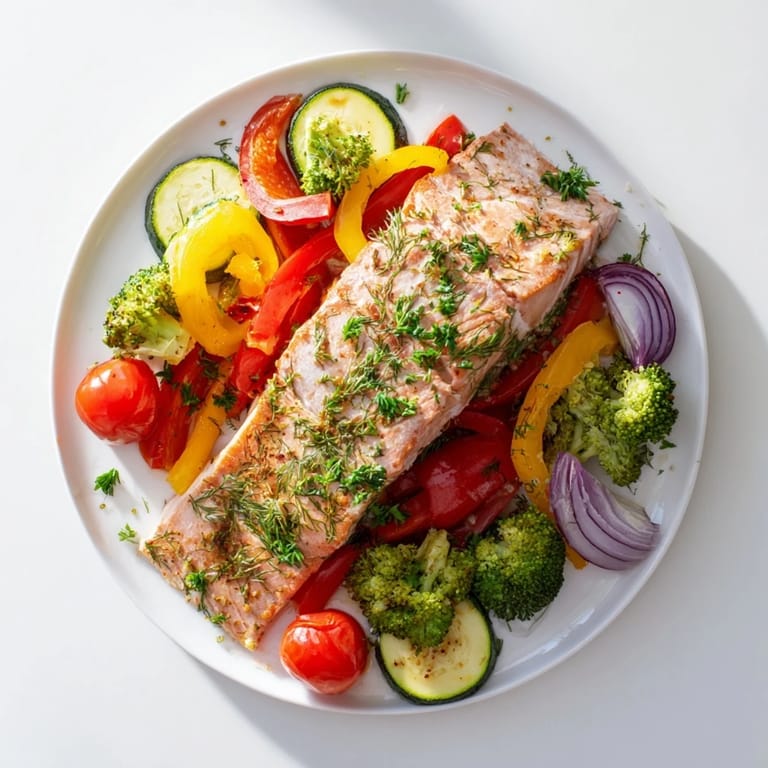
- Bell peppers (red and yellow): The sweetness of these balances the salmon's richness; skip the green if you don't want them overshadowing everything else.
- Red onion: Wedges work better than slices because they hold together and get soft, not mushy.
- Zucchini: Slice it thick enough that it doesn't turn to mush in twenty minutes.
- Cherry tomatoes: Halving them prevents them from rolling around; they'll burst slightly and become jammy.
- Broccoli florets: They might seem out of place next to salmon, but they add a pleasant earthiness and texture contrast.
Tired of Takeout? 🥡
Get 10 meals you can make faster than delivery arrives. Seriously.
One email. No spam. Unsubscribe anytime.
Instructions
- Get your oven ready and prep your stage:
- Preheat to 425°F and line your sheet pan with parchment paper or foil while the oven heats up. This prevents the salmon from sticking and makes cleanup almost laughably easy—you'll never want to roast without it again.
- Build the flavor base:
- Whisk together the olive oil, lemon zest, lemon juice, dill, garlic powder, salt, and pepper in a small bowl. The mixture should smell bright and herbaceous; if it smells flat, you might need more lemon juice.
- Dress the vegetables first:
- Scatter all your chopped vegetables across the sheet pan and drizzle with half the oil mixture, tossing everything so it coats evenly. This ensures the vegetables start caramelizing before the salmon even hits the pan.
- Nestle in the salmon:
- Arrange the fillets among the vegetables—they don't need to touch anything specific, just find their spot. Brush the remaining oil mixture over each fillet, paying attention to the sides that'll be exposed to the heat.
- Let the oven do its magic:
- Roast for 18–20 minutes, checking around the 18-minute mark by gently flaking a corner with a fork. The salmon should flake easily, and the vegetables should be tender with slightly caramelized edges.
- Finish with brightness:
- Pull it out, scatter fresh parsley over everything if you have it, and serve with lemon wedges so people can add more acidity if they want it.
 Pin
Pin What I love most about this dish is watching people realize they can make something this good without fussing—there's this moment where they taste it and mentally file it away as their new secret weapon. It's become the meal I make when I want to feel competent in the kitchen without actually working very hard, and somehow that's become the highest compliment I can give a recipe.
Why This Works as a Weeknight Dinner
The beauty of a sheet pan dinner is that you're not juggling multiple burners or timing different components—everything roasts together and finishes at almost exactly the same moment. The vegetables release moisture as they cook, which creates a light steam that keeps the salmon moist and infuses everything with flavor. I've made this on nights when I was tired, when I had unexpected guests, and when I just wanted to prove to myself that I could still cook something good. Every time, it delivered without complaint.
Customizing Your Pan
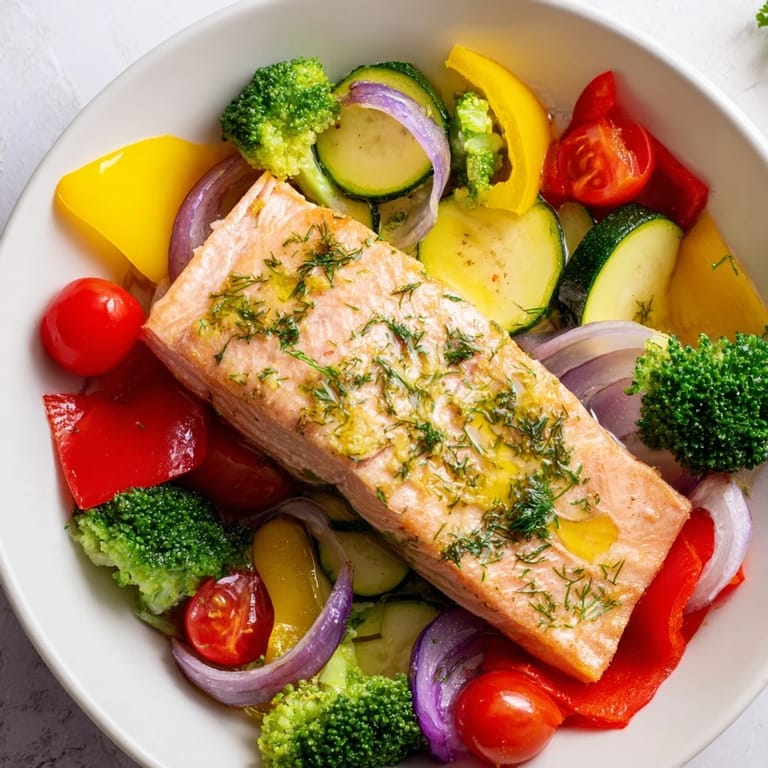
One of the best things about this recipe is how it adapts to whatever vegetables you have on hand or whatever looks good at the market that week. Asparagus, green beans, snap peas, and baby potatoes all work beautifully; just adjust your timing slightly if you're using something much denser. I've even added halved Brussels sprouts when I felt like something with more substance, and they became these crispy little gems by the time everything was done. The skeleton of the recipe stays the same, but the dish never feels repetitive.
Flavor Variations and Upgrades
Once you're comfortable with the basic version, it's fun to experiment with different herb and spice combinations—tarragon instead of dill gives it a subtle anise note, or a pinch of smoked paprika adds warmth and depth. I've finished it with capers for a briny punch, crumbled feta for creaminess, or a drizzle of tahini mixed with lemon for something unexpected. The point is that the formula is flexible enough to meet you wherever you are in terms of mood and pantry inventory.
- Swap dill for tarragon, oregano, or thyme depending on what you're craving.
- Add capers, olives, or feta as a finishing touch for extra flavor.
- A squeeze of bottled hot sauce right before eating works if you want heat.
 Pin
Pin This recipe proved to me that the most satisfying meals don't have to be complicated or time-consuming. It's become the one I reach for when I want to feel accomplished without the fuss.
Recipe Q&A
- → What vegetables work best with this dish?
Bell peppers, zucchini, cherry tomatoes, broccoli, and red onion complement the salmon well. Seasonal swaps like asparagus or green beans are great alternatives.
- → How do I know when the salmon is cooked?
When the salmon flakes easily with a fork and turns opaque throughout, it’s perfectly cooked. This usually takes 18–20 minutes at 425°F.
- → Can I use fresh herbs instead of dried?
Yes, fresh dill works wonderfully to brighten the flavors. Use about one tablespoon chopped fresh dill in place of dried.
- → Is it necessary to use parchment paper or foil?
Lining the sheet pan helps prevent sticking and makes cleanup easier, but it’s optional if you prefer to oil the pan well.
- → What can I serve alongside this dish?
Pair with a crisp white wine like Sauvignon Blanc or Chardonnay, or add a light grain such as quinoa or couscous for a fuller meal.