 Pin
Pin My friend Marco brought a carnitas bowl to a potluck last spring, and I watched people actually abandon the chips and dip to crowd around his container. The thing that got me was how the pork seemed to dissolve on your tongue while somehow staying substantial, and the rice beneath it had soaked up just enough of that citrusy, savory juice. I went home determined to figure out what he'd done, and honestly, once you nail the slow cooker timing, this becomes the kind of meal you make when you want to impress people without actually stressing in the kitchen.
I made these bowls for my sister's book club once, and someone asked if I'd trained under a chef because the carnitas had that perfect balance of crispy edges and creamy interior. What she didn't know was that I'd almost forgotten the broiling step entirely and only remembered while stirring the beans, so I did a last-minute scramble to get it right. Those little accidents sometimes lead to your best moments in the kitchen.
Ingredients
- Pork shoulder: Use boneless chunks cut fairly large so they stay juicy during that long, slow braise instead of falling apart into dust.
- Ground cumin and dried oregano: These create the flavor foundation that says you know what you're doing, even if this is your first time making carnitas.
- Orange and lime juice: Fresh citrus brightens everything and tenderizes the meat slightly, plus it smells incredible while cooking.
- Long-grain white rice: It won't turn mushy and will stay fluffy enough to showcase all the pork juices soaking into it.
- Pinto beans: Canned saves you hours, and rinsing them removes excess sodium so you control the seasoning.
- Fresh avocado: Wait to slice it until you're actually assembling the bowls or it'll brown and look sad.
Tired of Takeout? 🥡
Get 10 meals you can make faster than delivery arrives. Seriously.
One email. No spam. Unsubscribe anytime.
Instructions
- Layer the slow cooker with confidence:
- Throw the pork chunks into your slow cooker along with the salt, pepper, cumin, oregano, smoked paprika, garlic, and chopped onion. Pour the orange juice, lime juice, and chicken broth over everything and stir so the spices coat the meat evenly. This is the moment where you set it and forget it for hours.
- Let time do the heavy lifting:
- Cover and cook on low for 8 hours, or if you're in a hurry, on high for 4 hours until the pork shreds easily with just a fork. You'll know it's ready when steam rises and the meat practically falls apart at the slightest touch.
- Crisp the edges if you want that textural pop:
- Transfer your shredded pork to a baking sheet and slide it under the broiler for 5 to 7 minutes, watching carefully so it browns but doesn't char. This optional step transforms it from soft to restaurant-quality with those caramelized, slightly crispy edges.
- Rinse the rice like you mean it:
- Hold the rice under cold running water and stir with your fingers until the water runs mostly clear, which removes excess starch so your grains stay separate instead of clumping. Combine the rinsed rice, water, and salt in a medium saucepan and bring it to a boil, then immediately reduce heat to low, cover, and let it steam for exactly 15 minutes.
- Rest your rice for silkier texture:
- Once the timer goes off, remove the pan from heat but keep the lid on for 5 minutes while the carryover heat finishes the job. Fluff gently with a fork, and each grain should be tender and distinct.
- Wake up the beans with warmth and spice:
- In a small saucepan, combine your drained and rinsed pinto beans with cumin, chili powder, and water, then simmer gently over medium heat for 5 to 7 minutes, stirring occasionally so nothing sticks. The beans should be heated through and slightly creamy from their own starch.
- Assemble like you're creating edible art:
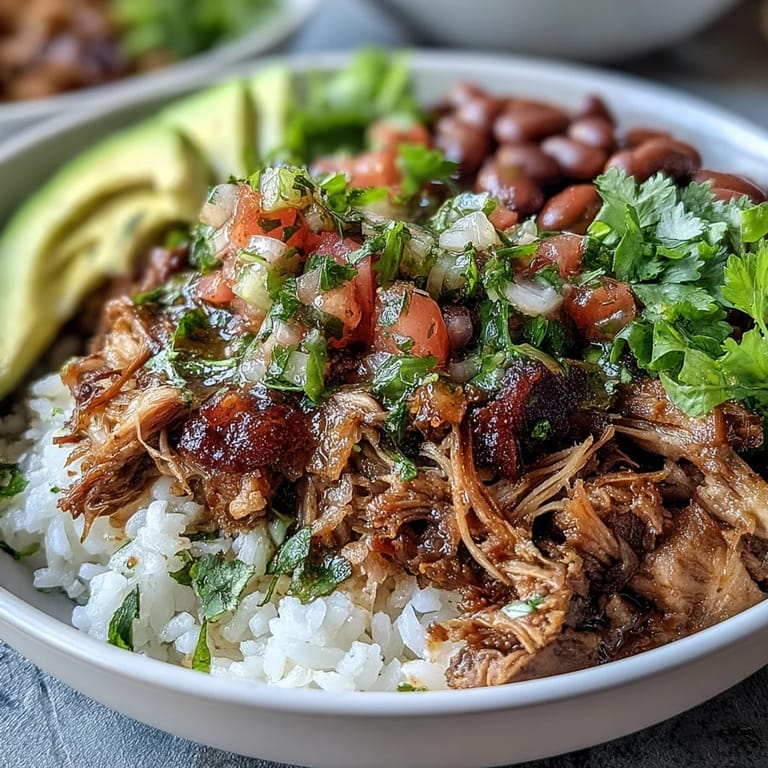
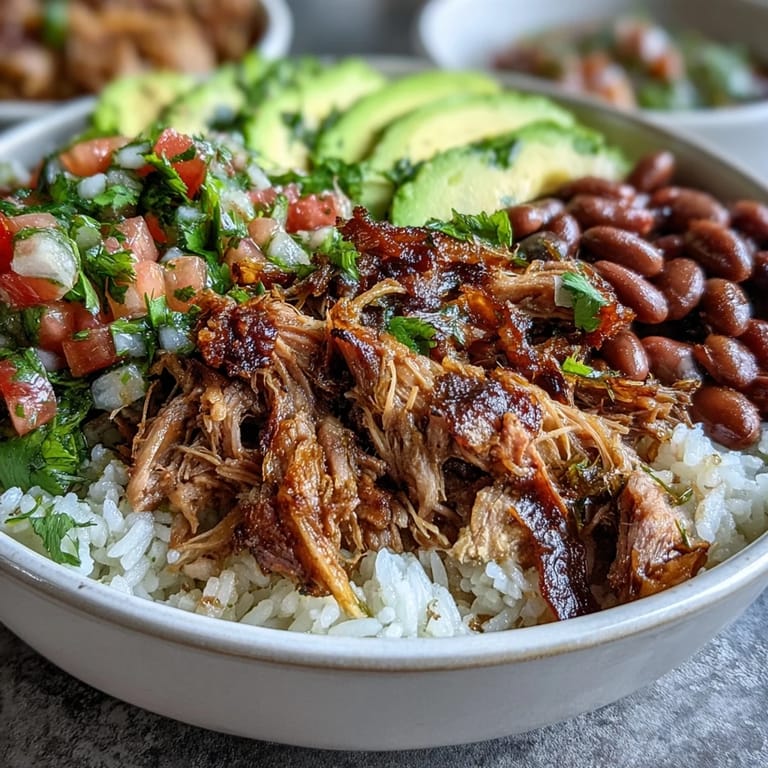
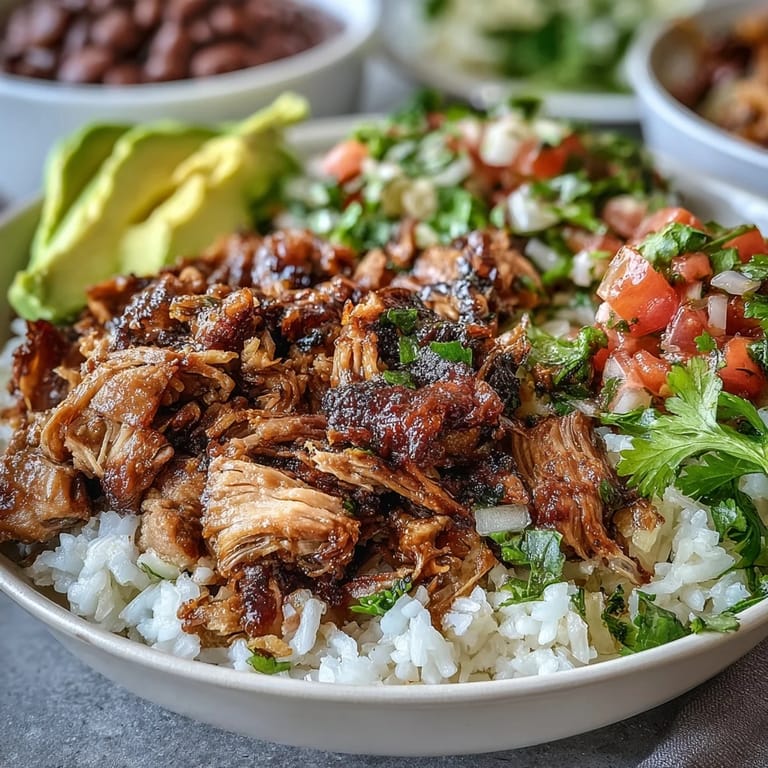
- Divide the fluffy rice among four bowls as your foundation, then top each with a scoop of warm beans and a generous portion of carnitas. Scatter fresh salsa, avocado slices, and cilantro over everything, and set a lime wedge on the side for people to squeeze over however they like.
 Pin
Pin There's something about handing someone a bowl where they can customize each bite that brings out a kind of joy most recipes don't. My nephew once spent ten minutes arranging his avocado slices in a perfect pattern before eating, and that's when I realized this dish lets people be creative instead of just consuming what you put in front of them.
Why the Slow Cooker Method Actually Works
Pork shoulder has lots of connective tissue and fat that benefits from low, slow heat rather than high-heat searing. The long cooking time breaks down those tough fibers into something silky and almost melting, while the citrus juice keeps things from tasting heavy or one-note. I learned this the hard way when I tried rushing carnitas in a regular pot, and the meat turned out tough and stringy instead of luxurious.
The Broiling Step That Changed Everything
When I first made carnitas, I served them straight from the slow cooker and they were delicious but lacked that crispy-edged contrast that makes restaurant versions so addictive. A quick trip under the broiler transforms the texture completely, giving you pockets of browned, slightly caramelized pork mixed with the tender interior. It's the difference between good carnitas and the kind people ask you to make again.
Customization Ideas That Actually Matter
The beauty of bowl-format meals is that everyone gets to be the chef of their own plate, which means less complaining and more creative combinations. Some people love pickled red onions for acidity, others want a dollop of sour cream for richness, and that's perfectly fine because you've built a strong foundation they can dress however they want. Think of the rice and carnitas as your canvas, and everything else as optional paint.
- Pickled red onions add brightness and cut through the richness with their sharp bite.
- A handful of shredded cheese or a spoonful of sour cream makes it creamier for people who prefer softer textures.
- Jalapeños or hot sauce transform it for spice lovers without overwhelming the delicate citrus notes.
 Pin
Pin This bowl taught me that the best meals aren't always the most complicated ones, they're the ones where everyone feels taken care of. Serve these warm with cold avocado and bright lime, and watch people slow down and actually enjoy their food instead of rushing through it.
Recipe Q&A
- → Can I make carnitas in the oven instead of a slow cooker?
Yes. Cook the pork tightly covered at 300°F (150°C) for about 3-4 hours until tender, then shred and broil for crispy edges.
- → How long do leftovers keep in the refrigerator?
Store components separately in airtight containers for up to 4 days. Reheat carnitas and rice gently, then assemble bowls fresh.
- → What other toppings work well with carnitas bowls?
Pickled red onions, radish slices, jalapeño peppers, sour cream, shredded cheese, or cotija all add great flavor and texture.
- → Can I use brown rice instead of white rice?
Absolutely. Brown rice will need about 40-45 minutes to cook and slightly more water—use 2.5 cups water per cup of rice.
- → Is it possible to freeze the cooked carnitas?
Yes, freeze shredded carnitas in freezer bags for up to 3 months. Thaw overnight in the refrigerator before reheating.
- → What cut of pork works best for carnitas?
Pork shoulder (also called pork butt) is ideal due to its marbling. The fat renders during cooking, keeping the meat moist and flavorful.