 Pin
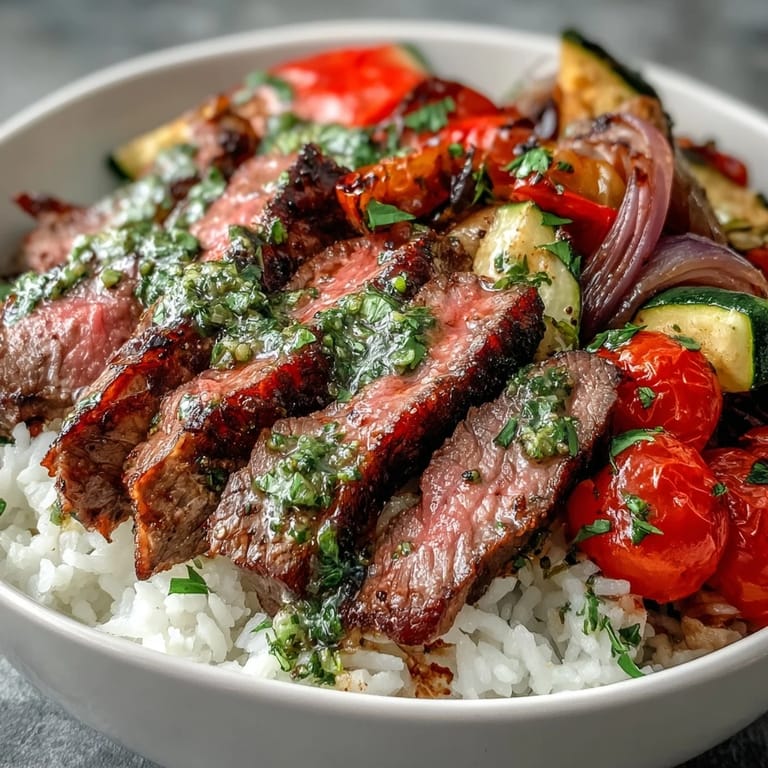
Pin My neighbor showed up one summer evening with a bowl of something that stopped me mid-conversation—tender steak over rice, vegetables catching the last light of day, and this green sauce that smelled like herbs and possibility. He called it his go-to weeknight dinner, and I remember thinking how something so restaurant-looking could actually live in a regular kitchen. That night changed how I thought about building a meal, turning what felt like separate components into something whole and satisfying.
I made this for my sister when she was going through a phase of wanting to eat better but not wanting to sacrifice flavor, and watching her face when she took that first bite told me everything. The way the warm steak and rice soaked up that bright sauce, the crunch of the roasted vegetables—it became her request every time she visited. Food that makes people pause and actually taste it, that's when you know you've got something worth repeating.
Ingredients
- Flank or sirloin steak (1 lb): Pick a cut with good marbling because it stays tender even if your timing isn't perfect, and the fat carries flavor into every bite.
- Olive oil: Use it generously for the steak and vegetables—it's not just cooking medium, it's flavor building.
- Kosher salt and freshly ground black pepper: These aren't just seasonings, they're the foundation that makes everything else sing.
- Smoked paprika (½ tsp): This small amount adds a subtle depth that people often can't identify but absolutely notice is missing if you skip it.
- Long-grain white rice (1 cup): The neutral canvas that holds the bowl together, absorbing sauce and creating something cohesive.
- Bell pepper, zucchini, red onion, cherry tomatoes: Pick vegetables that have good color contrast because you're eating with your eyes first.
- Fresh parsley and oregano: Fresh herbs are non-negotiable for the chimichurri—dried will work in a pinch but tastes like regret.
- Garlic cloves (3): Mince them fine so they distribute evenly through the sauce and don't become aggressive little chunks.
- Red wine vinegar (2 tbsp): This is what makes chimichurri sing instead of just sit there being herby.
- Crushed red pepper flakes (½ tsp): Start here and taste as you go, because heat is personal and building in layers is smarter than overshooting.
Tired of Takeout? 🥡
Get 10 meals you can make faster than delivery arrives. Seriously.
One email. No spam. Unsubscribe anytime.
Instructions
- Fire up the oven:
- Set it to 425°F and let it preheat while you prep everything else—this is your signal that cooking is happening and things are about to move quickly.
- Prepare and roast the vegetables:
- Toss your peppers, zucchini, onion, and tomatoes with olive oil and seasonings, then spread them on a baking sheet in a single layer where they can actually caramelize instead of steam. They'll spend 20 to 25 minutes getting golden and slightly charred at the edges, which is where all the sweetness lives.
- Cook the rice:
- Rinse it under cold water until the water runs clear—this removes excess starch and prevents gluey, sad rice. Combine with water and salt in a saucepan, bring to a boil, then cover and reduce heat to low, letting it simmer undisturbed for 15 minutes until the water is completely absorbed.
- Season and prep the steak:
- Pat it completely dry with paper towels, then rub it generously with olive oil and your seasoning blend so every surface gets attention. This matters more than you'd think.
- Sear the steak:
- Get your grill or grill pan screaming hot, then lay the steak down and resist the urge to fidget with it—let it sit for 4 to 5 minutes per side until you've built a crust that's golden and confident. Rest it for 5 minutes after cooking so the juices redistribute, then slice against the grain into pieces that bend without tearing.
- Make the chimichurri:
- Whisk together fresh parsley, oregano, minced garlic, olive oil, red wine vinegar, red pepper flakes, salt, and pepper in a bowl, tasting as you go. This sauce is better when you've adjusted it to your preference rather than just following numbers.
- Assemble and serve:
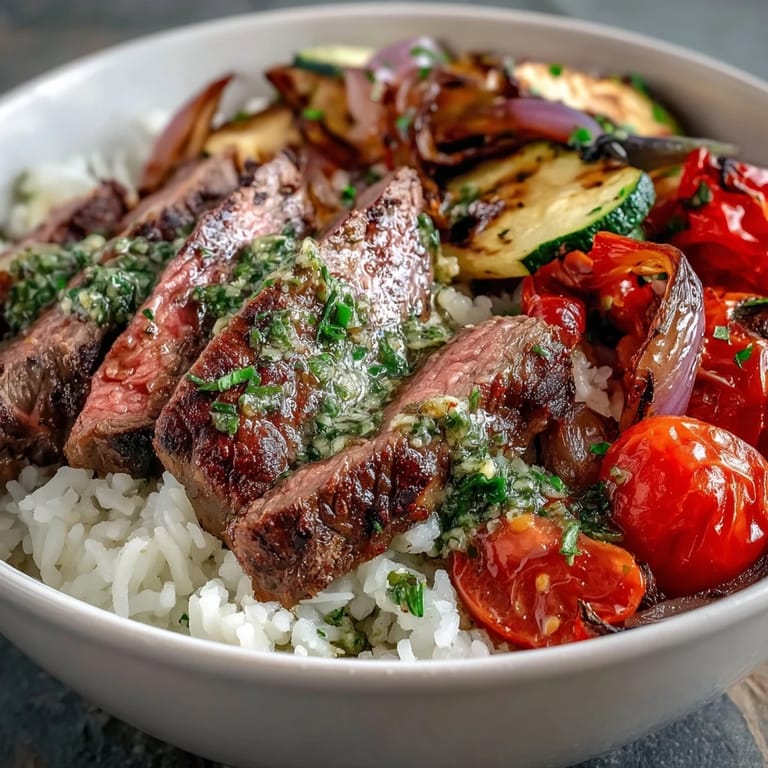
- Divide the fluffy rice among bowls, arrange roasted vegetables on top, nestle the sliced steak around everything, and finish with a generous drizzle of chimichurri. Serve immediately while the steak is still warm and the sauce hasn't had time to separate.
 Pin
Pin There's a moment right after you plate this when everything is still warm and the flavors haven't yet blended into sameness, when each element is distinct but working together. That's the moment worth eating for—when the chimichurri is still bright and alive, the steak is still hot enough to be properly tender, and the rice is absorbing all that good sauce. This is the meal that taught me that balance between components matters as much as any single ingredient.
The Grain Matters
White rice is perfect here because it's neutral enough to let everything else shine, but I've made this with brown rice on days when I wanted the bowl to feel more substantial and earthy. Quinoa works too if you're that way inclined, though it has a nuttiness that competes with the chimichurri rather than supporting it. The rice you choose is really about what mood you're in and what kind of dinner story you want to tell yourself.
Vegetables as Mood
The beauty of this bowl is that you can follow the seasons and your crisper drawer instead of being locked into one specific combination. Spring might mean asparagus and snap peas, summer is obviously all about what's colorful and abundant, and fall lets you roast squash and root vegetables until they're caramelized into sweetness. The only real rule is to cut everything roughly the same size so it cooks evenly and looks intentional rather than haphazard.
Making It Your Own
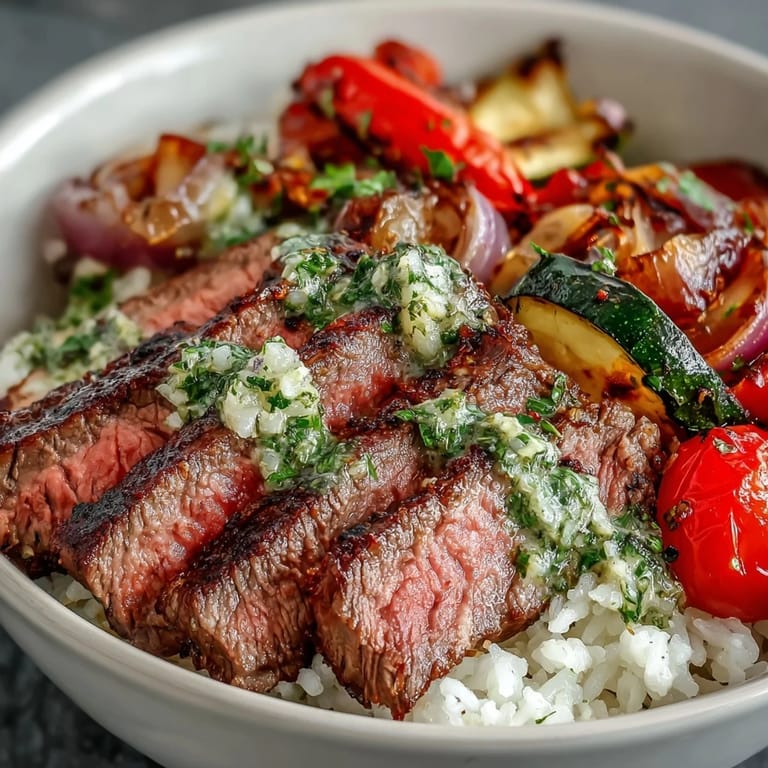
This is honestly a formula rather than a fixed recipe, which means there's room for your preferences without ruining anything. The steak could be swapped for grilled chicken or fish, the rice could be swapped for anything grain-like, and the vegetables are really just your chance to use what's on hand or what you're craving. What ties it all together is the chimichurri and the idea of building something balanced on a plate.
- Marinate the steak in oil and seasonings for up to 2 hours before grilling if you want deeper flavor and don't mind planning ahead.
- Make the chimichurri in advance and let it sit so the flavors deepen, though add the garlic closer to serving so it doesn't become overwhelming.
- If you're feeding a crowd, you can prepare rice and vegetables ahead and reheat them gently, then sear the steak fresh just before plating.
 Pin
Pin This bowl is the kind of dinner that makes you feel like you've accomplished something without actually stressing about it. Every time I make it, I remember why it became a regular, and why my neighbor knew exactly what he was doing that summer evening.
Recipe Q&A
- → What cut of steak works best?
Flank or sirloin steak both work beautifully. These cuts grill quickly and slice tender against the grain. Look for steak with good marbling for the most flavorful results.
- → Can I make the chimichurri ahead?
Absolutely. Chimichurri actually develops more flavor when made a day ahead. Store it in an airtight container in the refrigerator, bringing it to room temperature before serving.
- → How do I know when the steak is done?
Use an instant-read thermometer for accuracy. Medium-rare reaches 130-135°F internally, while medium hits 140-145°F. The steak will continue cooking slightly while resting.
- → What vegetables can I substitute?
Almost any hearty vegetable works well. Try broccoli florets, sweet potato cubes, asparagus, or eggplant. Just adjust roasting times accordingly—cut harder vegetables into smaller pieces.
- → Can this bowl be meal-prepped?
Yes. Store the rice, vegetables, and steak in separate containers. Keep the chimichurri in a small jar. Reheat the components gently and assemble just before eating for best texture.
- → Is this dish spicy?
The chimichurri has mild heat from red pepper flakes, but it's not overpowering. For more spice, increase the flakes or add a pinch of cayenne. For less heat, simply omit the flakes.