 Pin
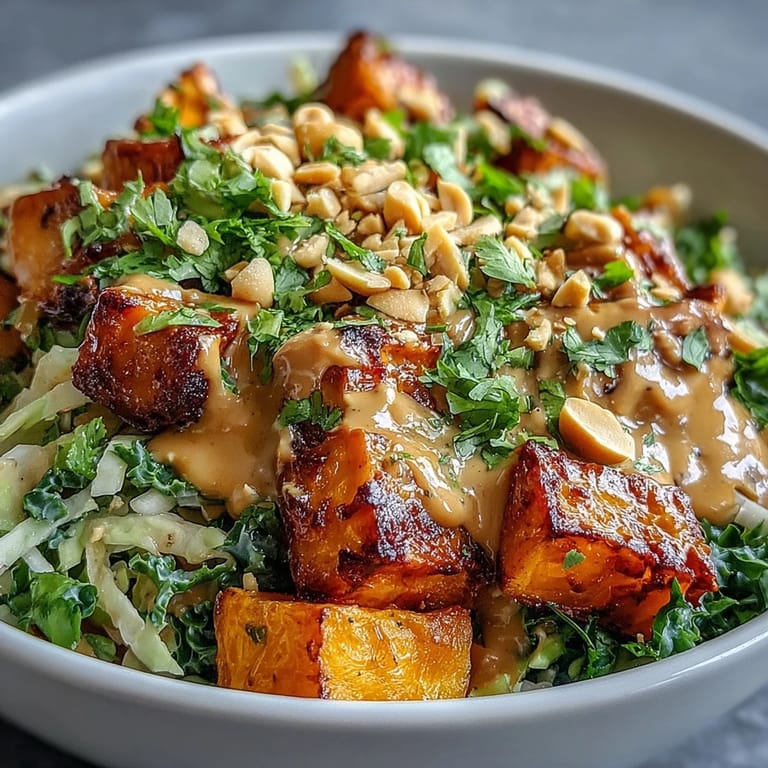
Pin The first time I made this bowl, I was scrambling to use up sweet potatoes that had been sitting on my counter way too long. I threw together whatever crunchy vegetables I could find in the crisper drawer, whisked up a quick peanut sauce from pantry staples, and somehow created something that felt intentional and thoughtful. My roommate walked in, took one look at the colorful arrangement, and asked if I'd been planning it all week. Now it is the dinner I turn to when I want something that looks impressive but actually comes together in the time it takes to roast a tray of vegetables.
Last winter, when my sister was recovering from surgery and needed meals that felt nourishing but not heavy, I brought her a batch of these bowls. She texted me later that night saying it was the first time in days she had actually looked forward to eating. There is something about the combination of warm roasted vegetables, cold crisp crunch, and that rich creamy sauce that makes food feel like care.
Ingredients
- Sweet potatoes: I have learned that cutting them into uniform one inch cubes helps them roast evenly without some pieces turning to mush while others stay hard.
- Olive oil: Toss the sweet potatoes thoroughly so every piece gets coated, which prevents them from drying out in the high heat.
- Broccoli florets: Keep them bite sized because nobody wants to chase a giant tree of broccoli around their bowl with a fork.
- Shredded cabbage: The raw cabbage adds this incredible crunch that holds up perfectly against the soft sweet potatoes.
- Peanut butter: Use natural peanut butter where the only ingredients are peanuts and salt, because the stabilized stuff with added oils makes the sauce taste weirdly artificial.
- Lime juice: Fresh squeezed makes a huge difference here, and I often add an extra squeeze right at the end for brightness.
Tired of Takeout? 🥡
Get 10 meals you can make faster than delivery arrives. Seriously.
One email. No spam. Unsubscribe anytime.
Instructions
- Roast the sweet potatoes:
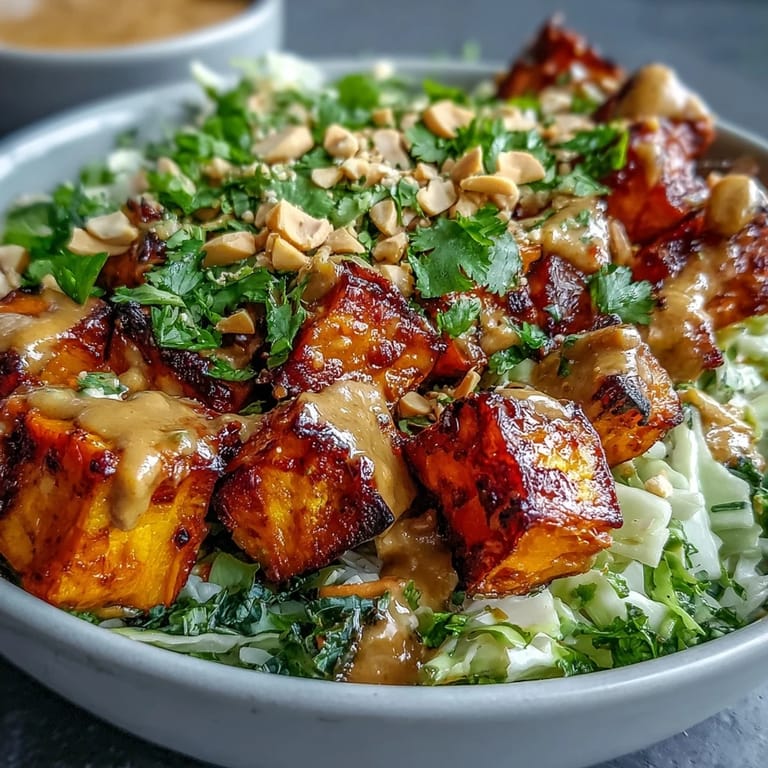
- Preheat your oven to 400°F and line a baking sheet with parchment paper for easier cleanup. Toss the diced sweet potatoes with olive oil, salt, and pepper until evenly coated, then spread them in a single layer without overcrowding the pan. Roast for 25 to 30 minutes, flipping halfway through, until they have golden edges and yield easily when pierced with a fork.
- Prep your vegetables:
- While the sweet potatoes roast, cut the broccoli into small florets, shred the cabbage, grate the carrots, and slice the avocado just before serving to prevent browning.
- Make the peanut sauce:
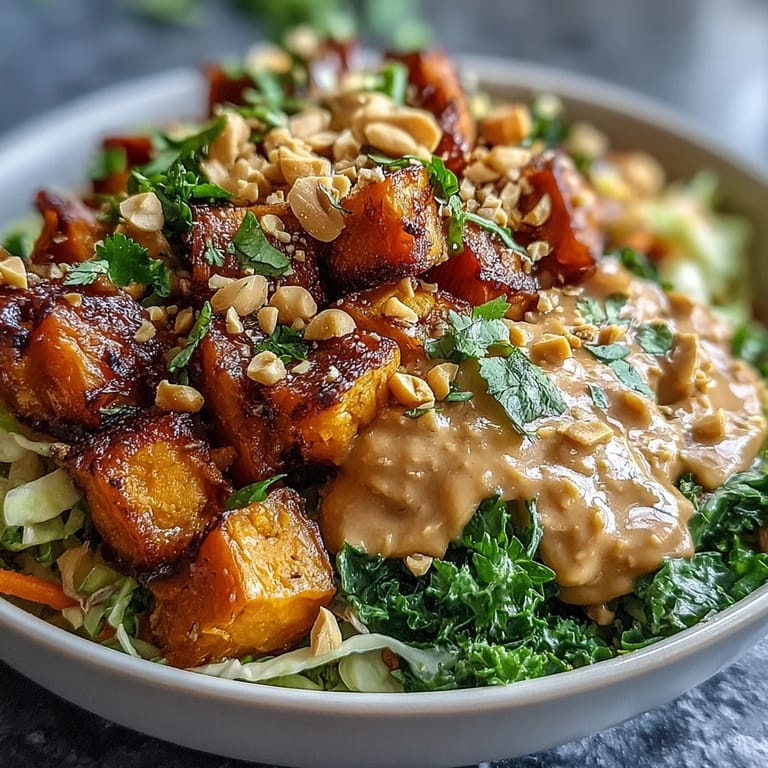
- Whisk together the peanut butter, soy sauce, maple syrup, lime juice, and sesame oil in a small bowl until smooth. Add warm water one tablespoon at a time until the sauce reaches a creamy, pourable consistency that coats the back of a spoon.
- Assemble the bowls:
- Divide the fresh vegetables among four bowls, then top with the warm roasted sweet potatoes. Drizzle generously with the peanut sauce and finish with chopped cilantro and peanuts for texture.
 Pin
Pin This recipe became my go-to when I started working from home and needed lunches that did not leave me feeling heavy and sluggish in the afternoon. Somehow, eating something this colorful makes even the most ordinary Tuesday feel a little more special.
Making It Your Own
I have served these bowls with baked tofu, edamame, and even shredded rotisserie chicken for non-vegetarian friends. The beauty of this recipe is that it works as a template rather than a strict set of rules. In the summer, I swap in cucumber and cherry tomatoes. In the fall, roasted Brussels sprouts replace the raw vegetables entirely.
Sauce Secrets
The first few times I made the peanut sauce, it turned out way too thick and almost impossible to drizzle. I learned that the key is adding the water gradually while whisking constantly. Some days I crave it thinner and almost pourable, while other times I want it thick enough to cling to every surface. Trust your instincts and adjust until it looks right to you.
Prep Ahead Strategy
Sunday meal prep changed my relationship with this recipe because I realized almost everything can be prepared in advance. The sauce keeps for weeks in the refrigerator. The vegetables can be chopped and stored in airtight containers. The only thing that really needs to be fresh is the avocado.
- Roast a double batch of sweet potatoes and eat them throughout the week in bowls, wraps, or just straight off the baking sheet.
- If taking this for lunch, pack the sauce separately and drizzle right before eating to keep everything crisp.
- The cabbage actually gets better after sitting in the dressing for a few hours, so do not be afraid to assemble in advance.
 Pin
Pin Every time I make these bowls, I am reminded that the most satisfying meals are often the simplest ones. Good food does not have to be complicated.
Recipe Q&A
- → Can I make this bowl ahead of time?
Yes, this bowl meal preps beautifully. Roast sweet potatoes up to 4 days ahead, chop vegetables in advance, and store the sauce separately in the refrigerator. Assemble just before serving to maintain texture and freshness.
- → What protein additions work well?
Baked tofu, edamame, chickpeas, or grilled tempeh pair perfectly with these flavors. For non-vegetarian options, grilled chicken or shrimp complement the Thai peanut sauce beautifully.
- → How can I adjust the sauce consistency?
Start with 2 tablespoons of warm water, then add more gradually while whisking until you reach your desired thickness. The sauce thickens when refrigerated, so thin with additional water before serving if needed.
- → Are there nut-free alternatives?
Sunflower seed butter makes an excellent nut-free substitute for peanut butter. The flavor profile will change slightly but still provides a creamy, satisfying sauce. Omit chopped peanuts and use sesame seeds instead.
- → What other vegetables can I use?
Snap peas, red bell pepper, cucumber, shredded Brussels sprouts, or roasted cauliflower all work wonderfully. Use whatever seasonal vegetables you have on hand to keep the bowl fresh and exciting.