 Pin
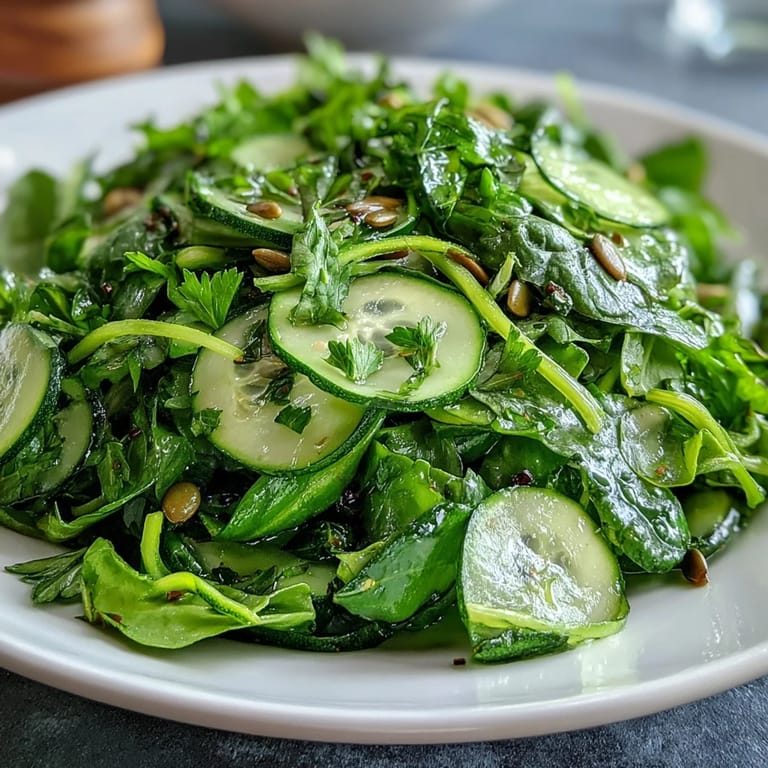
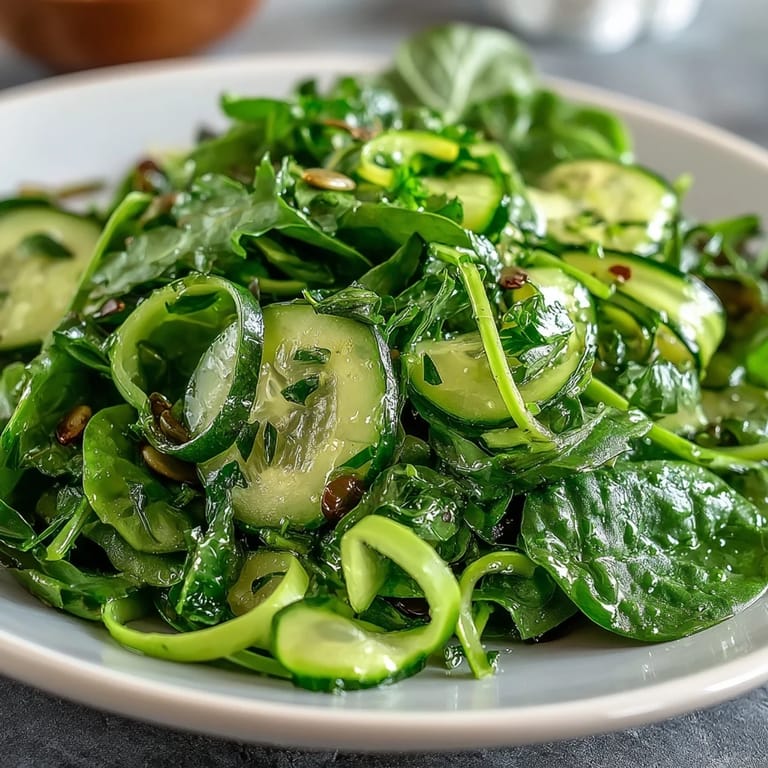
Pin There's something about standing in front of an open refrigerator on a warm afternoon, seeing all those bright vegetables practically glowing under the light, that made me want to create something that felt as alive as they looked. My neighbor had just dropped off a bag of impossibly green zucchini and celery from her garden, and I realized I'd been making the same heavy salads for months. This one came together almost by accident—layers of crisp, hydrating vegetables tossed with the simplest vinaigrette that lets everything shine instead of drowning it.
I made this for a picnic last summer where everyone was overheated and overwhelmed, and watching people actually ask for seconds of a salad was oddly moving. One friend said it tasted like what her body actually wanted instead of what she thought she should eat, and that stuck with me.
Ingredients
- Mixed baby greens (6 cups): Choose a blend that includes something peppery like arugula alongside milder spinach—the contrast matters more than you'd think.
- Cucumber (1, thinly sliced): English cucumbers stay crisper longer and have fewer seeds, but regular ones work fine if you scoop out the watery center.
- Celery (1 cup, thinly sliced): The unsung hero of this salad; it adds a clean snap that makes everything taste brighter.
- Green bell pepper (1 cup, julienned): Cut into thin matchsticks so they integrate into the salad rather than dominating each bite.
- Zucchini (1 cup, thinly sliced): Use a mandoline if you have one, but a sharp knife and careful attention work just as well.
- Fresh parsley (1/2 cup, chopped): Don't skip this—the herbaceous note transforms the whole thing from good to memorable.
- Extra virgin olive oil (3 tablespoons): This is where quality makes an audible difference; use something you'd drizzle on bread.
- Fresh lemon juice (2 tablespoons): Squeeze it yourself if possible; bottled juice tastes flat by comparison.
- Apple cider vinegar (1 tablespoon): It adds a subtle complexity that regular vinegar misses.
- Dijon mustard (1 teaspoon): Acts as an emulsifier so your dressing actually clings to the greens instead of pooling.
- Sea salt and black pepper: Taste as you go; you might need slightly more depending on your greens.
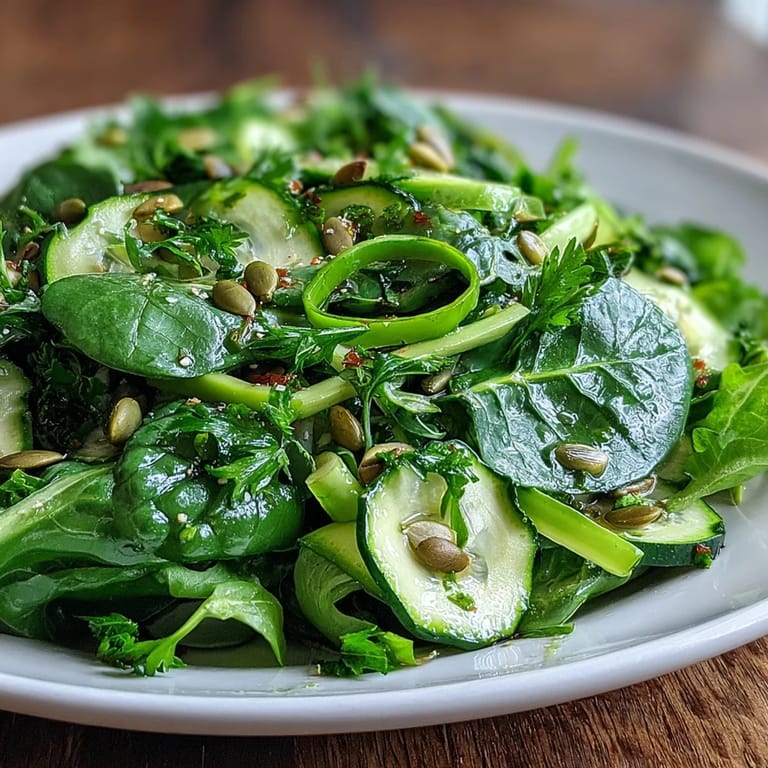
- Pumpkin or sunflower seeds (1/4 cup, optional): Toast them lightly in a dry pan for a minute if you want them to taste less forgettable.
Tired of Takeout? 🥡
Get 10 meals you can make faster than delivery arrives. Seriously.
One email. No spam. Unsubscribe anytime.
Instructions
- Assemble your green foundation:
- Pile your mixed greens into a large bowl—don't pack them down, just let them sit loosely. This matters because greens that have room to breathe stay crispier longer.
- Add the hydrating vegetables:
- Layer in the cucumber, celery, bell pepper, zucchini, and parsley in whatever order feels natural. The point is to distribute them evenly so no one vegetable overwhelms the others.
- Make the vinaigrette:
- In a small bowl, whisk the olive oil, lemon juice, apple cider vinegar, and mustard together until the mixture becomes creamy and slightly pale—this is the emulsification happening. Season with salt and pepper and taste it; it should be bright enough to make your mouth pucker slightly.
- Dress and toss gently:
- Pour the vinaigrette over the salad and toss with your hands or two spoons, using gentle lifting motions rather than aggressive stirring. You want to coat everything without bruising the delicate greens.
- Finish and serve immediately:
- Sprinkle seeds over the top if you're using them, and serve right away while everything is still at peak crispness. The moment this salad sits, the greens start to soften.
 Pin
Pin There was a moment during that picnic when someone took a bite and closed their eyes, and I realized that eating well doesn't have to be complicated or time-consuming. It just has to be intentional and fresh.
The Magic of the Vinaigrette
Most people underestimate how much a proper vinaigrette matters, thinking any combination of oil and acid will do. The truth is that whisking oil and lemon juice together until they become emulsified—that moment when the mixture goes from separate and slick to creamy and unified—is when the dressing actually clings to your greens instead of sliding off. The mustard isn't there for flavor; it's an emulsifier, the kitchen secret that makes everything work.
Variations That Keep Things Interesting
This salad is a canvas, and once you understand the basic structure, you can paint with whatever's in season or catching your eye at the market. In spring I add fresh mint and peas, in fall I include shredded carrots and pumpkin seeds, and in winter I sometimes add thin slices of crisp apple and a handful of walnuts. The through line is always the same: bright greens, hydrating vegetables, and a dressing that tastes like you actually care.
Why This Works as a Meal Starter
Serving this salad first at a meal is a smart move because it fills you with nutrients and hydration without making you feel heavy, leaving room for whatever comes next. The flavors are clean enough that they don't interfere with other dishes, but bold enough that people take it seriously instead of seeing salad as an obligation. If you're serving grilled fish or chicken, this is the perfect companion—it brightens the plate and refreshes your palate between bites.
- Make extra vinaigrette if you're serving this to guests; people always want more once they taste it.
- Prep all your vegetables earlier in the day, but don't slice them until right before serving so they stay crisp.
- If you're worried about leftovers, dress only what you're eating immediately and keep the undressed greens and vegetables separate.
 Pin
Pin This salad has become my answer to almost every question about what to eat when you want to feel good without thinking too hard. It's proof that simplicity, when done with attention and care, can be just as satisfying as anything complicated.
Recipe Q&A
- → Can I prepare this salad in advance?
Yes, you can wash and chop the vegetables up to a day ahead. Store them separately in airtight containers in the refrigerator. Keep the vinaigrette in a small jar and toss everything together just before serving to maintain the crisp texture.
- → What other greens work well in this mix?
Baby spinach, arugula, kale, and romaine all provide excellent bases. You can also try mixed spring greens, butter lettuce, or even add some fresh herbs like basil or mint for additional flavor depth.
- → How can I add more protein to make it a complete meal?
Consider adding grilled chicken breast, baked salmon, chickpeas, edamame, or even quinoa. Hard-boiled eggs, hemp seeds, or diced avocado also provide satisfying protein and healthy fats while complementing the fresh flavors.
- → Will the vinaigrette make the salad soggy if stored?
The vinaigrette is best added just before serving. If meal prepping, store the dressing separately in a small sealed container. The crisp vegetables will stay fresh for several days when kept dry and chilled.
- → Can I substitute the apple cider vinegar?
Absolutely. White wine vinegar, red wine vinegar, or champagne vinegar all work beautifully. Balsamic vinegar adds a sweeter, deeper note while rice vinegar offers a milder acidity that complements the fresh vegetables.