 Pin
Pin The steam rising from a bowl of miso noodles on a rainy Wednesday evening has a way of resetting the entire week. I stumbled into this recipe after a long day when takeout felt too expensive and cereal felt too sad. What started as a humble experiment with leftover chicken and a jar of miso I wasn't sure how to use turned into something I crave on repeat. The broth is savory and light, the noodles are satisfying without being heavy, and the toppings make it feel like a restaurant splurge you assembled in your own kitchen.
I made this for my sister after she moved into her first apartment and called me asking how to cook something that wasn't pasta with jarred sauce. We video-called through the whole process, and when she took her first bite, she went quiet for a second, then said it tasted like the noodle shop we used to go to in college. That moment reminded me how a simple bowl of noodles can carry so much more than just flavors. Now she makes it every Sunday and texts me photos of her bowl arrangements, each one a little more creative than the last.
Ingredients
- Boneless, skinless chicken thighs or breasts: Thighs stay juicier and more forgiving if you overcook them slightly, but breasts work beautifully if that's what you have on hand.
- White miso paste: This is the soul of the dish, providing that deep umami backbone without overwhelming saltiness; always taste your broth before adding extra salt.
- Low-sodium soy sauce: Gives the marinade its savory punch and keeps the sodium levels in check so the miso can shine.
- Rice vinegar: A splash of acidity brightens the marinade and keeps the chicken from tasting one-dimensional.
- Honey or maple syrup: Just enough sweetness to balance the salty and tangy elements, and it helps the chicken caramelize beautifully.
- Fresh ginger: Grated ginger adds a warm, spicy note that makes the whole kitchen smell incredible as the chicken cooks.
- Garlic: Minced fresh garlic is non-negotiable here; it melds into the marinade and adds aromatic depth.
- Toasted sesame oil: A little goes a long way, infusing the marinade and noodles with a nutty richness.
- Soba noodles or whole wheat spaghetti: Soba noodles have an earthy, slightly nutty flavor that pairs perfectly with miso, but whole wheat pasta is a solid backup.
- Low-sodium chicken broth: The base of your soup, and using low-sodium gives you control over the final seasoning.
- Shiitake mushrooms: They add a meaty texture and an earthy undertone that makes the broth taste like it simmered for hours.
- Carrot: Julienned carrots bring sweetness and a pop of color that makes each bowl look as good as it tastes.
- Baby bok choy: Tender, slightly sweet, and it wilts just enough to stay crisp, adding both texture and a mild bitterness.
- Snow peas: They stay crunchy and bright green, offering a fresh contrast to the rich broth.
- Baby spinach or kale: Stirred in at the end, they wilt gently and pack in extra nutrients without changing the flavor profile.
- Soft-boiled eggs: The jammy yolk swirls into the broth and makes everything feel luxurious and complete.
- Scallions: Fresh, sharp, and they add a burst of color and bite right before serving.
- Toasted sesame seeds: A small sprinkle adds crunch and a toasted, nutty finish.
- Fresh cilantro or parsley: Brightens the whole bowl and adds an herbal note that ties everything together.
- Nori strips: Optional but wonderful, they bring a hint of the sea and make the bowl feel authentically Japanese.
- Chili oil or Sriracha: For those who like heat, a drizzle transforms the bowl into something with a spicy kick.
Tired of Takeout? 🥡
Get 10 meals you can make faster than delivery arrives. Seriously.
One email. No spam. Unsubscribe anytime.
Instructions
- Make the Marinade:
- In a shallow bowl, whisk together the miso paste, soy sauce, rice vinegar, honey, ginger, garlic, and sesame oil until the mixture is smooth and the miso has fully dissolved. The marinade should smell fragrant and slightly sweet, with a hint of toasted sesame in the background.
- Marinate the Chicken:
- Add the chicken to the marinade, turning each piece to coat evenly, then cover the bowl and refrigerate for at least 30 minutes or up to 8 hours. The longer it sits, the more the flavors penetrate the meat, but even 30 minutes makes a noticeable difference.
- Cook the Noodles:
- Bring a large pot of water to a rolling boil, add the soba noodles, and cook according to the package directions until just al dente. Drain them, rinse under cold water to stop the cooking, and toss with a few drops of sesame oil to keep them from clumping together.
- Cook the Chicken:
- Heat a grill pan or skillet over medium-high heat, shake off any excess marinade from the chicken, and cook for 4 to 5 minutes per side until the internal temperature reaches 165°F and the outside has a golden, slightly caramelized crust. Let the chicken rest on a cutting board for 5 minutes before slicing it into thin strips so the juices redistribute and every bite stays tender.
- Build the Broth:
- In a clean soup pot, bring the chicken broth and water to a gentle simmer, then whisk in the remaining tablespoon of miso paste until it fully dissolves and the broth turns a warm, golden color. Taste it now and adjust with a pinch more miso or a splash of soy sauce if needed.
- Add the Vegetables:
- Stir in the mushrooms, carrots, bok choy, and snow peas, then simmer for 3 to 4 minutes until the vegetables are just tender but still have a bit of snap. Fold in the spinach or kale and remove the pot from the heat so the greens wilt gently without turning mushy.
- Assemble the Bowls:
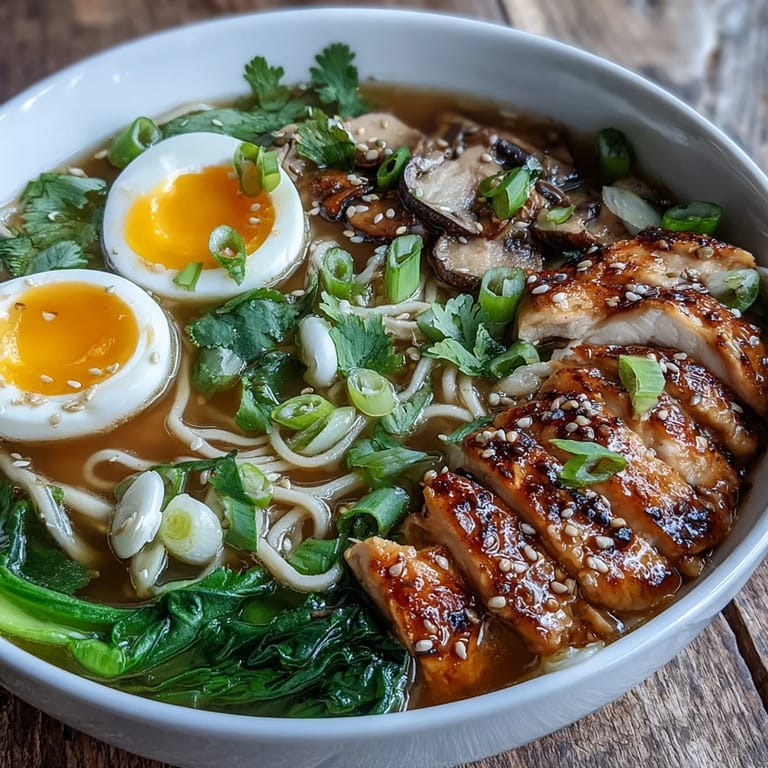
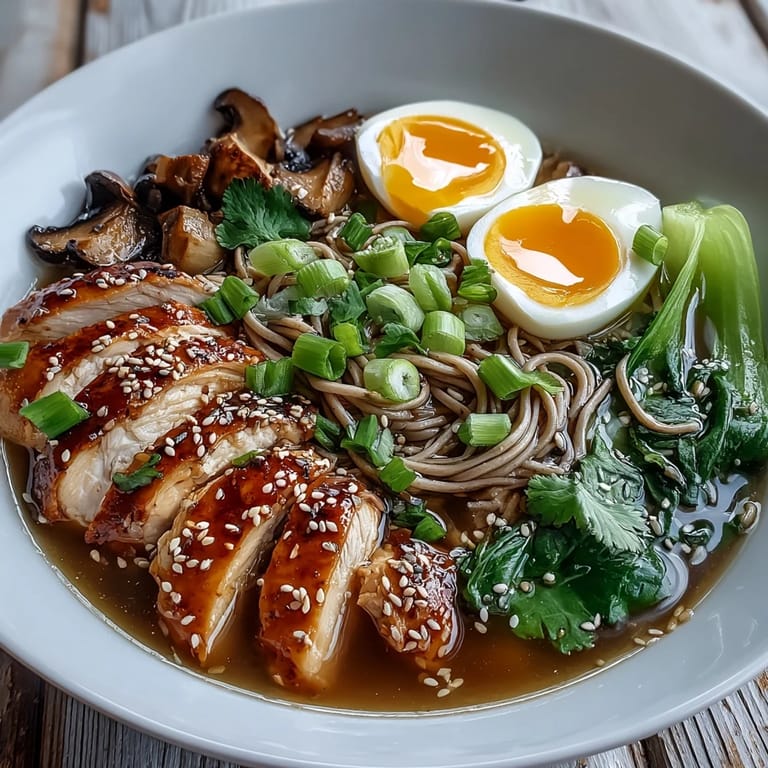
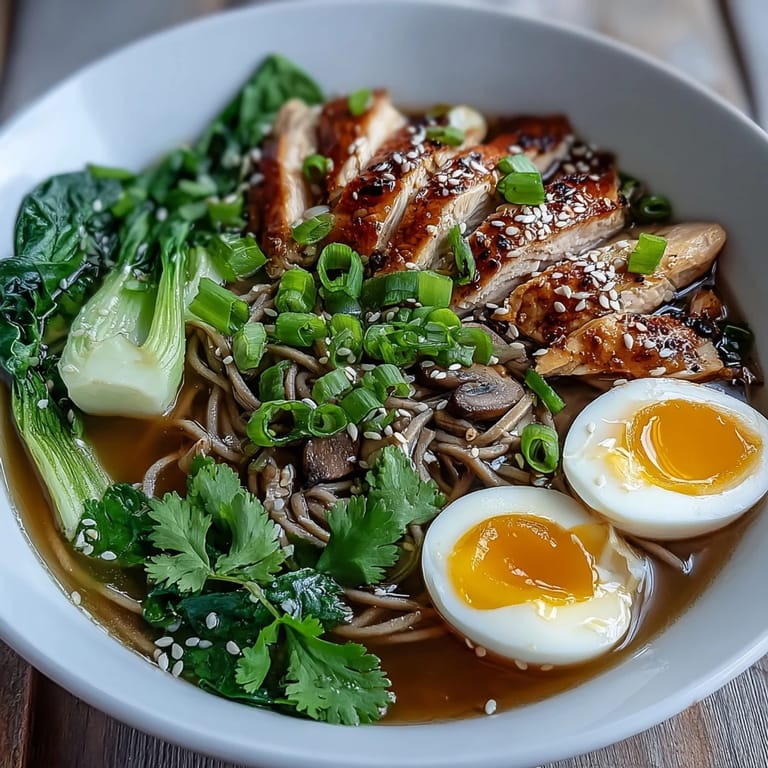
- Divide the noodles between two deep bowls, arrange the sliced chicken on top in a neat fan or pile, then ladle the hot broth and vegetables over everything. The noodles should be half-submerged, and the chicken should peek out from the broth like little islands of flavor.
- Add the Toppings:
- Finish each bowl with soft-boiled egg halves, a generous sprinkle of scallions, sesame seeds, cilantro, and nori strips if using. Drizzle with chili oil or Sriracha for heat, and serve immediately while the broth is steaming and the eggs are still warm.
 Pin
Pin One winter night, I made this for a friend who was going through a rough breakup, and halfway through her bowl, she looked up and said she forgot she could feel this good about something as simple as dinner. We didn't talk much after that, just ate in companionable silence with the sound of the broth being slurped and the occasional clink of chopsticks. Food has this quiet power to remind us that comfort doesn't always need words, sometimes it just needs warmth, flavor, and someone who cares enough to cook for you.
Storing and Reheating
Store the broth, noodles, chicken, and toppings separately in airtight containers in the fridge for up to three days. When you're ready to eat, reheat the broth gently on the stove, warm the chicken in a skillet or microwave, and pour the hot broth over fresh or briefly reheated noodles. The eggs and fresh toppings should be added right before serving so they stay vibrant and don't get soggy or discolored.
Swaps and Substitutions
If you want to make this vegetarian, swap the chicken for extra-firm tofu that's been pressed and marinated the same way, and use vegetable broth instead of chicken broth. You can also substitute the soba noodles with rice noodles, ramen noodles, or even zucchini noodles if you're looking for a lower-carb option. For the vegetables, feel free to use whatever you have on hand like broccoli, edamame, snap peas, or bell peppers, just adjust the cooking time so everything stays crisp-tender.
Serving Suggestions
This bowl is a complete meal on its own, but if you want to round it out, serve it with a small side of pickled ginger, a few rice crackers, or a simple cucumber salad dressed with rice vinegar and sesame oil. For a crowd, set up a toppings bar with extra scallions, cilantro, chili oil, lime wedges, and nori so everyone can customize their bowl to their liking.
- Pair it with a cold Japanese lager or a pot of green tea for a restaurant-quality experience at home.
- Leftovers make an incredible next-day lunch, especially if you pack the components separately and assemble them fresh.
- Double the recipe and freeze the broth in portions so you always have a head start on a cozy dinner.
 Pin
Pin This bowl has become my answer to almost every mood: too tired to think, too hungry to wait, or just craving something that feels like a hug from the inside out. I hope it becomes that for you too.
Recipe Q&A
- → Can I make this dish vegetarian?
Yes, substitute the chicken with extra-firm tofu and replace the chicken broth with vegetable broth for a delicious vegetarian version.
- → What type of noodles work best?
Soba noodles made from buckwheat are traditional, but whole wheat spaghetti or gluten-free noodles work equally well as alternatives.
- → How long should I marinate the chicken?
Marinate for at least 30 minutes, but overnight marinating creates deeper flavor. Bring chicken to room temperature before cooking.
- → Can I prepare this in advance?
Store leftover broth separately from noodles and toppings to prevent sogginess. Reheat broth and assemble just before serving.
- → Is this dish gluten-free?
Use 100% buckwheat soba noodles and tamari instead of soy sauce to make this completely gluten-free.
- → What vegetables can I substitute?
Broccoli, edamame, snap peas, or bean sprouts make excellent substitutes for any of the vegetables listed.