 Pin
Pin I discovered this salad on an afternoon when I was trying to impress someone without spending hours in the kitchen. A friend had mentioned Jennifer Aniston's go-to lunch, and I became oddly curious about what that meant. Turns out it's this bowl of bright, uncomplicated goodness that somehow makes you feel both energized and satisfied. The first time I made it, I was struck by how the warm grain and cool vegetables created this perfect balance. Now it's become my default when I need something that tastes like care but requires almost no fussing.
I remember making this for a picnic where everyone was supposed to bring something, and honestly, I was the last to sign up. But when I showed up with this salad in a glass container, something shifted. People kept coming back for more, and someone asked for the recipe before dessert even arrived. That's when I realized this salad had quietly become more than just food—it was the thing that made the afternoon feel a little bit special.
Ingredients
- Quinoa or bulgur: Either works beautifully, though quinoa gives you a fluffier texture and bulgur brings a slightly nutty, chewy quality. I rinse mine thoroughly to remove any bitterness.
- Chickpeas: Canned and rinsed saves you time, but they're the protein backbone that keeps this from feeling like a side salad.
- Cucumber: Diced into uneven chunks so you get that satisfying crunch in almost every bite.
- Red onion: Just a whisper of sharpness that wakes everything up. Finely chopped means it doesn't overwhelm.
- Feta cheese: Crumbled by hand feels more intentional than pre-crumbled, and the pieces are more irregular and better for nestling into the grain.
- Fresh parsley and mint: These aren't decorations—they're essential. The herbs keep the whole thing tasting alive and bright instead of heavy.
- Toasted nuts: Pistachios add a subtle sweetness and color, but almonds work just as well. Toasting them yourself makes all the difference in flavor.
- Extra virgin olive oil: The quality matters here since it's so visible in the dressing. Use something you'd actually enjoy tasting.
- Lemon juice: Fresh squeezed, always. It's the thing that ties everything together without adding weight.
- Garlic: Just one clove minced fine, enough to make itself known without dominating.
- Sea salt and black pepper: The final say in whether this tastes like something special or just average.
Tired of Takeout? 🥡
Get 10 meals you can make faster than delivery arrives. Seriously.
One email. No spam. Unsubscribe anytime.
Instructions
- Cook your grain until tender:
- Rinse the quinoa or bulgur under cool water, then combine with two cups of water in a medium saucepan. Bring it to a boil, then lower the heat and cover. Let it simmer—about twelve minutes for quinoa, fifteen for bulgur—until the water is absorbed and the grain is soft but still has a little texture to it. Fluff with a fork and let it cool while you prep everything else.
- Gather everything in one bowl:
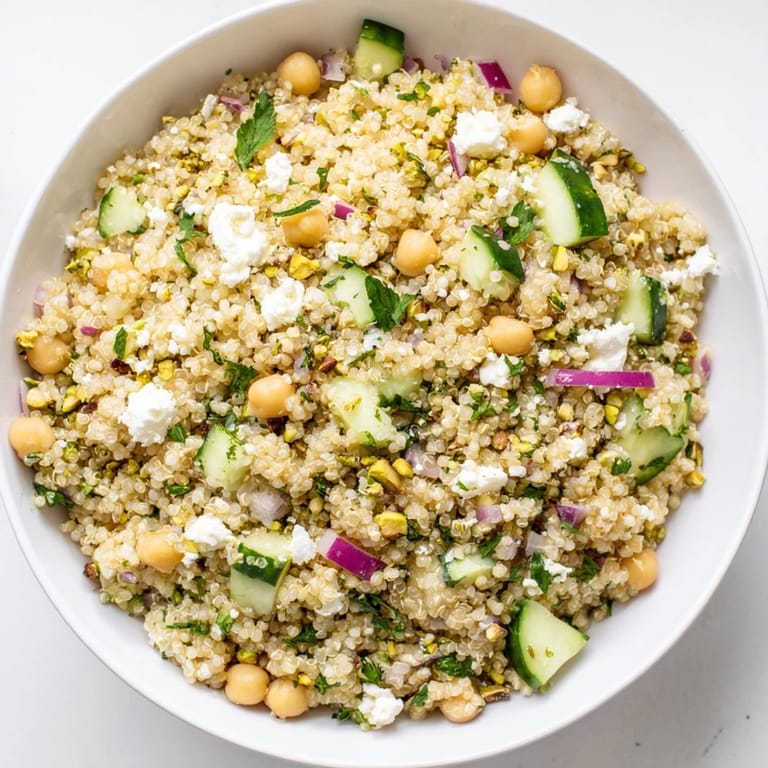
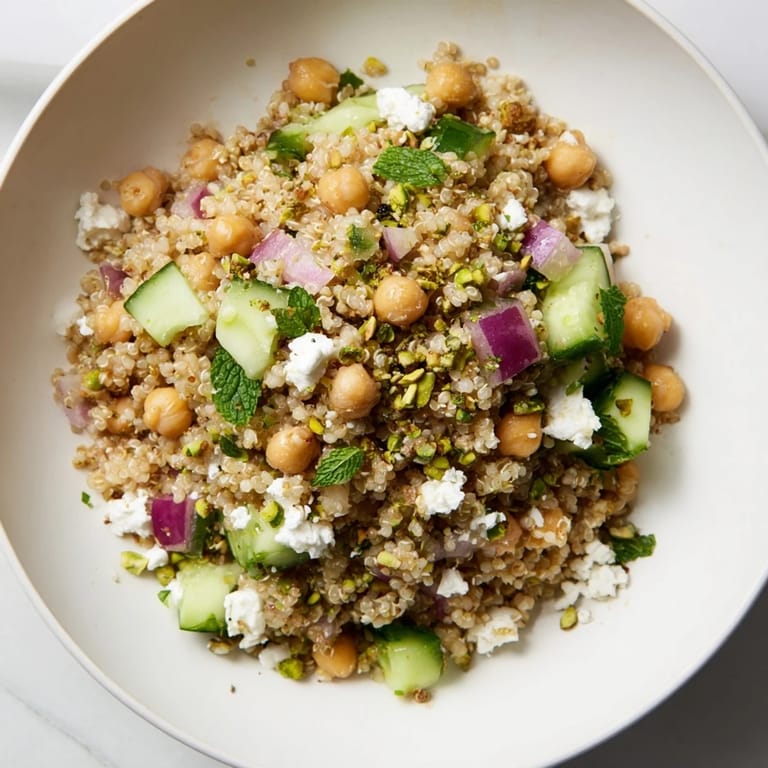
- Once your grain has cooled to room temperature, toss it into a large bowl with the drained chickpeas, diced cucumber, chopped red onion, crumbled feta, fresh parsley, mint, and your toasted nuts. Everything should look colorful and alive at this point.
- Whisk together your dressing:
- In a small bowl, whisk the olive oil, fresh lemon juice, minced garlic, sea salt, and black pepper until everything is emulsified and no longer separating. Taste it—it should be bright and balanced, not too sharp.
- Bring it all together:
- Pour the dressing over the salad and toss gently so nothing breaks apart but everything gets coated. The grains will absorb the dressing and become even more flavorful as they sit.
- Taste and adjust:
- This is your moment to make it yours. Add more salt if it feels flat, more lemon if it needs brightness, more pepper if you want a little kick. Serve it chilled, at room temperature, or even slightly warm—it's honest food either way.
 Pin
Pin There's a moment when you taste this for the first time after it's all come together—when the herbaceousness hits you, then the brightness of the lemon, then the nuttiness, all at once—and you understand why people keep asking for the recipe. It stops being just salad and becomes something that reminds you that good food doesn't require complicated techniques.
Why This Salad Feels Effortless
The genius of this salad is that it doesn't ask much of you but rewards you generously. There's no cooking skill required, just attention—rinsing your grain properly, toasting your nuts, squeezing fresh lemon. The heavy lifting is done by the ingredient list itself, which is balanced so perfectly that each element supports the others. It's the kind of recipe that reminds you that cooking doesn't have to be complicated to feel intentional.
When to Make This
I've made this salad for meal prep Sundays, for unexpected lunch guests, for myself when I needed something that felt nourishing without being heavy. It's equally at home on a picnic blanket, a weeknight dinner table, or packed in a container for lunch tomorrow. The flexibility is part of why I keep coming back to it. You can serve it straight from the fridge, or let it sit at room temperature for an hour and it only gets better as the flavors settle into each other.
The Beautiful Thing About Variations
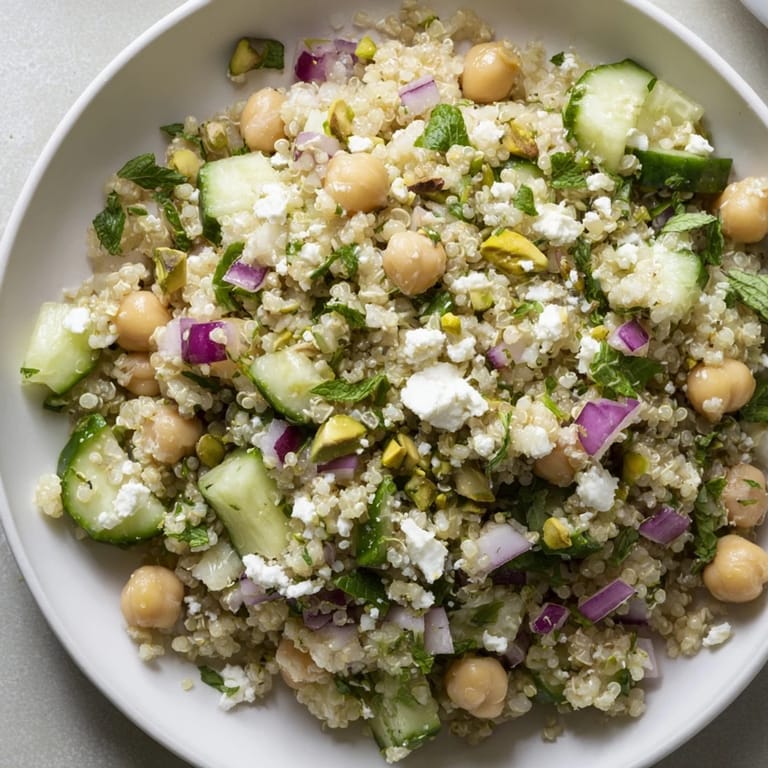
This salad is a base that welcomes improvisation. I've added diced avocado when I had one, stirred in sun-dried tomatoes when I wanted extra depth, swapped the pistachios for toasted walnuts when that's what was in the pantry. Even small changes—maybe using oregano instead of mint one time, or pomegranate seeds instead of nuts—keep it from ever feeling stale. It's flexible enough to be made vegan by skipping the feta, yet the core of it—the grain, the chickpeas, the herbs, the brightness—stays the same.
- Avocado and sun-dried tomatoes are my go-to additions when I want to make it feel more decadent.
- Walnuts or pecans work beautifully if pistachios aren't what you have on hand.
- Serve it warm with grilled chicken or fish if you want it to be a main course instead of a side.
 Pin
Pin This salad has become the answer to so many small moments—the lunch you want to feel proud of, the side dish that somehow steals the show, the thing you can make when someone's coming over and you want them to feel cared for. It's proof that good food comes from paying attention to simple things done well.