 Pin
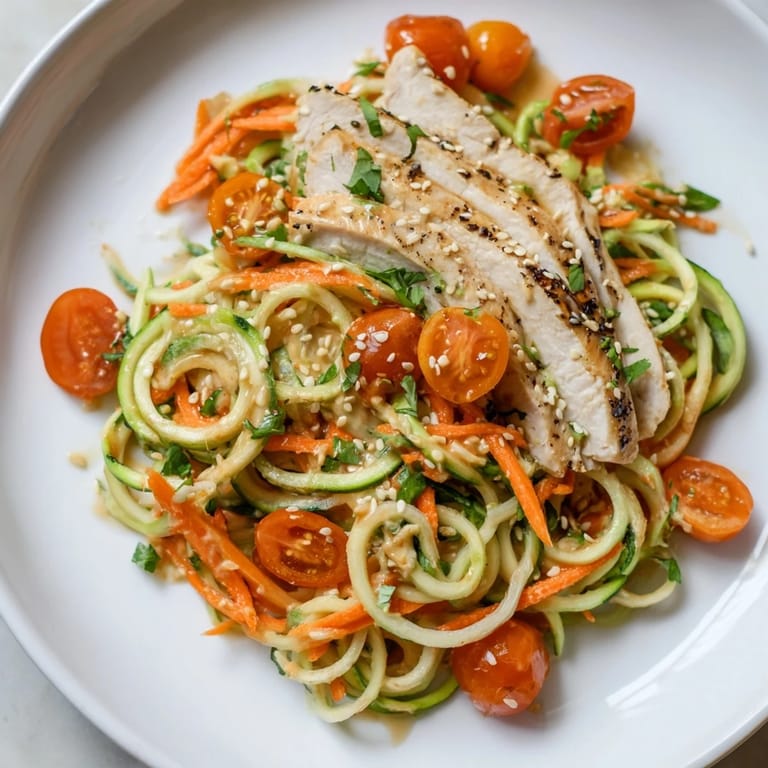
Pin There's something about a perfectly balanced bowl that makes you forget you're eating "healthy." I discovered this salad on a sticky summer afternoon when my usual grilled chicken felt too heavy, and I had a surplus of cucumbers from the farmers market practically begging to be used. The moment that crispy sesame dressing hit those cool, spiralized cucumber ribbons, I knew I'd found something special—the kind of meal that tastes indulgent but leaves you feeling energized, not sluggish.
I made this for a friend who'd just started meal-prepping, and watching her taste it, then immediately ask for the recipe, felt like a quiet victory. She'd been convinced healthy eating meant suffering through bland chicken and plain greens, but this bowl proved her wrong. Now she makes it twice a week and swears by it.
Ingredients
- Boneless, skinless chicken breasts (2, about 300 g): The blank canvas here—quality matters because they're the star, so choose breasts that look evenly thick to cook uniformly.
- Olive oil (1 tablespoon): Just enough to help the chicken develop a gentle golden surface and keep it from sticking.
- Sea salt and black pepper: The quietest but most important seasoning; don't skip these on the chicken itself.
- Cucumbers, spiralized (2 large): The cool, crisp base that makes this feel refreshing rather than heavy—if you don't have a spiralizer, thin julienne cuts work just as well.
- Cherry tomatoes (1 cup, halved): They add pops of sweetness and acidity that balance the richness of the sesame dressing.
- Shredded carrots (¼ cup): A texture contrast and a subtle natural sweetness that rounds out the flavor profile.
- Scallions (2 tablespoons, chopped): Fresh, sharp allium notes that prevent the bowl from feeling one-dimensional.
- Tahini or toasted sesame paste (2 tablespoons): The soul of the dressing—use toasted sesame paste if you want deeper, nuttier flavor, or tahini for something gentler.
- Low-sodium soy sauce or tamari (1 tablespoon): The umami anchor that makes your brain register this as seriously flavorful.
- Rice vinegar (1 tablespoon): Bright acidity that cuts through the richness of the sesame oil.
- Honey (1 teaspoon): A whisper of sweetness that softens the dressing and brings everything into balance.
- Toasted sesame oil (1 teaspoon): Potent stuff—a little goes a long way, and it's what makes people ask what's in the dressing.
- Garlic, minced (1 clove): Raw garlic adds a gentle bite and complexity without overpowering.
- Water (2 tablespoons): The flexibility ingredient—add more to thin if your dressing feels thick, less if it seems too loose.
- Toasted sesame seeds (1 tablespoon): The final textural flourish and a nod to the dressing's character.
- Fresh cilantro (2 tablespoons, chopped, optional): If you love cilantro, it's the perfect herbaceous finish; if you're one of those people who thinks it tastes like soap, skip it entirely.
Tired of Takeout? 🥡
Get 10 meals you can make faster than delivery arrives. Seriously.
One email. No spam. Unsubscribe anytime.
Instructions
- Get your pan ready:
- Heat a grill pan or skillet over medium-high heat until it's properly hot—this matters because chicken needs that initial sear to develop flavor. You should hear a gentle sizzle the moment the oil hits the pan.
- Season and sear the chicken:
- Brush each breast with olive oil and season generously with salt and pepper on both sides. Place them in the hot pan and resist the urge to move them around—let them sit for 5 to 6 minutes until golden.
- Finish cooking:
- Flip and cook the other side for another 5 to 6 minutes until the juices run clear when you pierce the thickest part. The internal temperature should reach 165°F if you're checking with a thermometer.
- Rest your protein:
- Transfer the chicken to a cutting board and let it rest for 5 minutes—this keeps it juicy instead of releasing all its moisture into the dressing.
- Prepare your vegetables:
- While the chicken rests, spiralize your cucumbers into a large bowl, then add the halved cherry tomatoes, shredded carrots, and scallions. The spiralized cucumbers release a little liquid, so don't worry if the bowl seems slightly wet.
- Whisk the dressing:
- In a small bowl, combine tahini, soy sauce, rice vinegar, honey, sesame oil, and minced garlic, then whisk until smooth. Add water a tablespoon at a time until you reach the consistency you want—it should coat a spoon but still flow gently.
- Dress and arrange:
- Drizzle the dressing over your vegetables and toss gently to coat, being careful not to break up the cucumber ribbons. Divide between bowls or plates.
- Top and serve:
- Slice the rested chicken thinly and arrange it over each salad, then sprinkle with toasted sesame seeds and cilantro if using. Serve immediately while the chicken is still warm and the cucumber is still crisp.
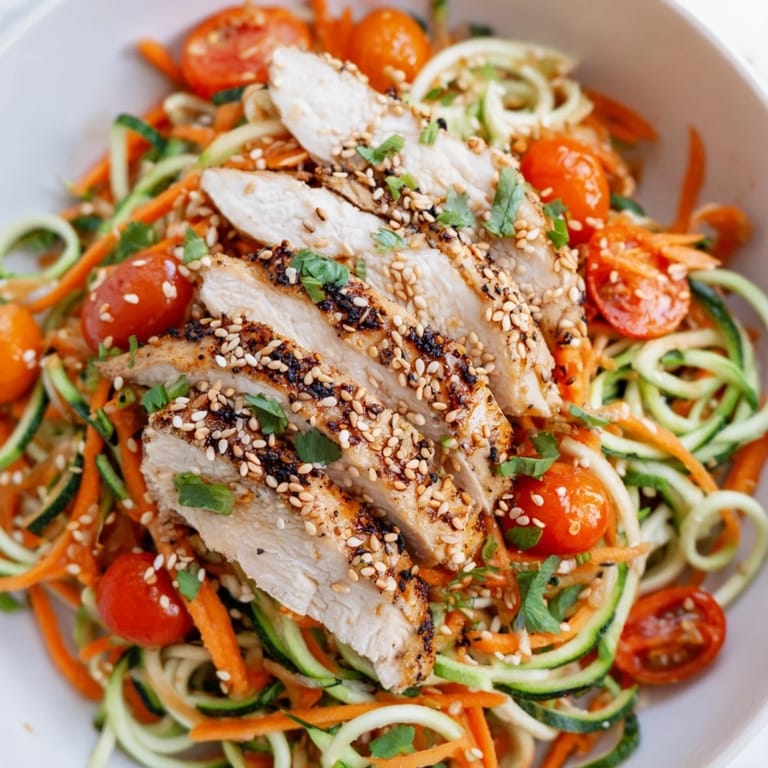 Pin
Pin The first time I served this to someone who'd never had spiralized vegetables before, she kept asking why the texture was so different from regular salad greens. When I explained that it was just cucumber cut a different way, her face lit up with that realization—food doesn't need to be complicated to be delicious, just thoughtful. That moment reminded me why I cook: to show people something familiar in a way that makes them see it differently.
Why This Dressing Works
Sesame-based dressings occupy this magical space where they feel fancy enough for a special occasion but simple enough to make on a random Tuesday. The tahini creates a creamy base without any dairy, while the sesame oil provides that toasted, nutty depth that sesame oil is famous for. Rice vinegar is the secret weapon here—it's more delicate than regular vinegar, so it brightens the dressing without adding harsh acidity. When you whisk these together with garlic and a touch of honey, you get something that tastes like it took hours to develop but actually takes about two minutes.
Making It Your Own
This salad is forgiving in the way that great bowls should be—it welcomes additions without falling apart. I've added soft-boiled eggs for extra richness, tossed in edamame for additional protein, and once threw in some leftover roasted sweet potato because I had it hanging around. A friend of mine swaps the chicken for crispy tofu when she wants to go vegetarian, and it honestly tastes just as satisfying. The dressing is adaptable too: a dash of sriracha if you want heat, a squeeze of lime juice if you want brightness, or even a small spoonful of peanut butter if you're craving a vaguely Thai direction.
- Grilled shrimp works beautifully here if you want something lighter than chicken.
- Leftover rotisserie chicken gets you a weeknight version in half the time.
- Serve it warm immediately or chill it and eat it cold the next day—both ways are genuinely good.
Storage and Timing
I've learned that keeping the components separate is the move if you're planning ahead. The spiralized cucumber and other vegetables can sit in a container for up to two days—they soften slightly but stay pleasant. The dressing keeps for about four days in a jar in the fridge, which means you can make two salads from one batch of dressing. The chicken is best served fresh but reheats gently if you warm it in a low oven rather than the microwave, which tends to make it tough.
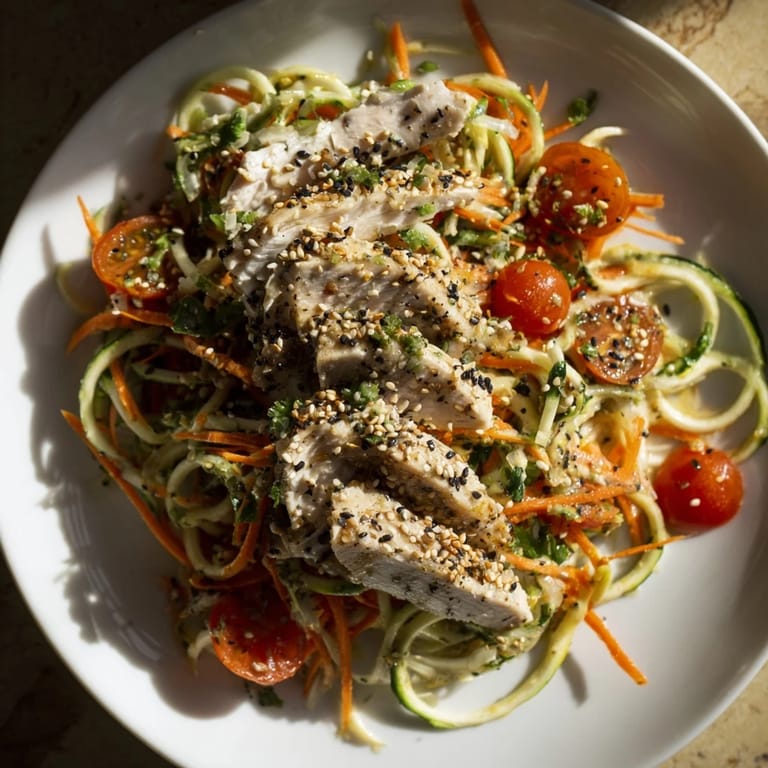 Pin
Pin This bowl became a regular in my rotation not because it's trendy, but because it actually tastes good and makes me feel good after eating it. That's the kind of recipe worth remembering.
Recipe Q&A
- → How should the chicken be cooked for best results?
Grill chicken breasts over medium-high heat for 5-6 minutes per side until juices run clear. Let rest before slicing thinly to retain juices.
- → What alternatives can be used for tahini in the dressing?
You can substitute tahini with toasted sesame paste or smooth peanut butter for a similar nutty flavor and texture.
- → Can this salad be made gluten-free?
Yes, by using tamari instead of soy sauce, the salad can be served gluten-free without compromising taste.
- → How to spiralize the cucumbers effectively?
Use a spiralizer to create thin, noodle-like cucumber strands which add a refreshing crunch and visual appeal.
- → What are some suggested variations to add more protein?
Boost protein by adding edamame, soft-boiled eggs, grilled tofu, or shrimp for different flavor profiles.