 Pin
Pin White asparagus showed up at the market one spring morning, pale and almost ghostly against the dark wooden crate. I'd never cooked with it before, only eaten it at a restaurant where someone's grandmother had sworn it was sweeter, more delicate than green. That conversation stuck with me, so when I saw those spears bundled together, I grabbed them without hesitation. I wanted to build something around them that felt equally refined—something that wouldn't compete with their subtle flavor but would celebrate it. That's when I thought about the cheeses I'd been hoarding in my fridge and the tiny shaving of truffle oil a friend had gifted me months before.
I made this for the first time when my sister called to say she was coming over after a stressful week at work. I wanted to give her something that felt special without asking her to sit through a long meal. She walked in to the smell of barely cooked asparagus and fresh lemon, and when I set the plate down, she just went quiet for a moment. That silence told me everything—it was exactly what we both needed.
Ingredients
- White asparagus, 500 g: Trimmed and peeled, these spears are sweeter and less grassy than their green cousins. Peel them with a vegetable peeler to remove the fibrous outer layer—it makes all the difference in texture.
- Burrata or buffalo mozzarella, 75 g: The creaminess here is essential; it softens against the warm asparagus and anchors the whole dish. Drain it well beforehand so it doesn't weep liquid onto the plate.
- Aged Comté cheese, 75 g: Shave it thin with a vegetable peeler; the nuttiness bridges the delicate asparagus and rich truffle beautifully.
- Parmigiano-Reggiano, 50 g: Just enough finely grated over the top adds a salty, umami punch without overwhelming the plate.
- Fresh black truffle, 15 g or truffle paste, 1–2 tbsp: This is where the dish gets its personality. Fresh truffle is worth the splurge if you can find it; the aroma alone justifies it. Truffle paste works in a pinch but tastes slightly more muted.
- Extra-virgin olive oil, 2 tbsp: Use one you actually like tasting straight—it matters here since nothing else masks it.
- Fresh lemon juice, 1 tbsp: Squeeze it yourself; bottled versions taste thin and chemical in such a spare dish.
- Flaky sea salt and white pepper: White pepper is milder and doesn't look like specks on the pale plate. Taste as you season.
- Microgreens or chervil for garnish: Optional but they add a whisper of color and freshness that feels intentional.
Tired of Takeout? 🥡
Get 10 meals you can make faster than delivery arrives. Seriously.
One email. No spam. Unsubscribe anytime.
Instructions
- Prepare the asparagus:
- Bring a large pot of salted water to a gentle simmer—you want it barely bubbling, not rolling. Add the white asparagus and cook for 8–10 minutes until just tender with a slight resistance when you pierce it with a fork. The moment it feels right, scoop it into an ice bath to stop the cooking; this keeps them bright and firm. Drain and dry gently on kitchen towels.
- Arrange on the plate:
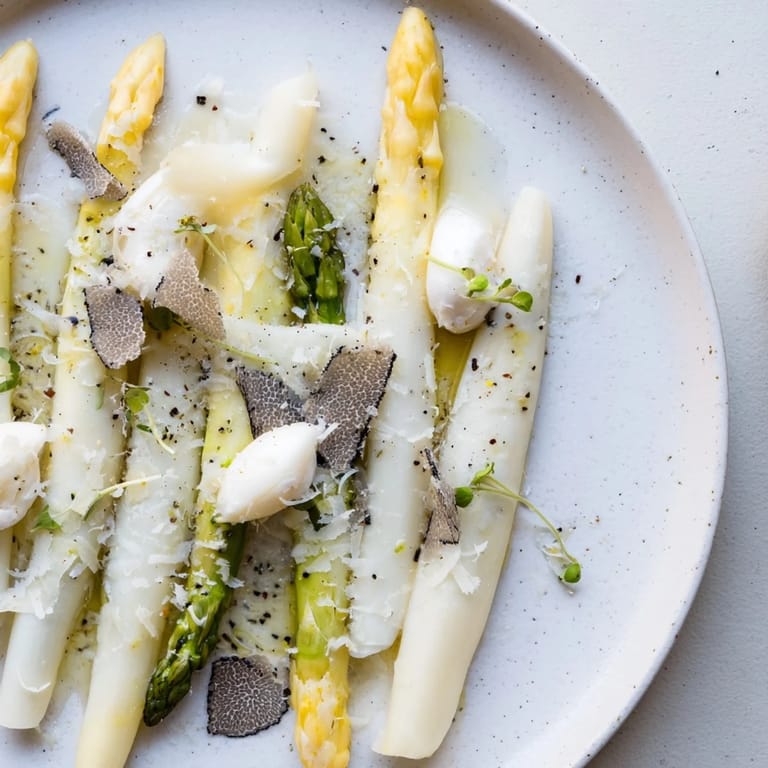
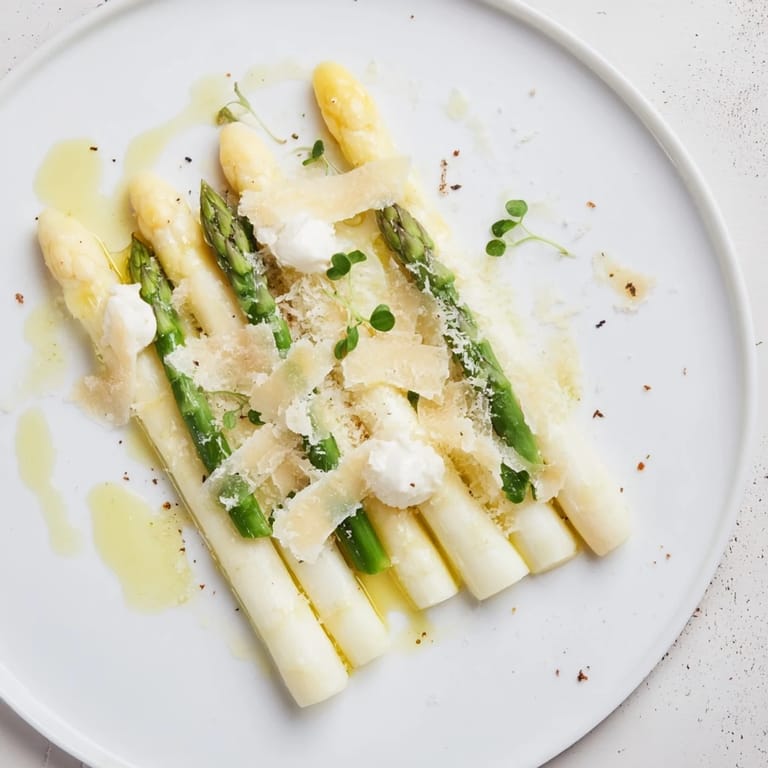
- Slice each cooled asparagus spear in half lengthwise and lay them side by side on chilled serving plates like a bridge. The chill matters—warm plates will soften everything and lose the elegance you're after.
- Layer the cheeses:
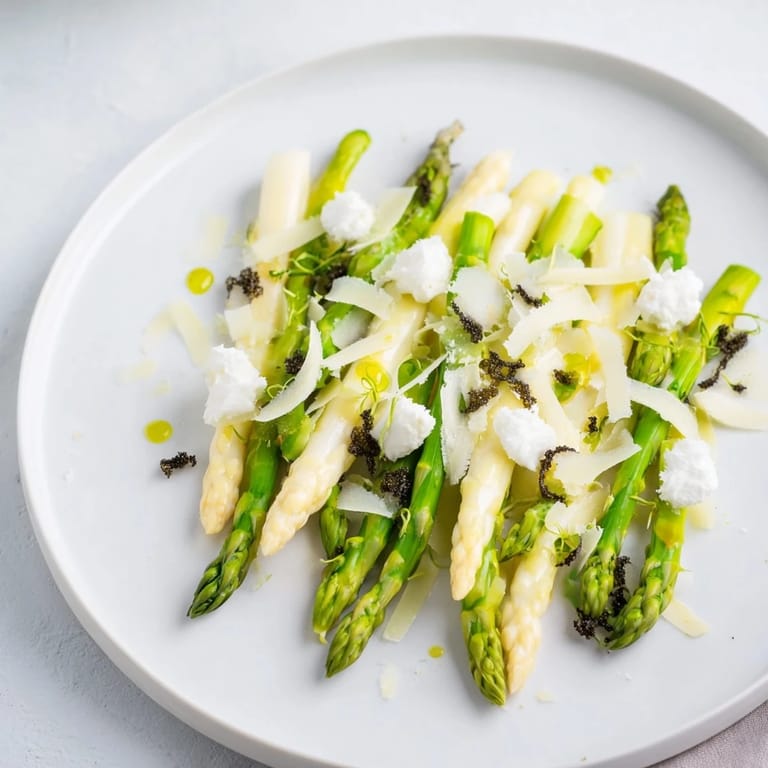
- Tear the burrata into irregular pieces and scatter them across the asparagus, letting some pieces nestle between the spears. Top with thin Comté shavings, then a light dusting of finely grated Parmigiano-Reggiano.
- Add the truffle:
- If using fresh truffle, hold the slicer at a low angle and shave thin stripes directly over the cheese—each one should be almost transparent. If using truffle paste, drizzle it gently in fine lines, as if you're drawing across the plate. Either way, the aroma should be noticeable immediately.
- Dress and finish:
- Whisk together the olive oil, lemon juice, sea salt, and white pepper in a small bowl until just combined. Drizzle this dressing lightly and evenly over everything—think refinement, not drowning. Scatter microgreens or chervil if you have them, and serve immediately while the asparagus is still cool and the cheese is at its creamiest.
 Pin
Pin My neighbor brought fresh black truffle from a trip to France, and when she grated a tiny amount over this dish one evening, the whole kitchen filled with an earthy, almost mushroomy perfume. Everyone at the table leaned in at the same moment, and suddenly this plate of pale cheese and white asparagus became something everyone wanted to taste. That's when I understood that this dish isn't about being complicated—it's about choosing the best ingredients and letting them speak for themselves.
Why White Asparagus Deserves More Love
White asparagus grows underground, never seeing sunlight, which gives it its pale color and milder, almost buttery flavor. Many people think it's inferior to green asparagus, but it's actually just different—and in this context, it's perfect. The delicate sweetness doesn't fight with the cheeses or the earthiness of the truffle; it lets them all coexist. Once you peel and cook it properly, you'll understand why it's considered a delicacy in European kitchens.
The Art of Building a Composed Plate
This dish taught me that fine dining isn't about complicated techniques or endless ingredient lists. It's about thoughtful composition—understanding how colors, textures, and flavors balance each other. The coolness of the asparagus, the creaminess of the cheese, the earthiness of the truffle, the brightness of the lemon—each element has a role. When they're arranged with intention, the plate feels generous rather than sparse, luxurious rather than fussy.
Wine Pairing and Serving Suggestions
This is a starter that demands to be tasted slowly, ideally before a meal where you're not rushed or distracted. Pair it with a crisp, mineral white wine like Sancerre, Grüner Veltliner, or even a light Chablis; the acidity cuts through the richness of the cheese beautifully. Some people worry that such an elegant dish needs a fancy occasion, but honestly, it's perfect for a quiet dinner for two or as the opening note to something special.
- Make it ahead only to the point of cooking and cooling the asparagus; everything else should be assembled just before serving.
- If fresh truffle isn't available or too expensive, high-quality truffle paste or even a drizzle of truffle oil will capture the spirit of the dish.
- This recipe scales easily—simply maintain the same proportions per person and you can serve two or eight.
 Pin
Pin There's something generous about serving food that feels refined but wasn't stressful to make. This dish reminds me that the best meals are the ones where everyone can taste the care, not the effort.
Recipe Q&A
- → How should the white asparagus be cooked?
Simmer the white asparagus in salted water for 8–10 minutes until tender but firm, then cool immediately in an ice bath.
- → What cheeses complement the asparagus best?
Burrata or buffalo mozzarella, aged Comté, and Parmigiano-Reggiano provide a creamy, nutty, and savory balance.
- → How can black truffle be added effectively?
Shave fresh black truffle thinly over the dish or drizzle with high-quality truffle paste for aromatic depth.
- → What dressing pairs well with these flavors?
A mix of extra-virgin olive oil, fresh lemon juice, flaky sea salt, and white pepper creates a bright, balanced dressing.
- → Are there any suggested garnishes?
Microgreens or chervil add freshness and visual appeal without overpowering delicate flavors.